

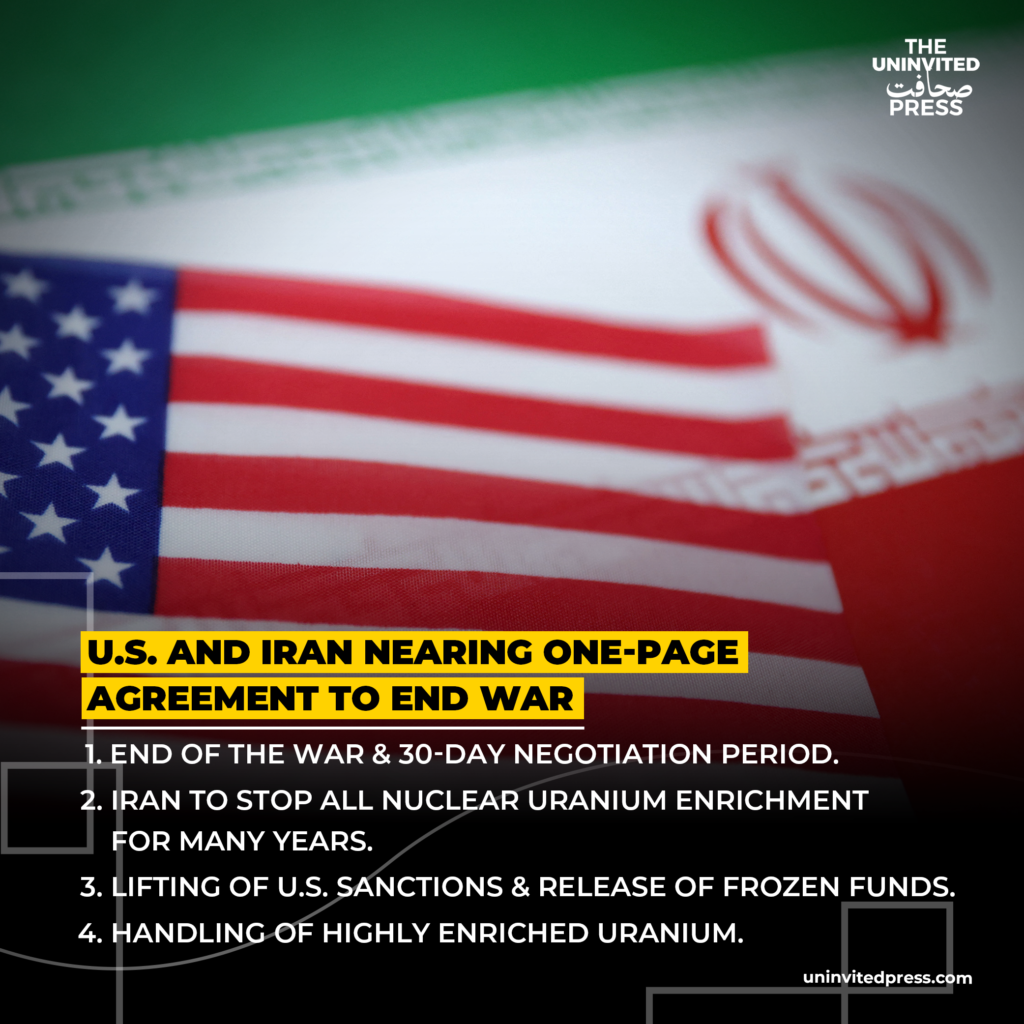
Proposed deal would halt hostilities, freeze nuclear enrichment and ease sanctions.
Washington and Tehran are reportedly on the verge of finalising a concise one-page memorandum of understanding aimed at formally ending the ongoing conflict in the Middle East and launching a 30-day window for broader negotiations on Iran’s nuclear programme and regional security.
According to multiple reports citing US officials and sources briefed on the talks, the draft agreement includes Iran halting all uranium enrichment activities for an extended period, the lifting of US sanctions, and the release of frozen Iranian funds.
The development marks a significant diplomatic shift amid months of direct and indirect confrontation that has disrupted global energy markets and raised fears of wider regional instability.
Key elements of the proposed deal:
The memorandum, described as a 14-point framework, outlines the following main provisions:
- Immediate end to hostilities and the start of a 30-day negotiation period.
- Iran’s commitment to stop all nuclear uranium enrichment for many years.
- US sanctions relief, including the release of billions of dollars in frozen Iranian assets.
- Arrangements for handling Iran’s stockpile of highly enriched uranium.
Additional elements under discussion reportedly include reopening safe passage through the Strait of Hormuz, a critical chokepoint for global oil shipments that has been a flashpoint in recent months.
Negotiations have involved US envoys, including Steve Witkoff and Jared Kushner, engaging with Iranian officials directly and through mediators, with Pakistan playing a notable facilitation role.
US-Iran Nuclear Talks Advance Cautiously:
Iranian officials have said they are reviewing the US proposal, stressing the need for a “fair and comprehensive agreement.” While acknowledging movement, Tehran has not yet publicly confirmed acceptance of the specific terms, particularly regarding long-term restrictions on its nuclear programme.
US President Donald Trump has expressed optimism, stating there is a “very good chance” of reaching a deal, while also warning of severe consequences if Iran rejects the overture.
Analysts caution that the one-page memo represents only an initial framework rather than a final resolution. Core disagreements-including the future of Iran’s enrichment capabilities, verification mechanisms, and broader regional influence-remain unresolved and could derail progress during the proposed 30-day talks.
Diplomatic Efforts Face Critical Test Amid Regional Tensions:
A potential agreement could reduce tensions in West Asia, stabilize energy prices, and support post-conflict recovery efforts. It may also mark progress in long-standing disputes that worsened after the US exited the 2015 JCPOA.
However, reactions from key regional players, especially Israel and Gulf states, are expected to be closely monitored, given concerns over Iran’s nuclear programme and regional security.
Iran has shown openness to diplomacy while demanding sanctions relief, but the outcome will depend on whether both sides can overcome deep disagreements in the coming days.