

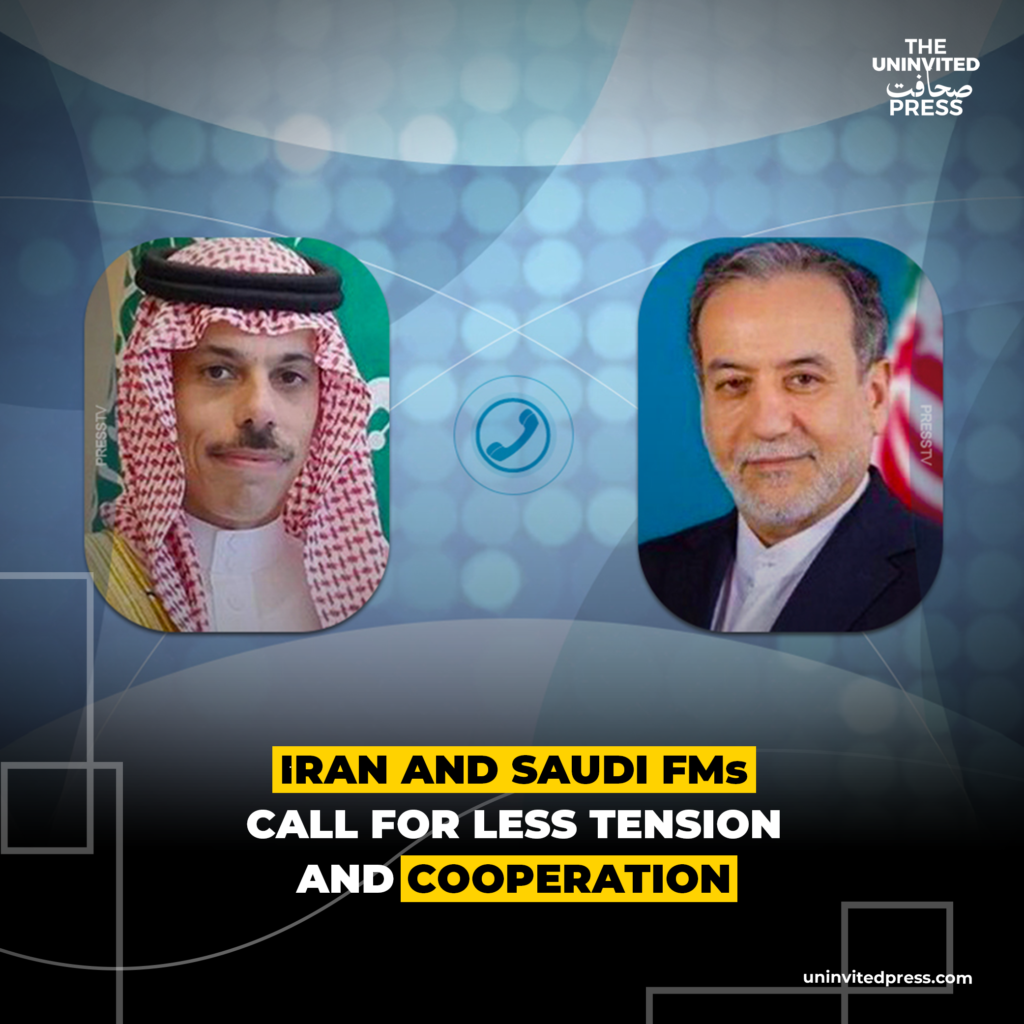
Foreign ministers of Iran and Saudi Arabia urge restraint, renewed dialogue, and stronger regional cooperation to reduce escalating tensions in the Middle East and promote long-term stability.
In a phone conversation on Wednesday, Iranian Foreign Minister Abbas Araghchi and his Saudi counterpart Prince Faisal bin Farhan Al Saud emphasised the need for sustained diplomatic efforts and closer coordination among regional countries to ease tensions and prevent further escalation in West Asia.
The call comes at a critical time as the Middle East grapples with ongoing volatility, including the aftermath of recent conflicts involving Israel, the United States, and Iranian retaliatory actions. Both sides reviewed the latest regional developments and underscored the importance of preserving security and stability across the region.
According to statements from both foreign ministries, the ministers highlighted “greater regional cooperation” as essential to avert conflict and promote peace. Araghchi, who was in Beijing for separate talks with Chinese officials at the time of the call, and Prince Faisal discussed ways to strengthen dialogue among West Asian nations.
Iran-Saudi Rapprochement Strengthens Regional Stability:
The conversation reflects the continued improvement in ties between Tehran and Riyadh since the China-brokered reconciliation agreement in March 2023, which restored full diplomatic relations after years of hostility. The two countries have since reopened embassies and engaged in high-level meetings.
“Iran and Saudi Arabia are pivotal players whose cooperation-or lack thereof-can shape the trajectory of regional security,” a Middle East diplomat told Al Jazeera, speaking on condition of anonymity.
Dialogue Emphasises Calm and Regional Security:
The call follows a period of intense diplomatic activity. Araghchi has been actively engaging international partners, including recent indirect talks involving the US, while Saudi Arabia has positioned itself as a key mediator and stabilising force in Gulf affairs.
Both countries have expressed concerns over the potential for wider conflict that could destabilise energy markets and economic recovery efforts. Saudi Arabia, as a major oil producer and leader in the Gulf Cooperation Council, and Iran, with its influence across the “Axis of Resistance,” share an interest in preventing uncontrolled escalation.
No specific agreements were announced from the call, but both ministries described the exchange as constructive and focused on de-escalation.
Road ahead:
Observers say continued high-level contacts between Tehran and Riyadh could open doors for broader regional initiatives, potentially including economic partnerships, security dialogues, and joint efforts on issues like Yemen and the wider Gulf security architecture.
As tensions persist across multiple fronts in the Middle East, the emphasis on diplomacy by two of the region’s most influential powers sends a measured signal of restraint amid uncertainty.