

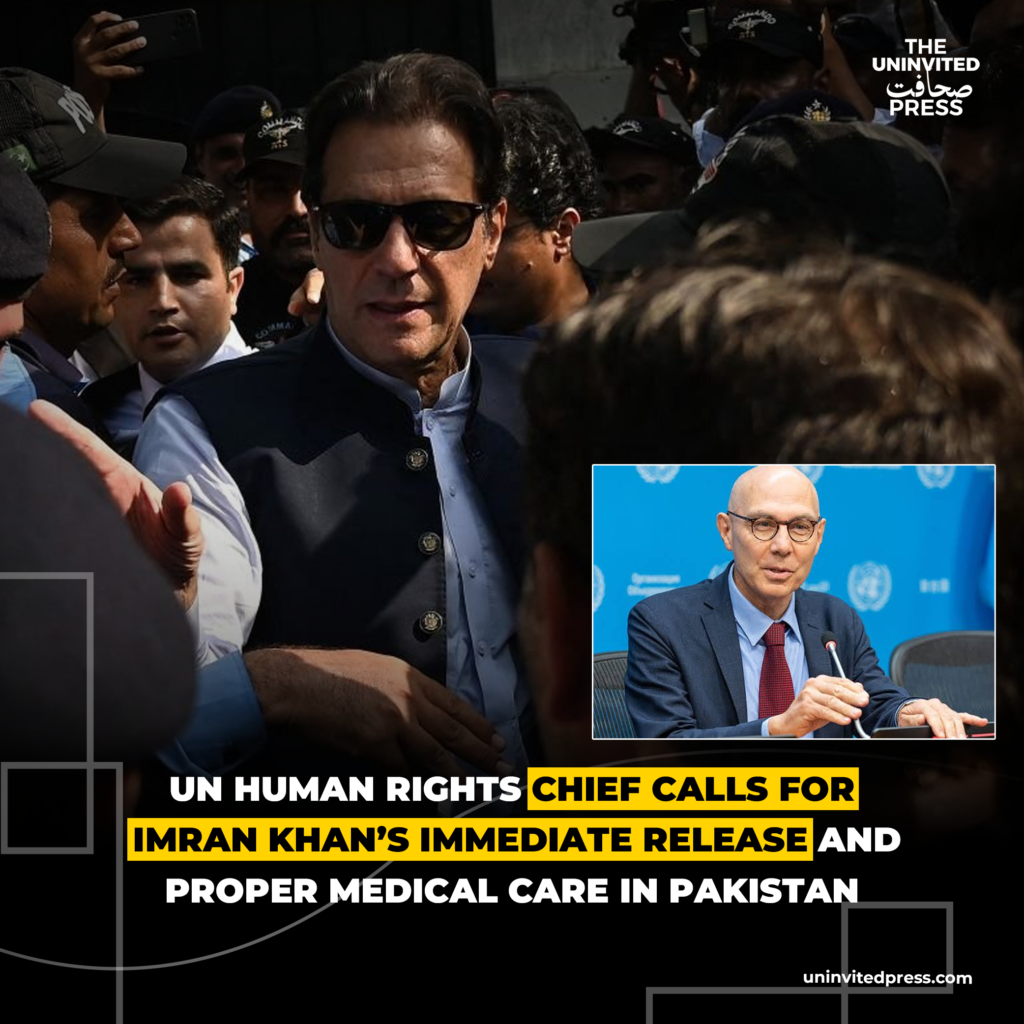
Volker Türk urges Pakistani authorities to treat the jailed former prime minister humanely and use his release as a confidence-building step to ease political tensions.
United Nations High Commissioner for Human Rights Volker Türk has called for the immediate release of former Pakistani Prime Minister Imran Khan, urging authorities to ensure he receives proper medical treatment and to take steps to de-escalate political tensions surrounding his prolonged detention.
Speaking in an interview with CNN’s Christiane Amanpour, Türk said: “I call for (Imran Khan’s) release. I call for his proper treatment, and I actually call for de-escalation. We need to diffuse the political tensions that are around this case, which means that a confidence-building measure between the opposition and the government could be his immediate release.”
Türk noted that he had previously raised the case privately through diplomatic demarches and was now making the appeal publicly. He stressed the need for Pakistani authorities to respect international legal standards on detention and treatment of prisoners. The situation, he added, extends beyond one prominent case, pointing to broader concerns about the detention of journalists, human rights defenders and opposition figures.
Concerns Grow Over Imran Khan’s Health and Jail Conditions:
The appeal comes amid growing alarm over Khan’s health and conditions at Adiala Jail in Rawalpindi, where the 74-year-old Pakistan Tehreek-e-Insaf (PTI) founder has been held since August 2023. Khan and his wife, Bushra Bibi, were sentenced to lengthy prison terms in the Toshakhana-II case involving allegations of unlawfully retaining state gifts.
In a letter to Pakistan’s top judges released on 16 November, Khan warned that his health was deteriorating dangerously. He reported severe blood pressure spikes and said doctors had cautioned of the risk of brain haemorrhage or cardiac arrest. He also raised concerns about his wife’s eye condition, saying she risked permanent vision loss. Khan alleged he had been held in solitary confinement for up to 22 hours a day since late December 2025, with restricted access to family, lawyers and reading materials. He said court orders requiring better medical care had not been implemented.
Amnesty International has echoed these concerns, reporting that Khan has had almost no family visits since December 2025 (apart from limited meetings with his sister) and has been denied consistent access to independent doctors despite a Supreme Court directive. The organisation also highlighted Bushra Bibi’s medical needs and called for an end to what it described as the political persecution of the family.
UN Human Rights Chief Raises Concerns Over Imran Khan’s Detention:
Khan, who served as prime minister from 2018 until his ouster through a no-confidence vote in 2022, faces multiple legal cases that he and his party maintain are politically motivated. PTI supporters and human rights groups have long argued that his detention forms part of a wider crackdown on the opposition.
Türk’s intervention underscores international unease about the state of political freedoms and the rule of law in Pakistan. He called for greater access for detainees to legal counsel, family members and medical care as essential steps toward restoring confidence and enabling meaningful political dialogue.
Pakistani authorities have previously maintained that Khan receives appropriate medical attention and that the cases against him are being handled through the courts. No immediate official response to Türk’s latest public call was available at the time of writing.
The UN human rights chief’s remarks add to mounting international scrutiny of Khan’s detention at a time of continued political polarisation in Pakistan.