

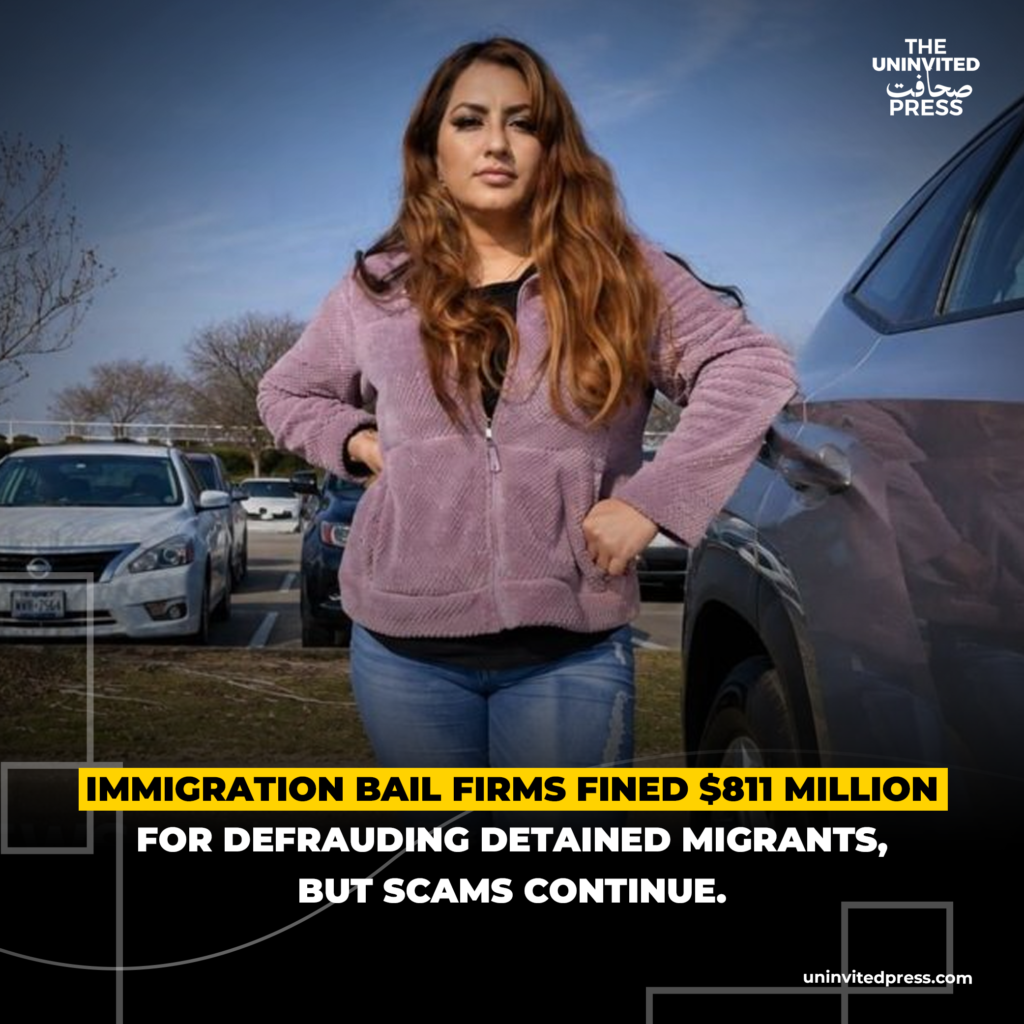
Despite a landmark US court judgment against predatory bond companies, investigations show related operations kept taking money from vulnerable families while people remained locked up.
US immigration bail companies that were ordered to pay more than $811 million for running a “predatory immigrant-services scam” against detained migrants have continued similar practices under new or related entities, according to an investigation that has left families out of pocket and people stuck in detention.
In 2024, a federal judge sided with the Consumer Financial Protection Bureau (CFPB) and attorneys general from New York, Virginia and Massachusetts, finding Libre by Nexus and its parent company liable for deceptive tactics. The ruling imposed roughly $231 million in restitution for consumers and hundreds of millions more in civil penalties against the firms and three principals-Richard Ajin, William Donovan and Robert Moore-bringing the total to about $811 million.
The companies marketed themselves as a way for families to secure the release of relatives held in Immigration and Customs Enforcement (ICE) detention by posting immigration bonds. In practice, regulators and the court found, they charged high non-refundable monthly fees that clients often believed were going toward the bond itself, forced people to wear GPS ankle monitors, and used contracts that many Spanish-speaking migrants did not fully understand.
Immigration Firm Accused of Taking Money Without Securing Detainees’ Release:
Although Libre by Nexus appeared to shut down after the ruling, public records and interviews with clients and former employees show a web of interconnected businesses kept collecting money. Assets, customer lists and records were transferred for nominal sums shortly after the injunction. One successor entity, Libre Immigration Services (LIS), continued to take payments from families seeking to free detained relatives.
Mildred Juarez, held in a Texas immigration detention centre, said her friends wired $2,600 to LIS on the recommendation of her lawyer. The company said it would begin the process of paying her immigration bond. Days passed with no release. She remained detained for a month until another bail agent secured her freedom after additional money was raised. An LIS email claimed a cash bond had been sent to ICE, but it had not been processed as promised.
Similar accounts have emerged of families paying fees only to discover their relatives were still locked up, with money effectively disappearing into ongoing “programme” charges rather than securing release.
Criminal cloud and regulatory gaps:
Some of the original principals face additional legal problems. Moore has been imprisoned after a conviction related to fraudulent tax returns for the firm. Donovan and others have faced further fraud-related charges, and one is accused of serious separate offences.
Advocates say the case exposes deeper problems in the US immigration detention system, where private companies profit from the desperation of people who often lack English fluency, legal knowledge or financial resources. Detention itself creates pressure to pay whatever is asked simply to reunite families, while oversight of bond and “assistance” companies has proved weak even after large judgments.
The CFPB and state officials had described the original scheme as trapping thousands of immigrant families into costly, long-term arrangements that left them financially drained. The fact that similar practices reportedly continued years after the $811 million order raises questions about enforcement and the ability of regulators to shut down networks that rebrand or transfer assets.
Immigrant rights groups have long warned that the combination of prolonged detention, limited access to counsel, and aggressive private operators creates fertile ground for exploitation. For the families who paid and still waited, the court victory offered little immediate relief.