

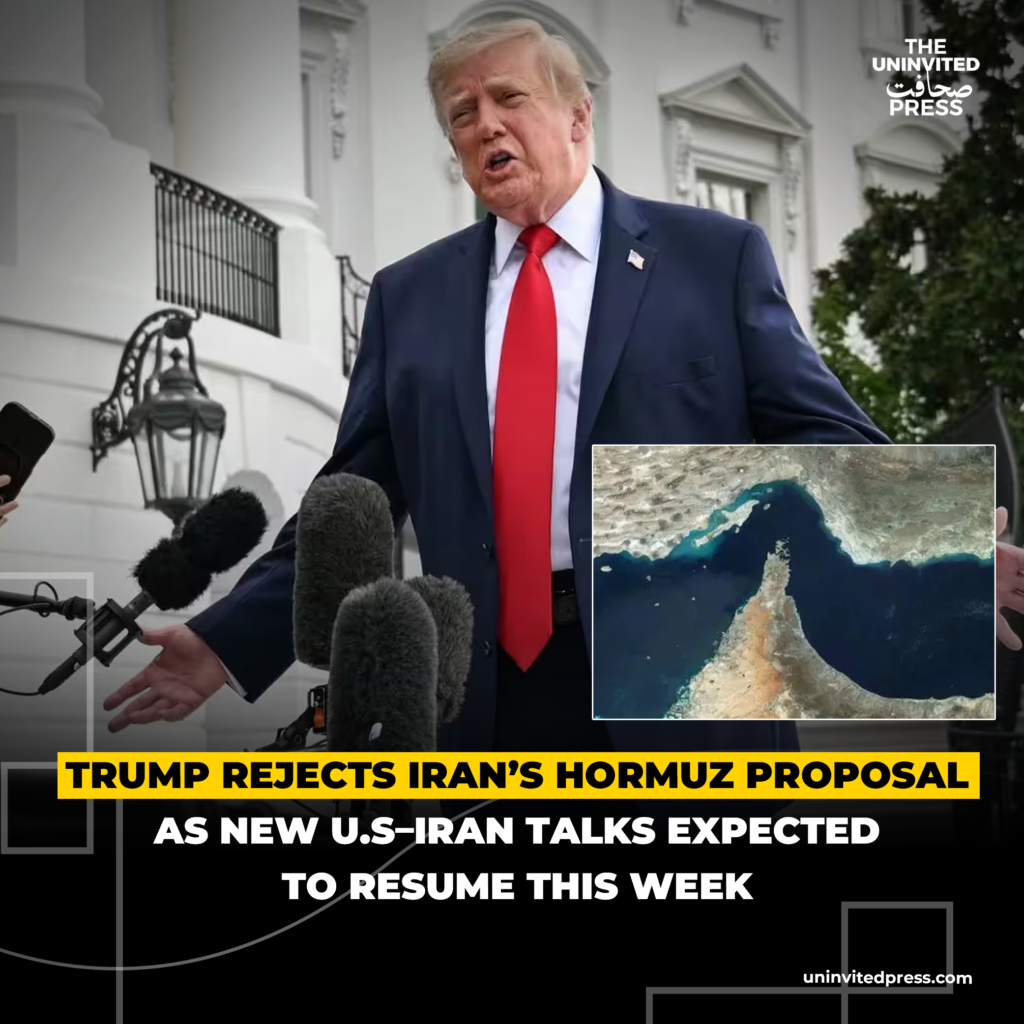
Tehran insists only diplomacy can end seven-month conflict while Washington signals further indirect negotiations through Qatari mediators.
United States President Donald Trump has publicly rejected Iran’s latest proposal to reopen the Strait of Hormuz within seven days, even as he indicated that another round of indirect talks between Washington and Tehran is expected this week.
Speaking to reporters outside the White House on Saturday, Trump dismissed the Iranian offer as unacceptable. “I reject their proposal,” he said. “They want to make a deal where they open the Strait immediately because they’re losing so badly… That deal would not be acceptable.”
The proposal, conveyed through Qatari mediators during discussions on the sidelines of the United Nations General Assembly in New York, called for Iran to reopen the vital waterway and resume nuclear negotiations within a week. In return, Tehran sought the lifting of the US naval blockade on Iranian ports, relief from sanctions affecting oil sales, and the reinstatement of a regional ceasefire that would also cover Lebanon.
Iran Sets Conditions for Reopening Strait of Hormuz:
Iranian Foreign Minister Abbas Araghchi said the conditions mirrored those contained in a June memorandum of understanding that later collapsed. “Our conditions are clear, and any move toward reopening the Strait of Hormuz is contingent on these conditions being met,” he posted on social media. “Only a negotiated solution can get them out of this deadlock.”
CORE CONDITIONS:
- Immediate lifting of the US naval blockade on Iranian ports.
- Waiving/easing of sanctions on Iranian oil sales and exports.
- Release of frozen Iranian assets (estimated at least $12 billion in some reports).
- Reinstatement of a regional ceasefire / end to hostilities across all fronts, including Lebanon (and in some statements, broader “resistance” fronts and Yemen).
TIMELINE UNDER THE PLAN:
- The seven-day clock starts the moment the United States accepts the proposal.
- Technical and preparatory steps would take roughly 4-5 days.
- The Strait of Hormuz would reopen on day 6.
- Broader talks (including on Iran’s nuclear programme) would begin on day 7.
Araghchi noted that while Trump had publicly rejected the plan, mediators had not yet delivered a definitive official US response. He said Iran would continue to wait for that formal reply and stressed that Tehran had never closed the door to diplomacy.
Despite the rejection, Trump told Media in a phone interview on Sunday that he expects further talks this week. “They want to make a deal, but it is not the deal that I want to make. It is what we would have maybe agreed to a year ago. They overplayed their hand,” he said.
Regional mediators, led by Qatar, have continued shuttling messages between the two sides. Sources familiar with the discussions said another round of indirect talks could take place as early as Monday, with possible adjustments to the proposed text still under discussion.
US-Iran Tensions Deepen Over Strait of Hormuz Talks:
The Strait of Hormuz, through which roughly one-fifth of the world’s oil and liquefied natural gas typically flows in peacetime, has been at the centre of the nearly seven-month conflict between the United States and Iran. Traffic through the waterway has been severely disrupted, contributing to sharp rises in global energy prices.
US officials have argued that Washington already maintains effective control of the strait and that Iran is seeking relief primarily because of economic pressure. Treasury Secretary Scott Bessent said the administration’s sanctions campaign is “delivering results,” while US Ambassador to the United Nations Mike Waltz accused Tehran of demanding “everything up front” without demonstrating good faith.
Iranian officials, for their part, have framed their proposal as a practical path out of stalemate, rooted in earlier understandings reached between the two sides. President Masoud Pezeshkian, speaking after attending the UN General Assembly, said the process would begin the day the United States accepted the terms.
The latest exchange underscores the deep gaps that remain. Washington continues to press for meaningful nuclear concessions and a more comprehensive agreement, while Tehran prioritises an end to the naval blockade, sanctions relief, and a halt to regional hostilities.
As mediators work to keep channels open, the coming days will test whether both sides can narrow their differences enough to prevent a further escalation of a conflict that has already reshaped energy markets and regional security calculations.