

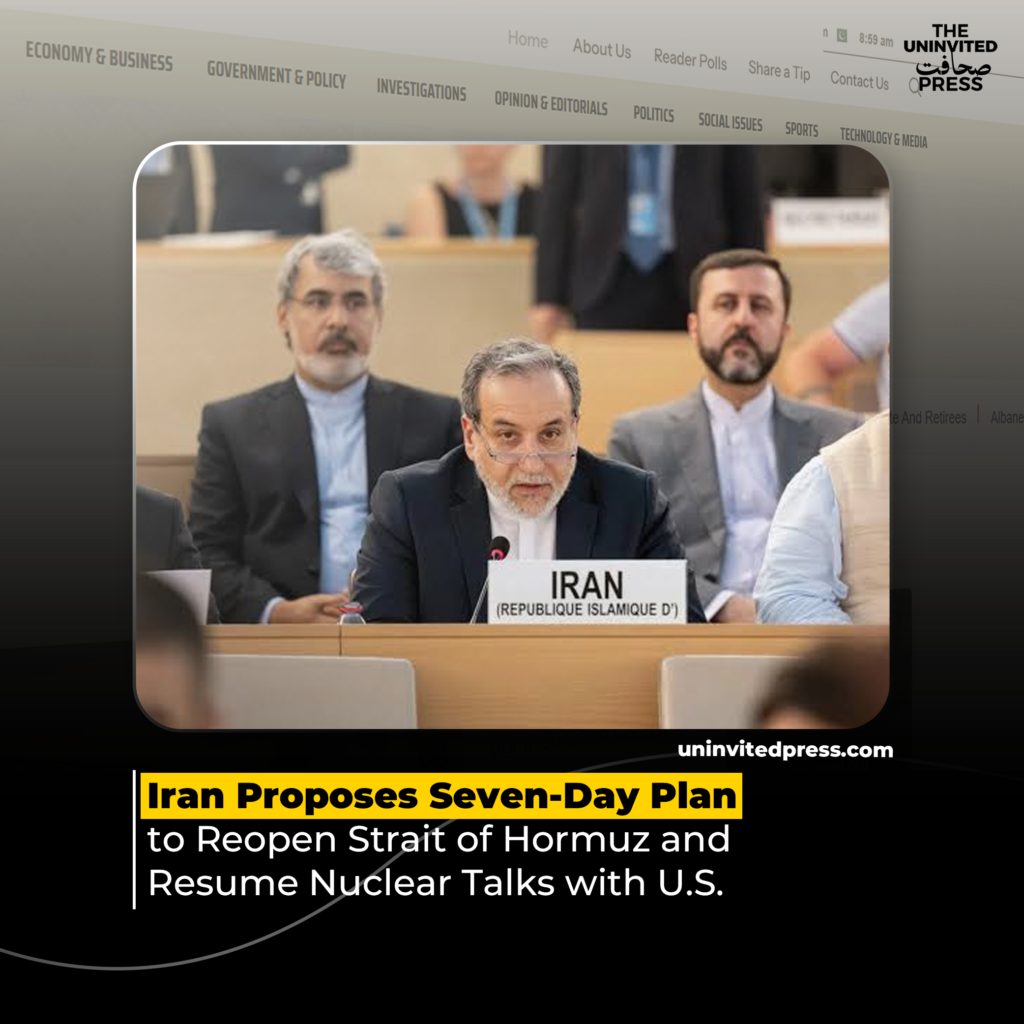
Foreign Minister Abbas Araghchi says Tehran has submitted a roadmap via Qatar that would halt hostilities, restore shipping and open negotiations if Washington meets key conditions.
Iran has proposed a seven-day plan to reopen the strategically vital Strait of Hormuz and resume nuclear negotiations with the United States, Foreign Minister Abbas Araghchi announced on Friday, saying the choice now rests with Washington.
Speaking to reporters at United Nations headquarters in New York, Araghchi said Tehran had formally conveyed the roadmap to the US through Qatar. Under the proposal, the seven-day timeline would begin the moment Washington accepts the plan. Initial steps would take four to five days, the strait would reopen on the sixth day, and talks on mutually agreed subjects-including Iran’s nuclear programme-would begin on the seventh.
“If the necessary conditions are met, the strait can be reopened and normal maritime passage restored within seven days,” Araghchi said. “The choice now rests with the United States. Iran does not accept coercion, threats or intimidation, and Iran will not surrender its sovereign rights under pressure.”
Iran Sets Conditions for Reopening Strait of Hormuz:
According to Iranian officials, the conditions largely mirror elements of a memorandum of understanding signed between the two sides in June that later collapsed. Washington would be required to lift its naval blockade of Iranian ports, waive sanctions on Iranian oil sales, release an estimated $12 billion in frozen Iranian assets, and observe a ceasefire covering the wider region, including Lebanon and Yemen. In return, Iran would reopen the Strait of Hormuz-through which roughly a fifth of the world’s seaborne oil trade normally passes-and enter comprehensive talks.
A senior Iranian official told Media that Tehran would not make nuclear concessions simply in exchange for reopening the waterway. Detailed negotiations on the nuclear programme, the official said, could begin only after the United States first meets Iran’s demands. Iran continues to insist on its right to enrich uranium and has rejected shipping its highly enriched stockpile abroad, though it has previously signalled openness to diluting some material.
The proposal comes amid an ongoing conflict that began with US and Israeli strikes on Iran in late February. The fighting has disrupted energy markets, raised global oil prices and heightened regional tensions. A previous ceasefire arrangement expired in August after both sides accused each other of violations. US President Donald Trump has repeatedly stated that preventing Iran from obtaining a nuclear weapon is his top priority and has threatened further military action if diplomacy fails.
Iranian President Masoud Pezeshkian, also in New York for the UN General Assembly, expressed hope that a deal could be reached before the US midterm elections in November. He indicated that Iran would allow international nuclear inspectors into the country as part of any future agreement, provided the terms were negotiated.
Iran Ready to Reopen Strait of Hormuz if Deal Is Reached:
The Strait of Hormuz has become Tehran’s primary point of leverage. Iranian forces and allied groups have restricted or threatened shipping in the waterway for months, prompting a US-led naval presence and economic pressure on Iran. Reopening the strait would ease global energy concerns, but analysts note that any lasting solution will depend on whether the two sides can bridge deep differences over Iran’s nuclear programme, regional influence and sanctions relief.
Araghchi emphasised that Iran is prepared to implement the plan immediately upon US acceptance. “I can tell you if there is seriousness on the US side to come to a deal and reopen the Strait of Hormuz, everything is now prepared,” he said.
As of Saturday, Washington had not issued a formal public response, though US officials have indicated that discussions through mediators continue. The coming days will test whether the Iranian roadmap can break the current deadlock or whether the conflict and the associated economic disruption will persist.