

‘Betrayal of students’: Anger grows as fresh allegations of irregularities surface in India’s premier medical entrance exam, despite repeated promises of reform.
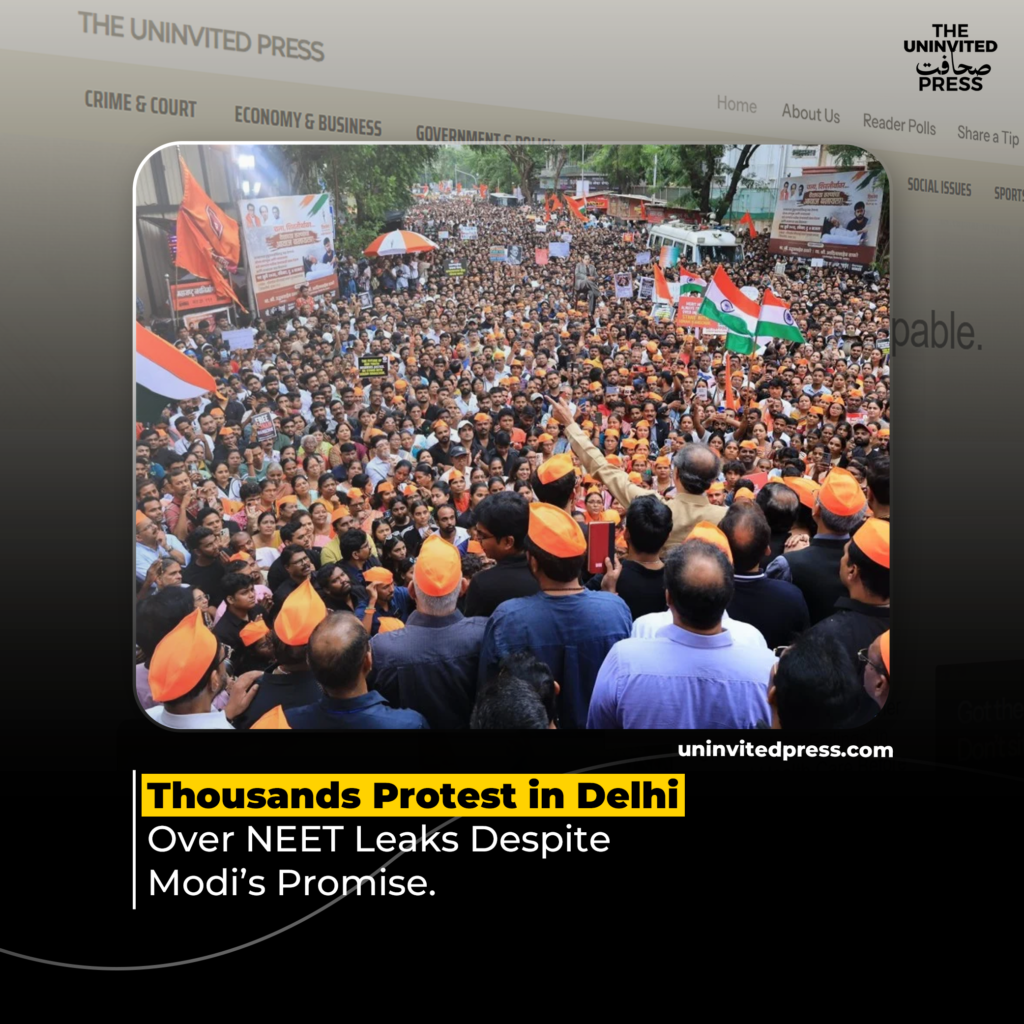
Tens of thousands of students, parents and opposition activists took to the streets of the Indian capital on Wednesday in one of the largest demonstrations yet against persistent leaks and irregularities in the National Eligibility cum Entrance Test (NEET), a controversy that has shaken public confidence in Prime Minister Narendra Modi’s flagship education initiatives.
Waving Indian flags and wearing orange caps and scarves-symbols often associated with student movements-protesters accused the government of failing to deliver on assurances to secure the examination process following major scandals in previous years. Many chanted slogans demanding a re-examination and accountability for those responsible for the leaks.
The protests come despite Modi’s public promises to overhaul the examination system and ensure “zero tolerance” for malpractice after the 2024 NEET paper leak crisis, which led to arrests, cancellations in some states, and widespread protests across the country.
Students Question NEET Integrity:
NEET, conducted by the National Testing Agency (NTA), serves as the single gateway for admission to undergraduate medical and dental courses across India. With over two million aspirants competing for a limited number of seats each year, the exam carries enormous stakes for students from diverse socio-economic backgrounds hoping to become doctors.
Critics argue that repeated leaks-allegedly involving organised gangs, corrupt officials, and coaching centres-have undermined the merit-based system and disproportionately affected students from smaller towns and lower-income families who rely on the exam for social mobility.
Opposition parties, including the Congress and regional outfits, have seized on the issue to accuse the Modi government of mismanagement and prioritising privatisation of education over strengthening public institutions. Protesters demanded the resignation of top NTA officials and a judicial inquiry supervised by the Supreme Court.
The government has defended its record, pointing to arrests made in connection with previous leaks and technological measures such as biometric verification and tighter security protocols introduced ahead of this year’s exam. However, fresh allegations of irregularities, including discrepancies in question papers and suspicious scoring patterns, have reignited fury.
NEET Protests Pressure Modi Government:
The protests reflect deeper frustrations with India’s competitive education system, where coaching industries worth billions of rupees have flourished amid intense pressure on young people. Reports of student suicides linked to exam stress and perceived injustices have further amplified calls for systemic change.
Education Minister Dharmendra Pradhan has described the protests as “politically motivated” and assured that the government remains committed to transparency. Yet, with parliamentary sessions often disrupted by the opposition on this issue, the controversy threatens to become a persistent thorn for the ruling Bharatiya Janata Party (BJP) ahead of key state elections.
Analysts say the NEET row highlights challenges in centralising a vast examination system serving a country of 1.4 billion people while battling entrenched corruption networks. Similar issues have plagued other national tests, raising questions about the sustainability of the current model.
Students’ groups have called for long-term reforms, including decentralisation of exams, stricter regulation of coaching centres, and greater investment in government schools and colleges to reduce reliance on a single high-stakes test.
As protests continue in Delhi and other cities, with more demonstrations planned, the Modi government faces mounting pressure to restore credibility to a process that shapes the future of India’s healthcare workforce. Many young protesters say their faith in the “New India” vision is being tested by what they see as broken promises on educational equity and integrity.