

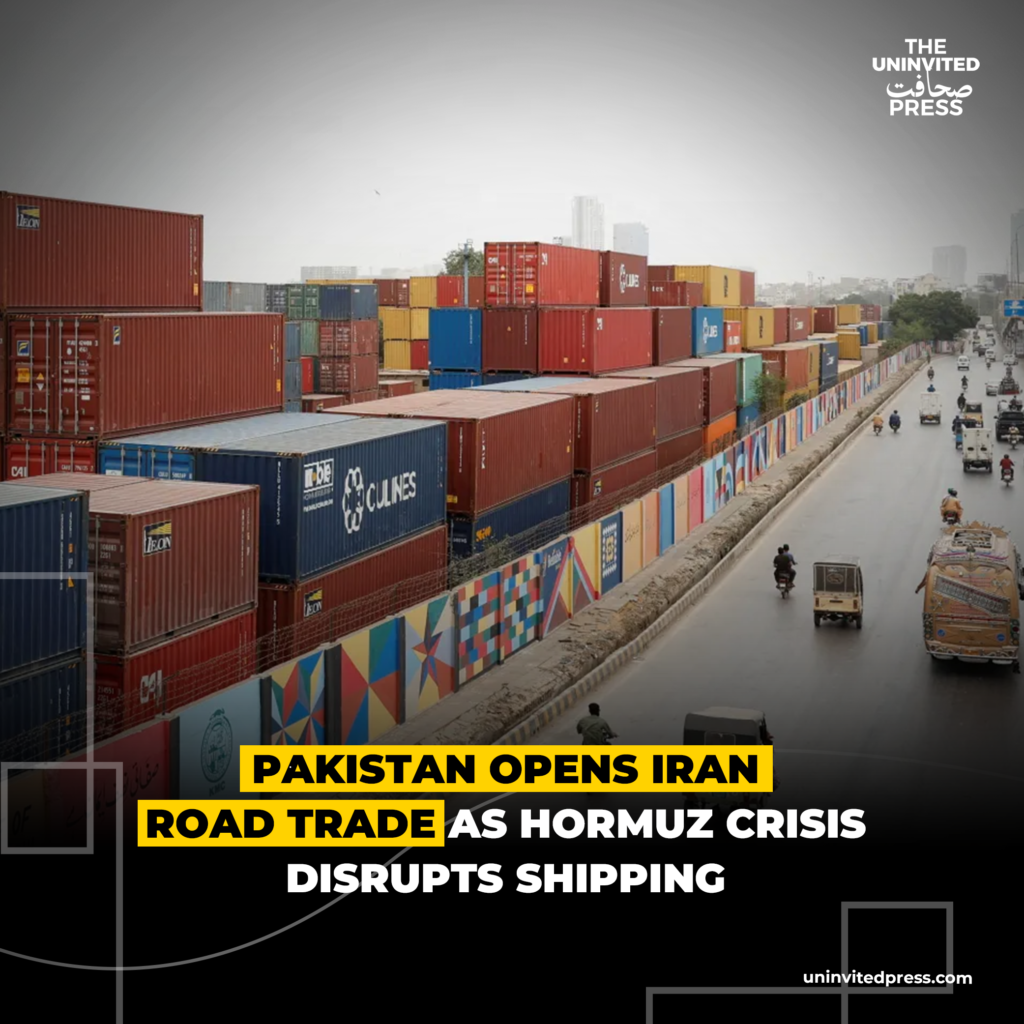
Islamabad moves to ease economic pressure by activating overland corridors, offering alternative supply lines as US naval operation in the Strait of Hormuz drives up global oil prices and disrupts maritime trade.
Pakistan has activated new overland trade routes with Iran, allowing the movement of goods and fuel through its territory as the US-led naval blockade of the Strait of Hormuz continues to paralyse key shipping lanes.
Pakistani officials confirmed the opening of several border crossings and upgraded road links, including the Taftan-Zahedan route, to facilitate bilateral trade and provide Iran with an alternative channel for essential imports and exports amid the ongoing crisis.
Alternative route amid maritime crisis:
The decision comes as the Hormuz blockade, now in its third week, has drastically reduced Iranian oil exports and severely disrupted commercial shipping in the Gulf. Shipping companies have rerouted vessels, causing delays, higher insurance costs, and a spike in global energy prices.
“Pakistan and Iran share a long border and historic ties. In these difficult times, we are committed to keeping trade flowing through safe land corridors,” said a senior Pakistani commerce ministry official, speaking on condition of anonymity.
Trucks carrying fuel, food commodities, machinery and consumer goods have already begun crossing the border in increased numbers, according to local traders and border authorities. The move is expected to help both countries mitigate the economic fallout from the naval standoff.
Economic lifeline for Iran and Pakistan:
For sanctions-hit Iran, the land route offers a vital lifeline to bypass the maritime restrictions. Iranian traders report growing interest in routing goods through Pakistan to reach Central Asian markets and even parts of South Asia.
Pakistan, facing its own economic challenges, stands to gain from increased transit fees, customs revenue and opportunities for its trucking and logistics sectors. However, officials in Islamabad are treading carefully to avoid direct confrontation with the United States, which has warned third countries against undermining its pressure campaign on Iran.
Regional Powers React to Pakistan-Iran Trade Shift Amid Hormuz Crisis:
The development has drawn mixed reactions across the region. Gulf states, already worried about energy market volatility, are monitoring the situation closely. India, which maintains strong ties with both Pakistan and Iran, has quietly welcomed alternative supply options for its energy needs.
China, a major investor in both countries through the China-Pakistan Economic Corridor (CPEC) and its relations with Iran, is seen as a behind-the-scenes supporter of enhanced connectivity that could eventually link into broader Belt and Road networks.
Human rights and humanitarian organisations have welcomed the move, noting that overland trade could help ease potential shortages of food and medicine inside Iran, where civilians are bearing the brunt of the economic squeeze.
Pakistani Prime Minister’s Office say the government is following a policy of “strategic neutrality,” maintaining relations with all sides while focusing on national economic interests. Foreign Minister Ishaq Dar is expected to visit Tehran and other regional capitals for talks on trade and security.
Analysts caution that expanding trade routes with Iran could strain Pakistan’s relations with the United States, which is pushing allies to isolate Tehran economically.
As the Hormuz crisis continues, Pakistan’s move reflects a broader regional shift toward pragmatic responses amid global economic uncertainty and geopolitical tensions.