

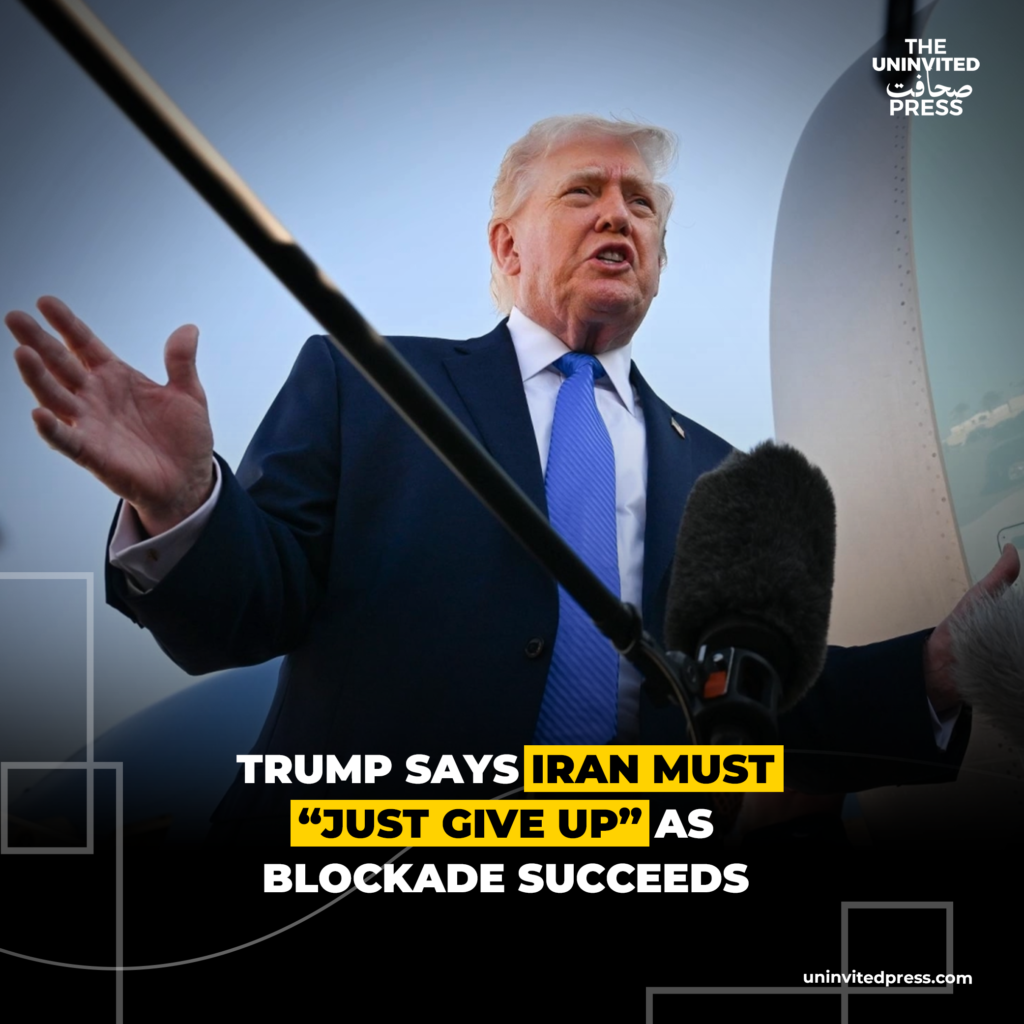
US President escalates rhetoric amid naval operation in the Strait of Hormuz, claiming success in choking Iranian exports while Tehran vows to resist what it calls an “act of economic war”.
US President Donald Trump has declared that Iran “must just give up” as a US naval blockade in the Strait of Hormuz enters its third week, claiming the operation is successfully crippling Tehran’s oil exports and economy.
Speaking to reporters near Air Force One, Trump praised the military pressure, stating the blockade was “working better than anyone thought” and warning that continued resistance would only bring more suffering to the Iranian people.
“Iran is going to have to just give up. They have no choice,” Trump said, adding that the US and its allies were prepared to maintain the pressure “for as long as it takes.”
Blockade’s impact and Iranian defiance:
The US-led naval operation, part of the broader military campaign launched in late February, has severely restricted oil tanker movements through the Strait of Hormuz, a critical chokepoint carrying about one-fifth of global oil supplies. Shipping data and satellite imagery show a sharp drop in Iranian crude exports since the blockade intensified.
Iranian officials have condemned the move as a violation of international law and an act of aggression. Foreign Ministry spokesperson Nasser Kanaani described it as “piracy on an international scale” and warned that Iran would respond “by all available means,” including potential disruption of navigation in the Gulf.
Tehran has already threatened to close the strait entirely if the blockade continues, a step that could send global energy prices soaring further and trigger a wider regional crisis.
Iran Crisis Sparks Global Tensions and Economic Concerns:
The remarks come as Defence Secretary Pete Hegseth faces congressional scrutiny over the rising costs of the Iran campaign. Critics warn the aggressive U.S. posture could escalate into a wider war and is already impacting global energy markets, driving up fuel prices for Americans.
Republicans support the hardline approach, citing the need to prevent Iran from obtaining nuclear weapons and to protect Israel. However, Democrats and analysts question the legality of ongoing naval operations without congressional approval.
In the Middle East, reactions remain critical. Gulf states have expressed concern over supply disruptions, while Iraq, Qatar, and Turkey are urging de-escalation and renewed diplomacy. The UN Security Council is expected to discuss the crisis in emergency talks.
Human rights groups warn the pressure could deepen shortages of food, medicine, and fuel in Iran, worsening conditions for civilians already affected by sanctions.
US Pressure on Iran Raises Fears of Wider Conflict:
As the Trump administration maintains its maximum pressure campaign, analysts say the strategy carries significant risks. While the blockade appears to be squeezing Iran’s revenues, there are growing fears that Tehran may lash out through proxy militias or asymmetric attacks, further destabilising the region.
Iranian Supreme Leader Ayatollah Ali Khamenei has reportedly rejected any negotiations under duress, insisting that “resistance” remains the only path.
Whether Trump’s call for Iran to “just give up” will hasten a breakthrough or instead prolong a dangerous standoff remains to be seen.