

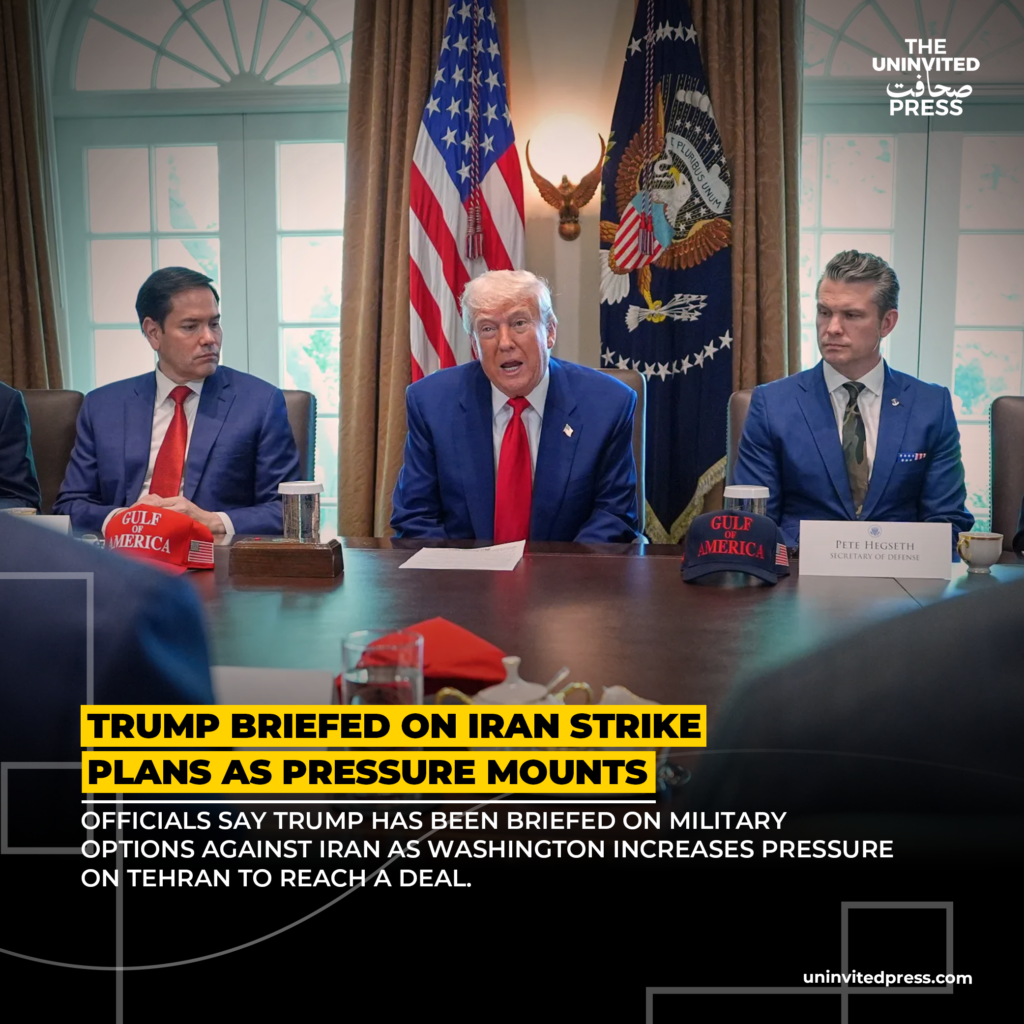
US President receives military options for escalated action amid ongoing naval blockade and economic squeeze on Tehran, as Washington pushes for a decisive outcome in the Gulf crisis.
US President Donald Trump has been briefed on fresh military strike options against Iran, according to senior administration officials, as the United States ramps up pressure on Tehran to capitulate amid a tightening naval blockade in the Strait of Hormuz.
The briefing, which included Defence Secretary Pete Hegseth and other top national security officials, focused on potential targets inside Iran should diplomatic efforts or the current blockade fail to force concessions, sources familiar with the meeting told reporters.
US Weighs Military Options as Trump Seeks “Maximum Leverage” on Iran:
The discussions as covering both limited precision strikes on remaining Iranian military infrastructure and broader scenarios, though they stressed that no final decision for new attacks has been made.
Trump, flanked by senior advisers in the Situation Room, was said to have emphasised the need for “maximum leverage” to bring Iran to the negotiating table on terms favourable to the US and its allies.
“The president is being kept fully informed of all options,” a White House official said. “He wants this resolved quickly, and he is prepared to use all elements of American power.”
Blockade and economic warfare:
The latest briefing comes as the US-led naval operation continues to choke off Iranian oil exports through the Strait of Hormuz. Shipping data shows Iranian crude loadings have plummeted, contributing to higher global energy prices and growing concerns about supply chain disruptions.
Iran has denounced the blockade as “economic terrorism” and warned of retaliatory measures, including possible attacks on commercial shipping and activation of regional proxy forces.
Tehran has so far refused to bow to US demands, with Supreme Leader Ayatollah Ali Khamenei reiterating that Iran “will not surrender” to pressure.
Global Alarm Grows Over Iran Crisis Amid Rising Diplomatic Tensions:
The developments have triggered alarm across the Middle East. Gulf Arab states, while wary of Iranian influence, are increasingly concerned about the risk of a wider conflict that could engulf the region and further damage their economies.
Pakistan’s recent decision to open overland trade routes with Iran is being seen by some analysts as an attempt by regional players to create breathing space and alternative pathways amid the maritime crisis.
China and Russia have criticised the US approach at the United Nations, calling for an immediate de-escalation and a return to diplomacy. European allies have expressed cautious support for pressure on Iran but urged restraint to avoid an all-out war.
In Washington, the briefing has intensified partisan divisions. Republicans support a hardline approach, while Democrats and moderates question its risks and rising costs, referencing recent scrutiny of Defence Secretary Hegseth over war expenses.
Humanitarian groups warn that further escalation could worsen shortages of food, medicine, and fuel in Iran, already strained by sanctions and blockade measures.
As Trump considers his next steps, analysts say the coming days may be critical, with uncertainty over whether pressure will lead to a deal or wider conflict.