

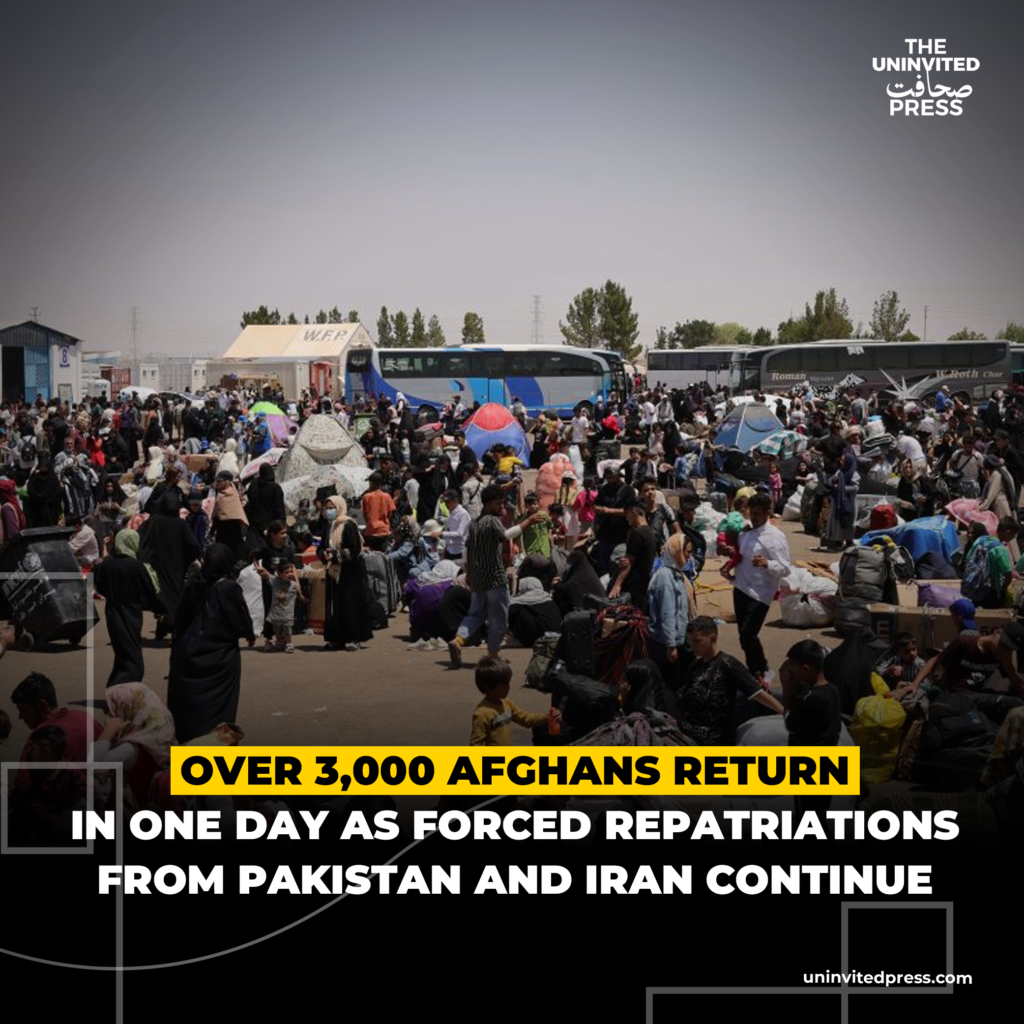
Mass deportations leave thousands stranded at borders amid humanitarian concerns and calls for protection of vulnerable refugees.
More than 3,000 Afghans were repatriated in a single day as Pakistan and Iran continue large-scale forced returns of Afghan nationals, adding to the mounting pressure on the Taliban-led government and international aid organisations struggling to manage the influx.
According to officials and eyewitness accounts, buses and other vehicles ferried hundreds of families across the border, many carrying their few remaining belongings. Crowded scenes at transit points showed men, women and children waiting amid tents, luggage and limited facilities provided by aid groups such as the World Food Programme.
The latest wave of returns comes amid sustained deportation campaigns by both neighbouring countries, which have cited security concerns, economic burdens and undocumented status as reasons for the expulsions.
Afghan Returns Strain Humanitarian Aid:
Pakistani authorities have accelerated deportations since late 2023, targeting Afghan refugees who fled the Taliban takeover in August 2021. Iran has similarly stepped up returns, with many Afghans facing arrest, detention and forced expulsion after years of residence.
Humanitarian organisations report that returnees often arrive with minimal resources, facing challenges in reintegration into a country still grappling with economic collapse, food insecurity and limited services under Taliban rule.
“These returns are happening at a pace that is overwhelming absorption capacity,” said a UNHCR spokesperson, noting that many families lack housing, livelihoods or access to basic healthcare upon arrival.
Deportations Deepen Afghanistan's Crisis:
Aid agencies have warned of a growing humanitarian emergency. Returnees include vulnerable groups such as women, children, the elderly and individuals with medical conditions. Reports from border areas describe overcrowded conditions, inadequate shelter and shortages of food and water.
The Taliban administration has called on the international community to support reintegration efforts, while also urging Afghans abroad to return voluntarily. However, many deportees say they face risks of persecution, particularly former government workers, women’s rights activists and members of ethnic or religious minorities.
Pakistan and Iran maintain that the returns are necessary due to domestic challenges, including militant attacks attributed to groups operating from Afghan soil and the strain on local resources. Afghan officials have criticised the moves as inhumane and called for more orderly, voluntary repatriation processes.
Winter Deepens Afghan Humanitarian Crisis:
As winter approaches, concerns are rising over the welfare of those forced back to a country where nearly half the population requires humanitarian assistance. The UN and partners have appealed for increased funding to support shelter, cash assistance and job creation programmes.
The mass returns highlight the precarious situation of millions of Afghans displaced internally or living as refugees in neighbouring states since the Taliban’s return to power. With borders tightening and protection space shrinking, the coming months are expected to see continued large-scale movements.
For many of the newly arrived families, the journey home has been one of uncertainty, loss and the challenge of rebuilding lives in a vastly changed Afghanistan.