

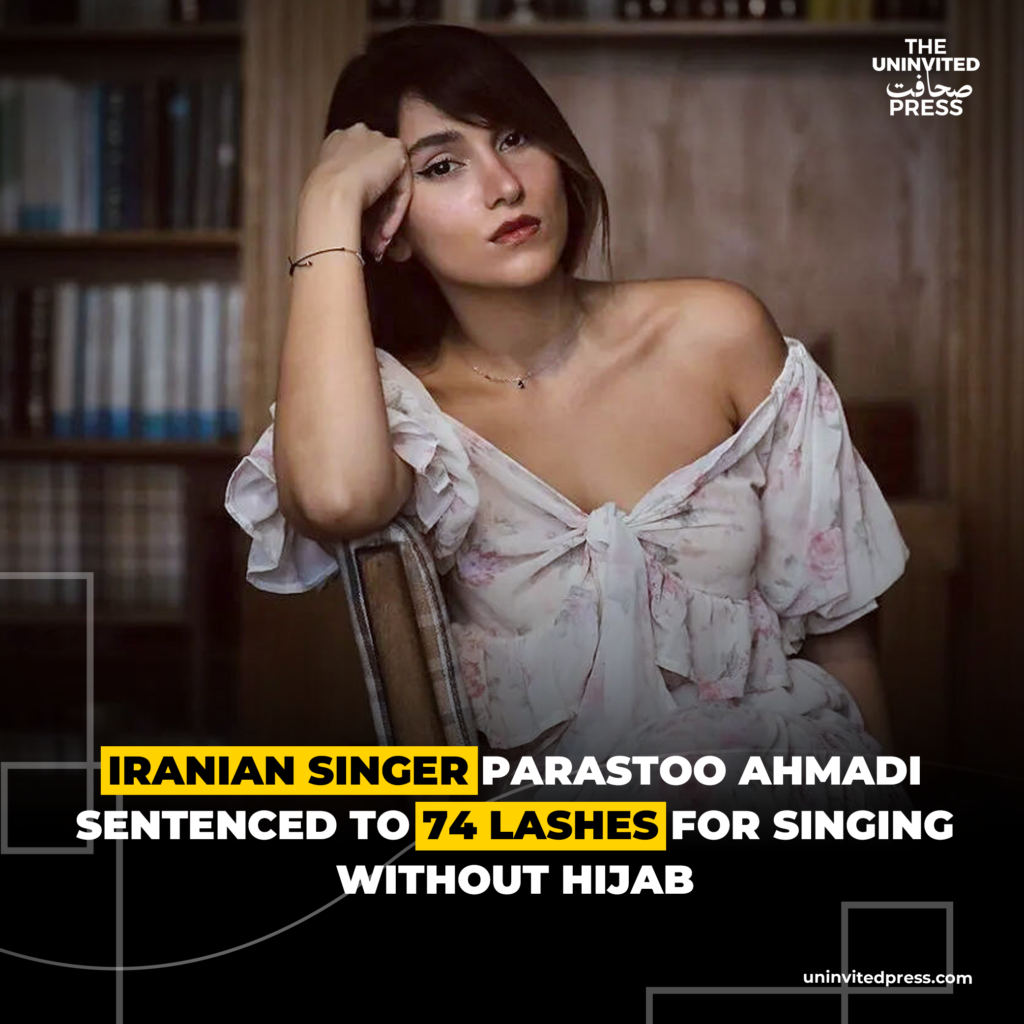
Punishment highlights ongoing crackdown on artists and women defying mandatory hijab rules amid broader repression.
Iranian authorities have sentenced popular singer Parastoo Ahmadi and eight members of her production team to 74 lashes each, along with two-year bans on travel and artistic activities, for a 2024 livestreamed concert in which she performed without a hijab.
The ruling, issued by a criminal court in Qom province, comes after Ahmadi, 29, released footage of the “Caravanserai Concert” on her YouTube channel. In the video, which has garnered nearly three million views, she sang the patriotic song From the Blood of the Youth in an empty theatre alongside male musicians.
Court documents cited charges including “offending public decency” and producing “vulgar and immoral content” online, invoking articles of Iran’s Islamic Penal Code that criminalise appearances without mandatory hijab and the promotion of acts deemed immoral.
Crackdown on artistic expression:
The sentence underscores the Iranian regime’s continued strict enforcement of hijab laws and restrictions on women’s public performances, particularly solo singing, which hardline clerics often view as provocative. Female artists face severe limitations, including bans on performing before mixed-gender audiences.
Human rights advocates described the punishment as emblematic of unchanged repression despite external pressures and recent geopolitical shifts. Bahar Ghandehari of the Center for Human Rights in Iran called it “yet another reminder that human rights conditions in Iran have not changed.”
The decision comes shortly after reports of a US-backed ceasefire agreement with Iran, raising questions about the regime’s priorities in domestic policy even as it engages in international diplomacy.
Artist Punishment Fuels Rights Concerns:
Ahmadi’s case echoes the struggles of countless Iranian women and artists since the 2022 death of Mahsa Amini, which sparked the “Woman, Life, Freedom” protests. Many performers and creators have faced arrests, floggings, and professional bans for defying compulsory veiling or producing content deemed subversive.
The production team, including musicians Ehsan Beiraqdar and Soheil Faqih Nasiri, received identical sentences, reflecting collective punishment for collaborative artistic work.
Iranian authorities have not publicly commented on the ruling. The sentence is preliminary and subject to appeal, but such decisions are frequently upheld in the judiciary’s conservative framework.
As images of Ahmadi circulate widely online, the case has drawn international attention, with activists and diaspora communities condemning the corporal punishment as archaic and disproportionate. It serves as a stark illustration of the Islamic Republic’s determination to control cultural expression and enforce gender norms, even in virtual spaces.