

Pezeshkian’s remarks come amid ongoing diplomatic efforts following a fragile ceasefire and a recent memorandum of understanding between Tehran and Washington.
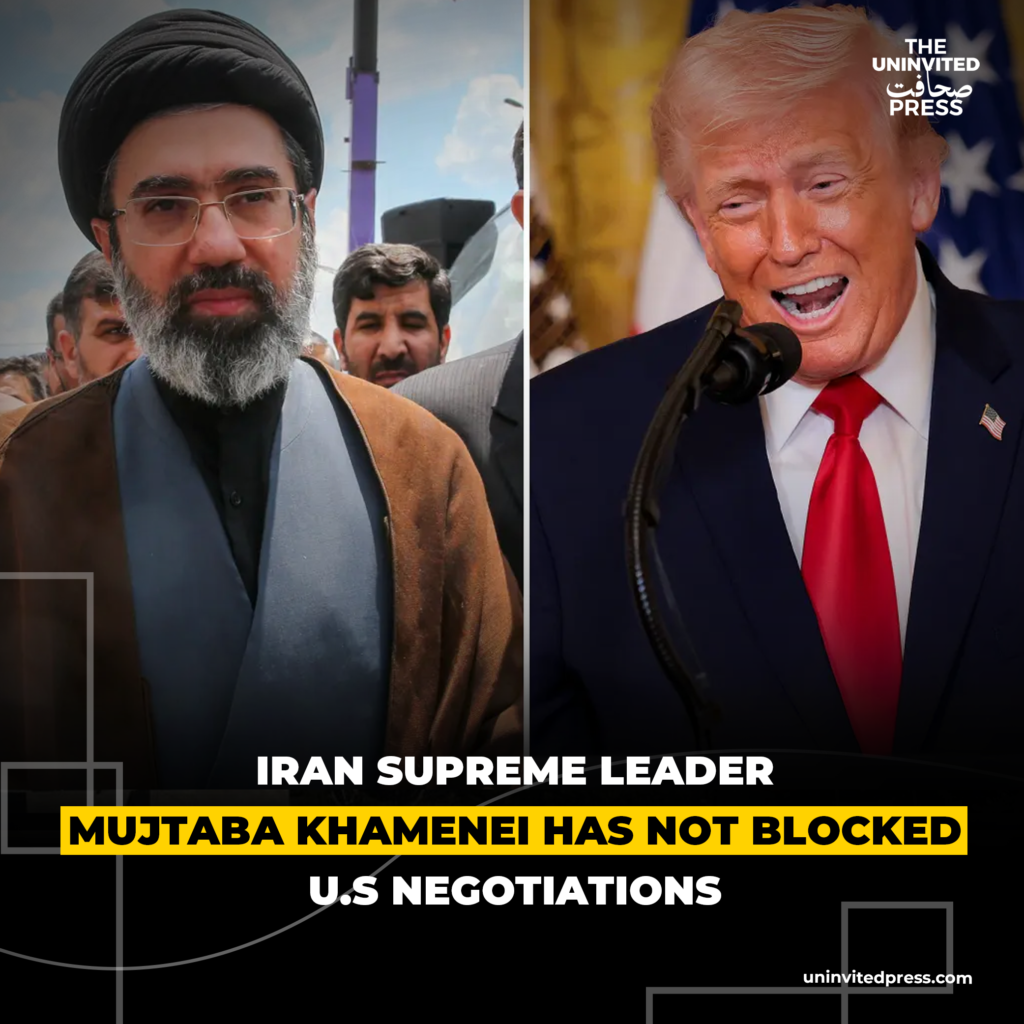
Iranian President Masoud Pezeshkian has stated that Supreme Leader Mujtaba Khamenei has not obstructed negotiations with the United States, emphasising that talks are advancing under official government decisions.
Speaking on Wednesday, Pezeshkian addressed domestic speculation about the Supreme Leader’s stance on the recent US-Iran memorandum of understanding. He clarified that if Khamenei had issued an order against negotiations, the government would have immediately complied.
The comments reflect efforts to present a unified Iranian position as indirect and technical talks continue with the US, following months of heightened tensions that included open conflict earlier in 2026.
Khamenei Endorses Deal, Warns Against US Pressure:
Mujtaba Khamenei, who assumed the role of Supreme Leader earlier this year following the death of his father Ayatollah Ali Khamenei, has publicly acknowledged authorising the recent agreement despite holding a “different view” on it.
In a written statement, the Supreme Leader indicated he granted permission after receiving assurances from President Pezeshkian and other officials that Iranian interests, including those of the “resistance front,” would be protected. He stressed that the deal does not equate to accepting US demands and warned against additional American “greed.”
The latest developments follow a period of direct confrontation, including a short but intense war earlier in 2026 that significantly impacted the region. A ceasefire and subsequent memorandum have opened a 60-day window for broader discussions, including Iran’s nuclear programme and sanctions relief.
US President Donald Trump has described the negotiations as progressing positively, with some reports suggesting openness to direct engagement, including a potential meeting with Khamenei.
For many Iranians, the prospect of any agreement raises hopes of economic relief after years of sanctions and conflict, though scepticism persists due to the history of broken trust, particularly around the 2015 JCPOA. Analysts note that while Iran may have achieved certain strategic objectives in limiting concessions, the path forward remains fraught with challenges.
Leadership Alignment Boosts Iran-US Dialogue:
- Full Leadership Alignment: Talks are proceeding with the Supreme Leader’s knowledge and approval. If Khamenei had opposed them, the government would have stopped immediately.
- Ongoing Technical Progress: Iranian and US teams are holding indirect talks (e.g., in Doha) on implementing the recent memorandum, focusing on sanctions, nuclear issues, and other details.
- No Internal Veto: Despite some domestic debate, Pezeshkian confirmed there is no blockade from top leadership, countering hardliner criticism.
- Pragmatic Push: The president is actively supporting diplomacy to ease economic pressure, with Khamenei allowing the process while maintaining red lines.
The diplomatic manoeuvring comes against a backdrop of broader Middle East instability. Neighbouring countries are closely watching the US-Iran track, concerned about potential shifts in power dynamics, oil markets, and proxy conflicts.
Pezeshkian’s statement appears aimed at quelling internal debate and signalling to both domestic audiences and international partners that Iran’s leadership is aligned on the current negotiation path, even if underlying ideological reservations remain.
As technical talks in venues like Doha reportedly show “positive progress,” the coming weeks will be critical in determining whether this fragile opening can translate into a more durable understanding or if entrenched positions will once again derail diplomacy.