

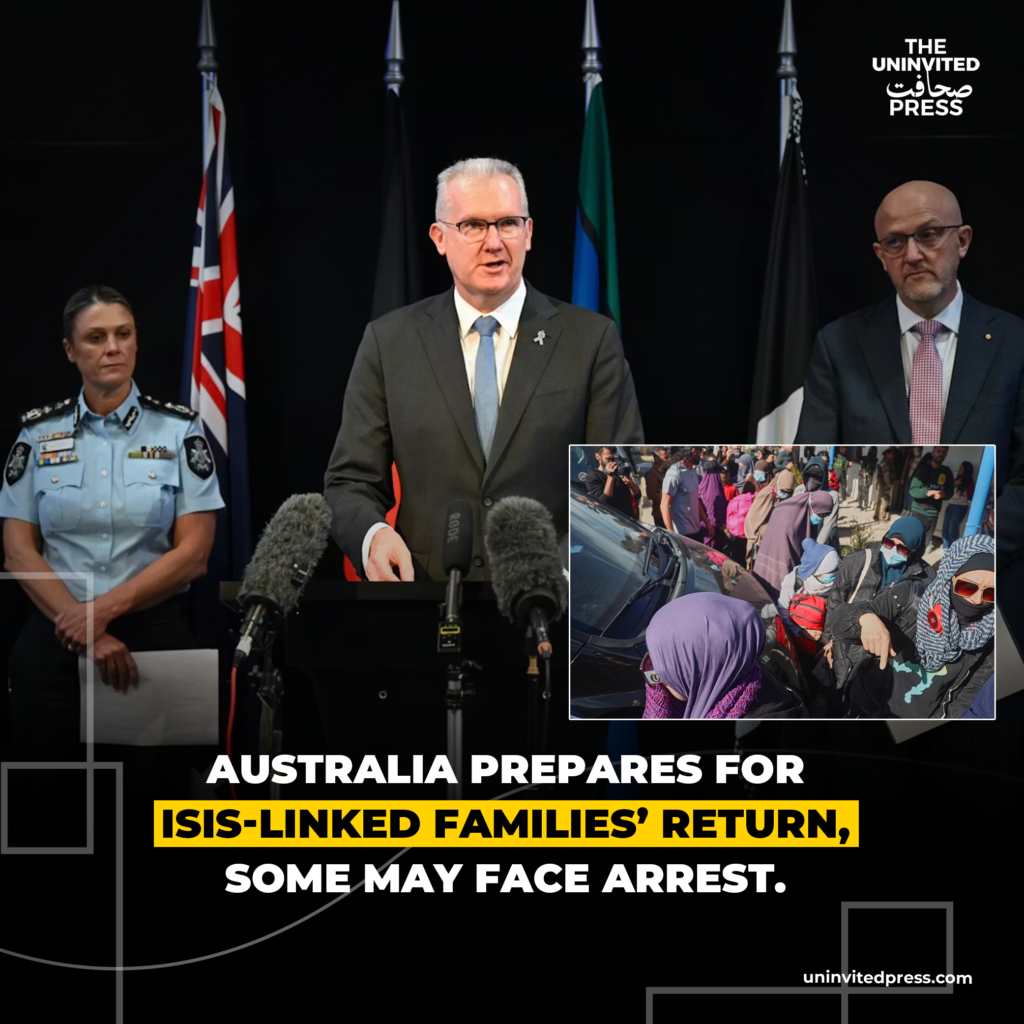
Group of four women and nine children expected to arrive imminently after years in detention camps, with government vowing no assistance and full legal accountability.
Australian authorities are preparing for the imminent arrival of 13 citizens-four women and nine children-linked to Islamic State (ISIS) fighters, who have left detention camps in northeast Syria and booked commercial flights home, officials confirmed on Wednesday.
The development has reignited intense debate over the repatriation of so-called “ISIS brides” and their families, years after the fall of the extremist group’s self-proclaimed caliphate.
Government stance: No support, full force of law:
Home Affairs Minister Tony Burke stated that the Australian government is not facilitating or assisting the group’s return. Speaking in Canberra, he emphasised that any individuals who committed crimes overseas would face investigation and potential prosecution upon arrival.
Australian Federal Police (AFP) Commissioner Krissy Barrett confirmed that some members of the cohort are expected to be arrested at the airport, while others may face ongoing investigations. “Some individuals will be arrested and charged. Some will face continued investigations when they arrive,” she said.
The families have been held for years in the Al-Roj detention camp in Syria’s Kurdish-controlled northeast, amid international pressure on countries to repatriate their citizens following the defeat of ISIS.
Debate Intensifies Over Australia’s ISIS Repatriation Policy:
Critics and human rights advocates have long argued that Australia has a responsibility to repatriate its citizens, particularly the children, many of whom were born in conflict zones or taken there at a young age. International law experts say there is no legal barrier preventing their return, and prolonged detention in the camps poses risks of radicalisation and severe humanitarian conditions.
Opposition figures and victims’ groups have voiced strong concerns about security risks, potential costs of monitoring returnees, and the trauma experienced by communities affected by ISIS atrocities.
The women in the group are understood to have been married to Australian or foreign ISIS fighters, many of whom are now deceased or imprisoned. The government has maintained a firm policy against official repatriation flights, unlike some other Western countries that have brought back dozens of their citizens.
Australia Faces Complex ISIS Repatriation Challenge:
This latest movement follows a previous failed attempt by a larger group of around 34 Australian women and children to leave the camps earlier in 2026. Australia has repatriated a small number of children in the past but has resisted large-scale returns.
The arrivals, expected in Sydney and Melbourne in the coming days, will trigger a major security and welfare operation involving federal police, intelligence agencies and social services. Returnees will likely undergo deradicalisation and integration programmes where appropriate, particularly for the minors.
As the flights approach, the case highlights the complex challenges facing governments worldwide in dealing with the human legacy of the ISIS conflict-balancing national security, legal obligations, and humanitarian imperatives.