

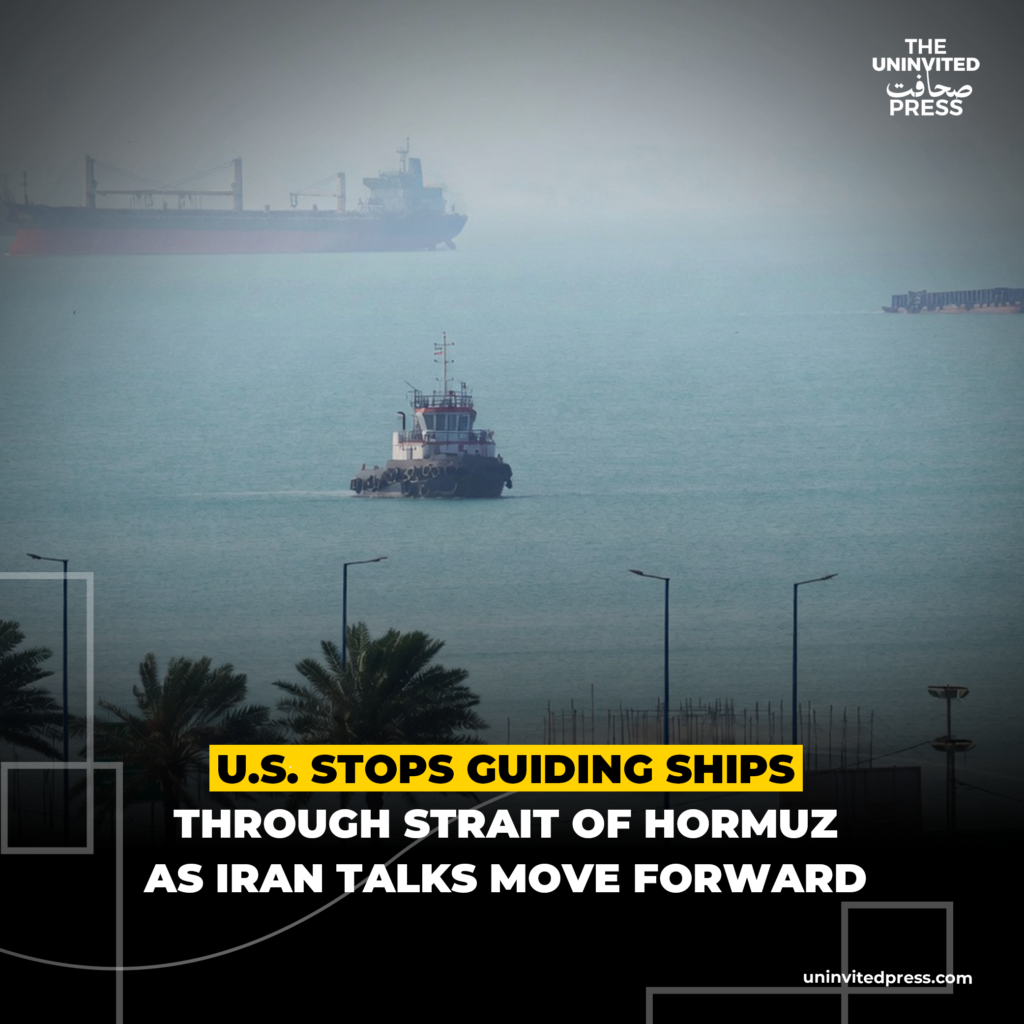
Move signals de-escalation in Gulf waterway amid fragile ceasefire and ongoing diplomatic efforts to prevent renewed confrontation.
The United States has suspended its naval operations guiding commercial vessels through the Strait of Hormuz, US officials announced on Wednesday, citing progress in indirect talks with Iran over nuclear issues and maritime security.
The decision marks a significant shift after weeks of heightened tensions in which American warships escorted tankers and cargo ships through the strategic chokepoint in response to Iranian threats to restrict shipping.
US Pauses Hormuz Escort Missions Amid Iran Tensions:
Pentagon spokesperson Sabrina Singh confirmed the pause in escort missions, describing it as a “prudent step” while diplomatic channels remain active. “We have demonstrated that the strait cannot be closed, and with talks moving forward, we are adjusting our posture,” she said.
Iranian officials welcomed the development. A Foreign Ministry spokesperson in Tehran said the move “could help reduce tensions” but warned that any future provocation would be met with a firm response. Iranian state media described the US decision as recognition that attempts to militarise the strait had failed.
The Strait of Hormuz, through which nearly 20 percent of global oil passes, had become a flashpoint following earlier US-Israeli strikes on Iran and Iran’s subsequent restrictions on shipping. US-led escort operations under the banner of protecting freedom of navigation involved direct confrontations with Iranian forces, including the downing of drones and interception of fast-attack boats.
Hormuz Shipping Disruptions Ease Amid Talks:
Commercial shipping had largely avoided the strait due to insurance risks and threats, causing significant delays and higher costs for global energy markets. With the US now stepping back from active escort duties, shipping companies are cautiously monitoring the situation before resuming normal transit.
Analysts say the pause reflects a mutual desire to prevent economic fallout from spiralling. Oil prices, which spiked during the height of the crisis, have eased slightly in recent days on news of diplomatic progress.
Indirect talks, mediated through intermediaries including Oman and Qatar, are understood to cover Iran’s nuclear programme, sanctions relief and guarantees for safe passage in the Gulf. Both sides have signalled willingness to engage, though deep mistrust remains.
Gulf Tensions Ease as Diplomatic Push Grows:
Gulf Arab states, including Saudi Arabia and the UAE, have quietly backed de-escalation while urging the US to maintain a strong deterrent. Israel has expressed scepticism over any potential agreement with Iran.
The region remains tense after months of conflict involving Israel, Iran, and allied groups, with a fragile ceasefire still facing violations.
Rising humanitarian and economic concerns, including disrupted energy flows and global price impacts, are also pushing diplomatic efforts.
As US naval presence in the Strait of Hormuz decreases, attention now turns to whether ongoing talks can bring lasting stability to the key maritime route.