

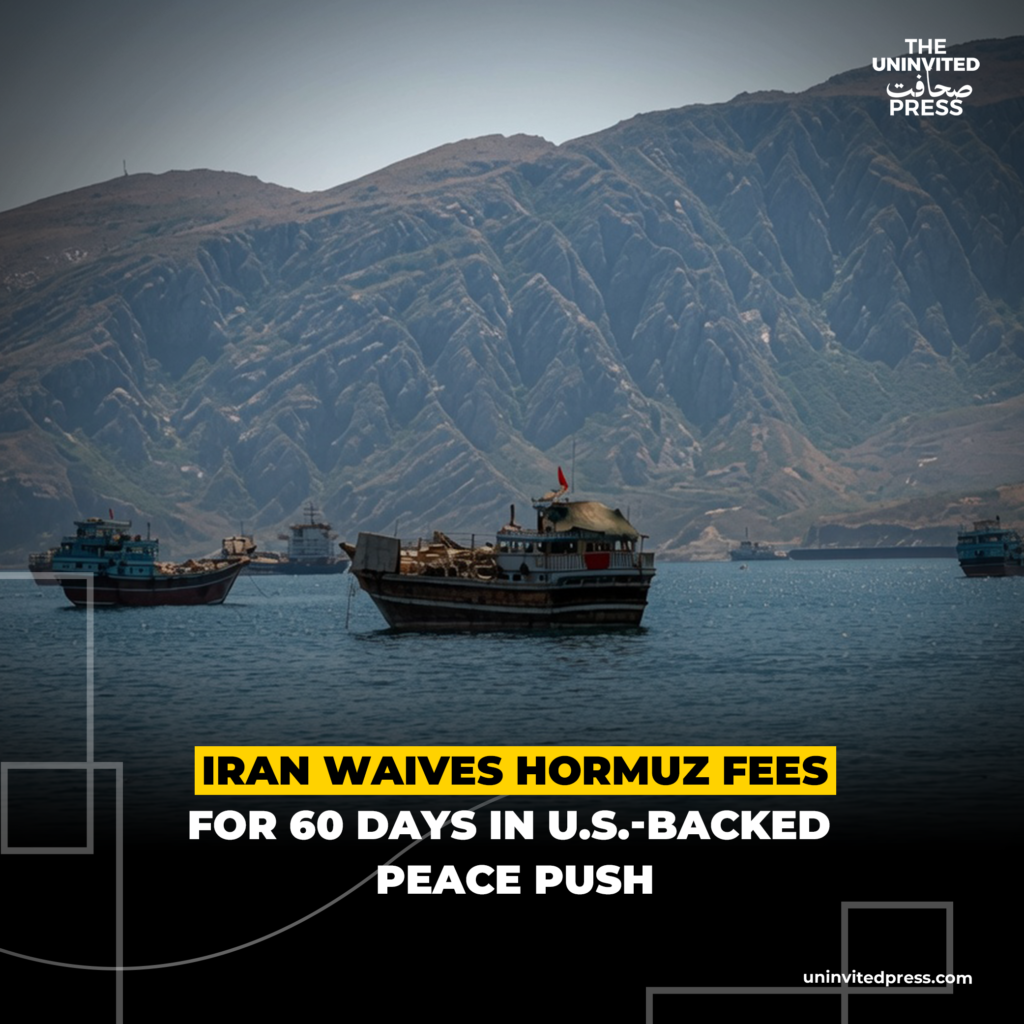
Temporary measure aims to ease maritime tensions and boost trade, but questions remain over long-term control of vital waterway.
Iran has announced a 60-day waiver on transit fees for commercial vessels passing through the Strait of Hormuz, a key implementation step under a newly signed memorandum of understanding (MoU) with the United States aimed at de-escalating regional tensions following months of conflict.
The decision, confirmed by Iran’s Persian Gulf Strait Authority (PGSA), suspends fees for security, safety, environmental services and related costs, allowing ships to transit the strategic chokepoint without additional charges during the negotiation period.
The waiver comes as part of a broader US-Iran agreement that includes an immediate ceasefire, the lifting of the US naval blockade on Iranian ports, and a 60-day window for further talks on a more permanent peace deal, including nuclear issues and potential reconstruction support.
Iran Waives Strait Fees for 60 Days:
Iranian officials framed the fee suspension as a confidence-building measure to restore maritime trade flows critical for global energy markets. The Strait of Hormuz, through which about one-fifth of the world’s oil passes, has been a flashpoint in recent confrontations.
“This temporary waiver demonstrates Iran’s commitment to regional stability and facilitating the safe passage of commercial vessels,” a PGSA statement said, while noting that ships must still obtain prior approval, coordinate routes, and adhere to designated corridors due to lingering security concerns, including areas affected by mines.
Analysts view the move as a pragmatic step amid economic pressures on Iran, though some hardliners within the country have criticised it, particularly regarding potential passage for Israeli-linked vessels.
MoU Aims to Secure Strait of Hormuz:
The MoU, reportedly mediated with involvement from Pakistan and others, follows a period of intense hostilities that saw disruptions in Hormuz shipping, attacks on vessels, and significant economic fallout. The US has described the agreement as a pathway to lasting peace, while Iran maintains its sovereign rights over the waterway.
However, differences persist. While US officials emphasise a vision of a permanently toll-free strait, Iranian authorities have signalled intentions to introduce service fees after the 60-day period, sparking concerns over future navigation costs and precedents for international waters.
Impact on global energy and regional players:
The temporary waiver is expected to help ease oil price volatility and encourage shipping companies to resume full operations. Yet insurers and shipowners remain cautious, citing the need for proven safety and clear rules going forward.
Gulf Arab states, many of which rely heavily on the strait for exports, have welcomed the de-escalation but called for guarantees of freedom of navigation without unilateral restrictions.
As negotiations begin, the coming weeks will test whether this US-backed initiative can translate into a durable agreement or if underlying disputes over the Strait of Hormuz and broader regional influence will resurface.