

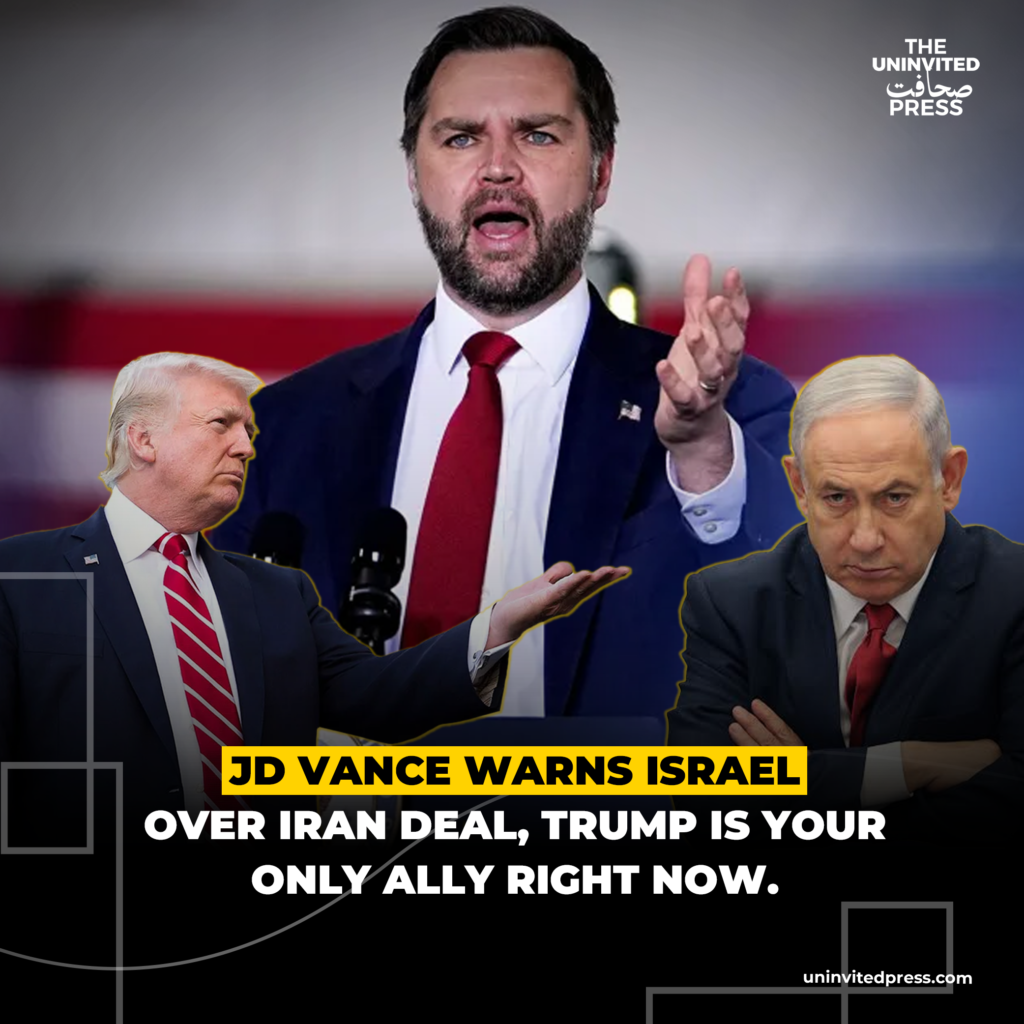
US Vice President tells Israeli officials to “wake up and smell the reality,” amid tensions over a preliminary agreement aimed at ending the war with Iran and opening the Strait of Hormuz.
US Vice President JD Vance has issued a sharp rebuke to Israeli critics of the Trump administration’s preliminary deal with Iran, warning that President Donald Trump is Israel’s “only powerful ally” at a critical moment and cautioning against actions that could strain the relationship.
Vance responded to reports of discontent within Israeli Prime Minister Benjamin Netanyahu’s cabinet over the agreement, which includes a 60-day negotiating period on Iran’s nuclear programme, sanctions relief elements, and efforts to halt hostilities, including those involving Hezbollah in Lebanon.
“My message to them would be twofold,” Vance said. “Number one: Donald J. Trump is the only head of state in the entire world who is sympathetic to the nation of Israel at this moment in time If I was in the cabinet of the Israeli government, I might not be attacking the only powerful ally that I have anywhere left in the entire world.”
Tensions over the Iran agreement:
The remarks highlight growing friction between Washington and some factions in Israel following the signing of what has been described as a memorandum of understanding to end the recent US-Iran conflict. Israeli hardliners have expressed concerns that the deal does not sufficiently dismantle Iran’s nuclear capabilities or ballistic missile programme and could constrain Israel’s military options.
Vance emphasised US military and financial support for Israel, noting that a significant portion of defensive weapons used by Israel in recent months were American-made and funded by US taxpayers. He urged Israeli officials to focus on broader geopolitical realities rather than criticising the US president.
The vice president also pushed back against Israeli military actions in Lebanon, suggesting they risk undermining the nascent agreement.
Netanyahu’s position and next steps:
While Vance noted that Netanyahu himself had not personally attacked the deal in their conversations, reports indicate frustration in parts of the Israeli government. The US has proceeded with lifting aspects of its naval blockade on Iran as part of the agreement, and talks are expected to continue, though a planned Vance trip to Switzerland for further negotiations has been delayed.
The Trump administration has framed the deal as a pragmatic step to end the war, reopen key shipping routes like the Strait of Hormuz, and create leverage for longer-term nuclear negotiations, while insisting Iran must meet commitments to avoid a return to conflict.
Critics in both the US and Israel argue the agreement offers Iran too many upfront concessions with limited immediate guarantees on its nuclear ambitions or regional proxy activities.