

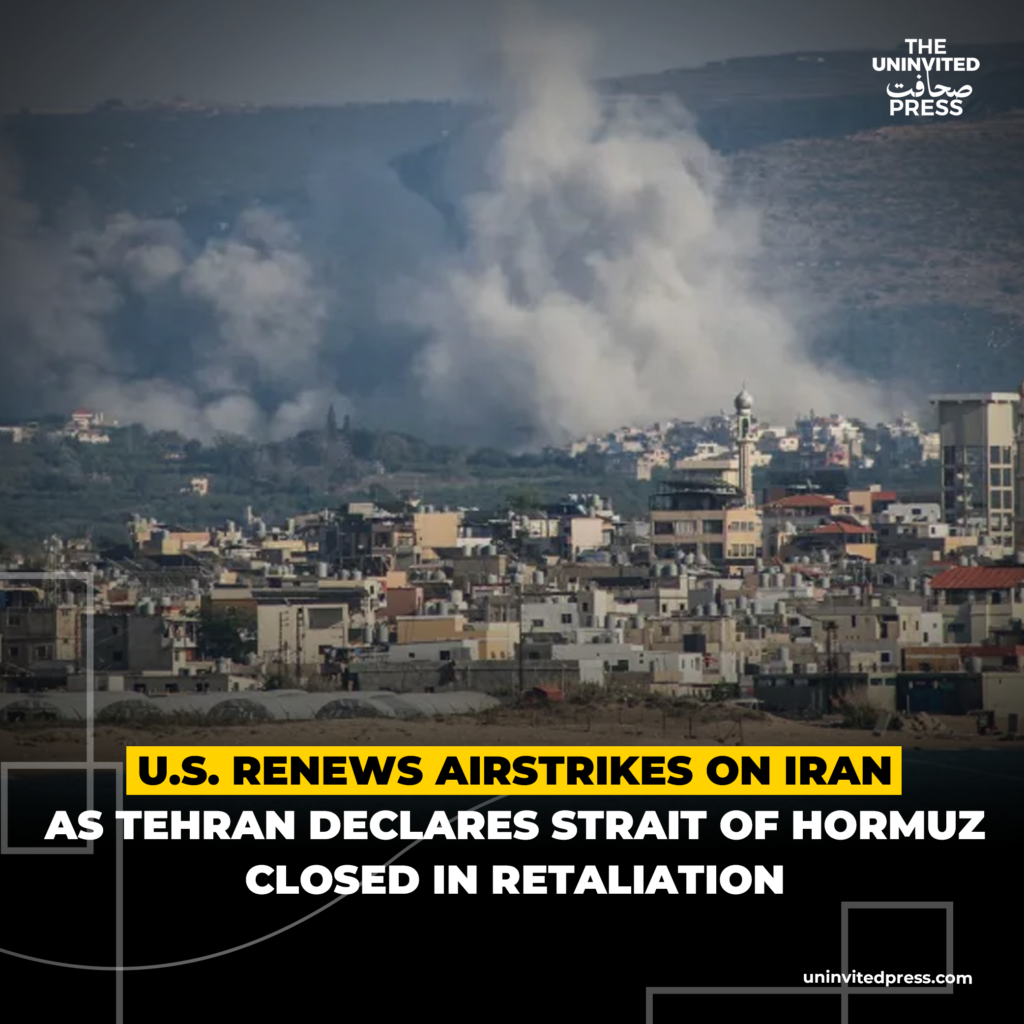
Tensions spiral in the Gulf as fresh US attacks target Iranian military sites near the vital waterway, threatening global oil supplies.
The United States has carried out fresh airstrikes on Iranian targets, escalating a dangerous cycle of retaliation with Tehran that now threatens one of the world’s most critical energy chokepoints.
Iranian officials announced the closure of the Strait of Hormuz late on Wednesday, declaring it off-limits in direct response to the latest US military action. The narrow waterway, through which about one-fifth of global oil and liquefied natural gas passes, has become a flashpoint in the ongoing conflict.
CENTCOM Targets Iranian Defence Infrastructure:
US Central Command (CENTCOM) confirmed it conducted “self-defence strikes” targeting Iranian air defence systems, radar sites, ground control stations, and surveillance infrastructure, primarily in southern Iran near the Strait of Hormuz. The operation followed the downing of a US Army Apache helicopter in the area, which Washington blamed on Iranian forces.
President Donald Trump described the strikes as a “proportional response” to Iranian aggression, warning that Tehran would “pay the price” for actions that jeopardise regional stability and stalled peace negotiations.
Iranian state media and officials, however, condemned the attacks as violations of sovereignty, accusing the US of hitting civilian infrastructure, including water facilities affecting thousands of people. Tehran has vowed a strong response.
Hormuz Closure Sparks Fears of Wider Conflict:
The closure of the Strait of Hormuz marks a significant escalation. Iranian Revolutionary Guard Corps (IRGC) officials stated that any vessels attempting to transit the strait would be targeted. This move comes amid a broader pattern of disruptions since earlier US-Israeli strikes earlier this year.
Analysts warn that a sustained blockade could trigger sharp spikes in global energy prices and disrupt supply chains, with potential ripple effects on the world economy.
The latest clashes threaten a fragile ceasefire that had been holding since earlier rounds of conflict in February and spring 2026. The downing of the US helicopter and subsequent strikes have pushed both sides closer to full-scale confrontation once again.
Regional powers and international actors are closely monitoring the situation, with concerns mounting over possible wider involvement and humanitarian impacts.