

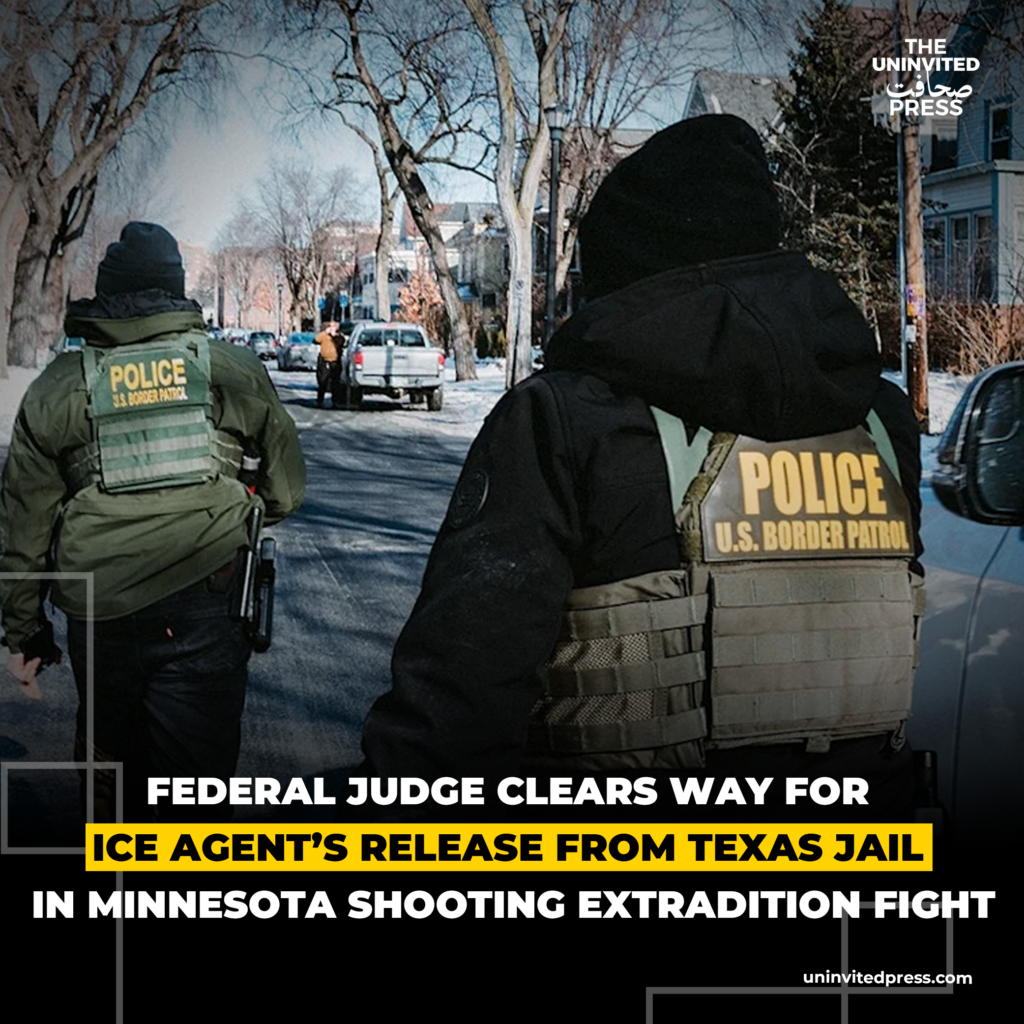
Federal ruling sides with Texas governor, leaving Christian Castro free after 90-day limit amid interstate dispute over Minneapolis shooting charges.
A United States federal judge has rejected Minnesota’s emergency bid to force the extradition of an Immigration and Customs Enforcement (ICE) agent, clearing the way for his release from a Texas jail after nearly three months in custody.
US District Judge Fernando Rodriguez Jr. ruled on Wednesday that Minnesota’s lawsuit against Texas authorities was premature. The decision means ICE agent Christian Castro, 52, is expected to walk free from the Cameron County jail in Brownsville on Thursday under Texas law, which caps detention pending extradition at 90 days.
Castro faces state charges in Minnesota stemming from a January 14 shooting during a large-scale immigration enforcement operation in Minneapolis known as Operation Metro Surge. Prosecutors accuse him of firing through the front door of a home and wounding 24-year-old Julio Cesar Sosa-Celis, a Venezuelan national, in the leg. He is also charged with falsely reporting a crime by allegedly claiming that Sosa-Celis and another man had attacked an ICE officer with a broom handle and snow shovel.
Minnesota authorities obtained a nationwide arrest warrant in May. Texas Rangers arrested Castro on May 29 in the border region. Minnesota Governor Tim Walz formally requested extradition, but Texas Governor Greg Abbott has neither approved nor denied the request, instead directing an investigation into whether Castro qualifies as a fugitive under the law.
Political and Legal Tensions Between US Governors:
The case has escalated into an unusual interstate confrontation pitting Minnesota’s Democratic leadership against Texas’s Republican governor. Minnesota Attorney General Keith Ellison filed suit last week seeking a temporary restraining order. He asked the court either to compel Abbott to sign a rendition warrant or to bar Cameron County Sheriff Manuel Trevino from releasing Castro, arguing the agent could flee-possibly across the nearby Mexican border-and evade prosecution for months or years.
Judge Rodriguez, a Trump appointee sitting in the Southern District of Texas, rejected those arguments. He found that Abbott had not yet refused the extradition request and that no statutory or constitutional deadline forced an immediate decision. “The record reflects only that Governor Abbott has neither agreed nor refused to sign the rendition warrant as to Castro,” the judge wrote. He also declined to order the sheriff to ignore Texas’s 90-day detention limit, noting no evidence that the sheriff had acted improperly.
Ellison said his office disagreed with the ruling and would continue litigating. “We will continue litigating this case and do everything in our power to ensure Castro is returned to Minnesota to face his criminal charges,” he stated.
Abbott has previously indicated skepticism toward Minnesota’s request, citing mistrust of Governor Walz’s administration. The dispute raises rarely litigated questions about the extent of a governor’s discretion under the US Constitution’s Extradition Clause and related federal statutes, which generally require states to surrender fugitives upon proper demand.
Texas Governor Blocks Extradition of Minnesota Shooting Suspect:
The shooting occurred amid a heightened federal immigration crackdown in the Twin Cities area ordered under the Trump administration. Federal agents were conducting operations targeting individuals for deportation when the confrontation unfolded outside a Minneapolis residence. Sosa-Celis was wounded but survived. Separate federal charges against Sosa-Celis and another man related to the incident were later dropped after prosecutors cited newly discovered evidence inconsistent with the original allegations.
Minnesota officials have pursued the state assault and false-reporting charges independently. Castro has remained in local custody in Texas pending the extradition process. Cameron County Sheriff Trevino has confirmed that, absent a court order or signed warrant, Castro will be released at midnight Thursday in accordance with state law.
The ruling leaves any future extradition decision squarely with Abbott. Minnesota officials have expressed concern that release could complicate efforts to bring Castro to trial, particularly given the proximity of the Texas-Mexico border. Legal observers note that if Abbott later formally denies the request, Minnesota could renew its court challenge on the merits.
The case underscores ongoing friction between federal immigration enforcement priorities and state-level accountability efforts in Democratic-led jurisdictions, against the backdrop of intensified nationwide operations that have sparked protests and multiple legal challenges across the Midwest.