

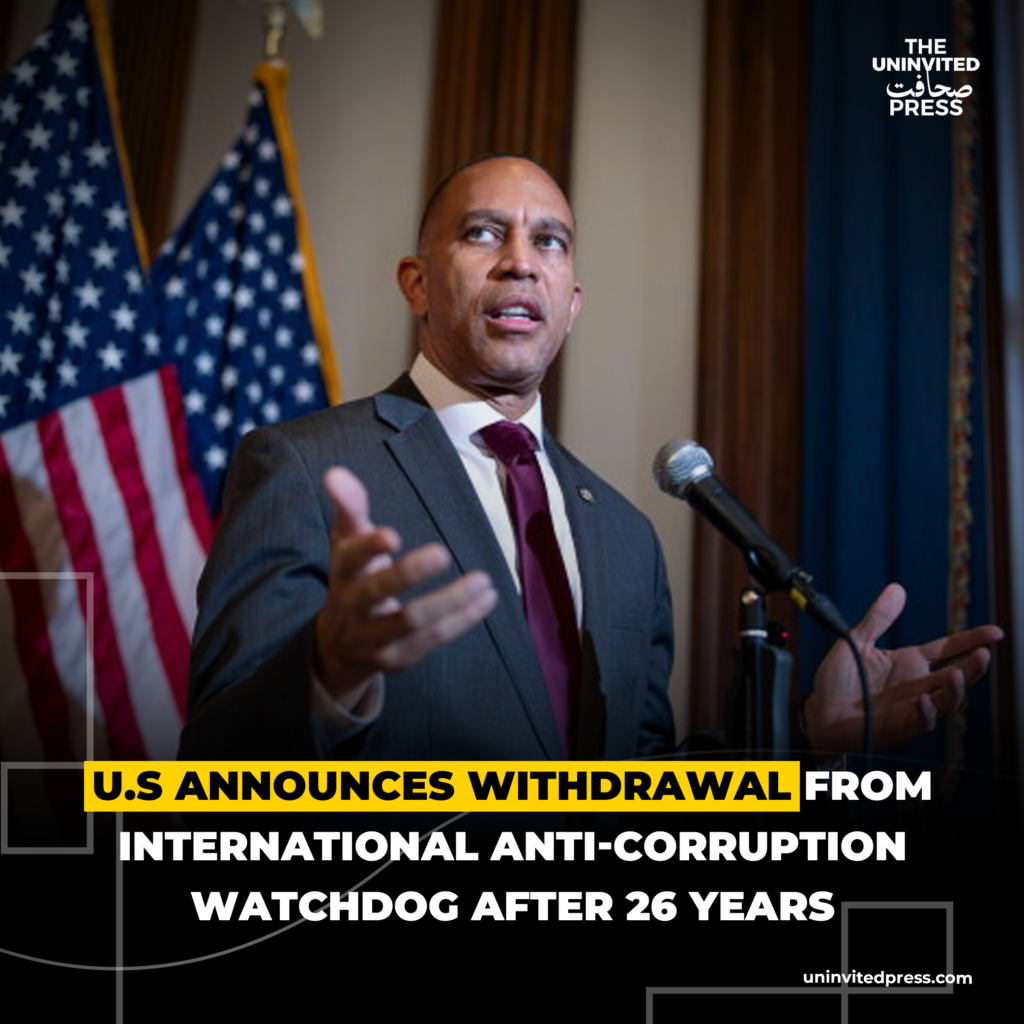
Trump administration exits Council of Europe’s GRECO body, citing lack of benefits to national security amid wider pullback from multilateral groups.
The United States has formally withdrawn from a leading European anti-corruption monitoring body after more than a quarter of a century of membership, the latest step in the Trump administration’s broader retreat from international organisations.
The Council of Europe confirmed on Tuesday that Washington had notified it the previous day of its decision to leave the Group of States against Corruption, known as GRECO. The United States joined the body in 2000, making it one of only two non-European members alongside Kazakhstan. Only Russia and Belarus had previously exited the group.
State Department cites limited benefits:
The State Department confirmed the move, saying US participation, which required an annual financial contribution, “does not provide tangible benefits to US national security.”
“The era of writing blank checks to international bureaucracies is over,” a department spokesperson said. Officials said the administration would instead prioritise what it described as higher-impact tools against corruption, including visa restrictions, sanctions and targeted foreign assistance aimed at investigations that directly affect US security and prosperity.
GRECO was established in 1999 by the Council of Europe to monitor whether member states meet European anti-corruption standards. Its work involves peer reviews, recommendations and follow-up assessments on issues such as political financing, conflicts of interest and the integrity of public officials. The United States had taken part in these evaluations for 26 years.
US Ends 26-Year Role in Anti-Corruption Body:
In a statement, the Strasbourg-based organisation said the United States “has been a valuable contributor to its work and to the exchange of experience and good practice in preventing and combating corruption.” It added that GRECO remains open to future cooperation with Washington “in support of shared efforts to prevent corruption, strengthen integrity and uphold the rule of law.”
The body’s total budget for 2025 was reported at around €3 million ($3.4 million), funded by contributions from its roughly 48 members. The exact amount of the US annual payment was not immediately disclosed.
The withdrawal fits a pattern of disengagement from multilateral institutions under the current administration. The United States has already left or suspended participation in bodies including the World Health Organization and the UN Human Rights Council, and has reviewed its involvement in dozens of other organisations. Last week, Washington also declined to invite Organisation for Security and Co-operation in Europe observers to monitor the November congressional midterm elections, breaking with long-standing practice.
Critics of the decision argue that leaving GRECO reduces external scrutiny of US anti-corruption frameworks and weakens international cooperation at a time when transnational financial crime and illicit finance remain significant challenges. Supporters of the administration’s approach say resources are better directed toward bilateral tools and domestic priorities rather than what they view as inefficient international bureaucracies.
For now, the formal exit ends a 26-year chapter of US engagement with one of Europe’s primary mechanisms for tracking and encouraging anti-corruption reforms. Whether the move will prompt similar decisions by other countries or lead to alternative forms of cooperation remains to be seen.