

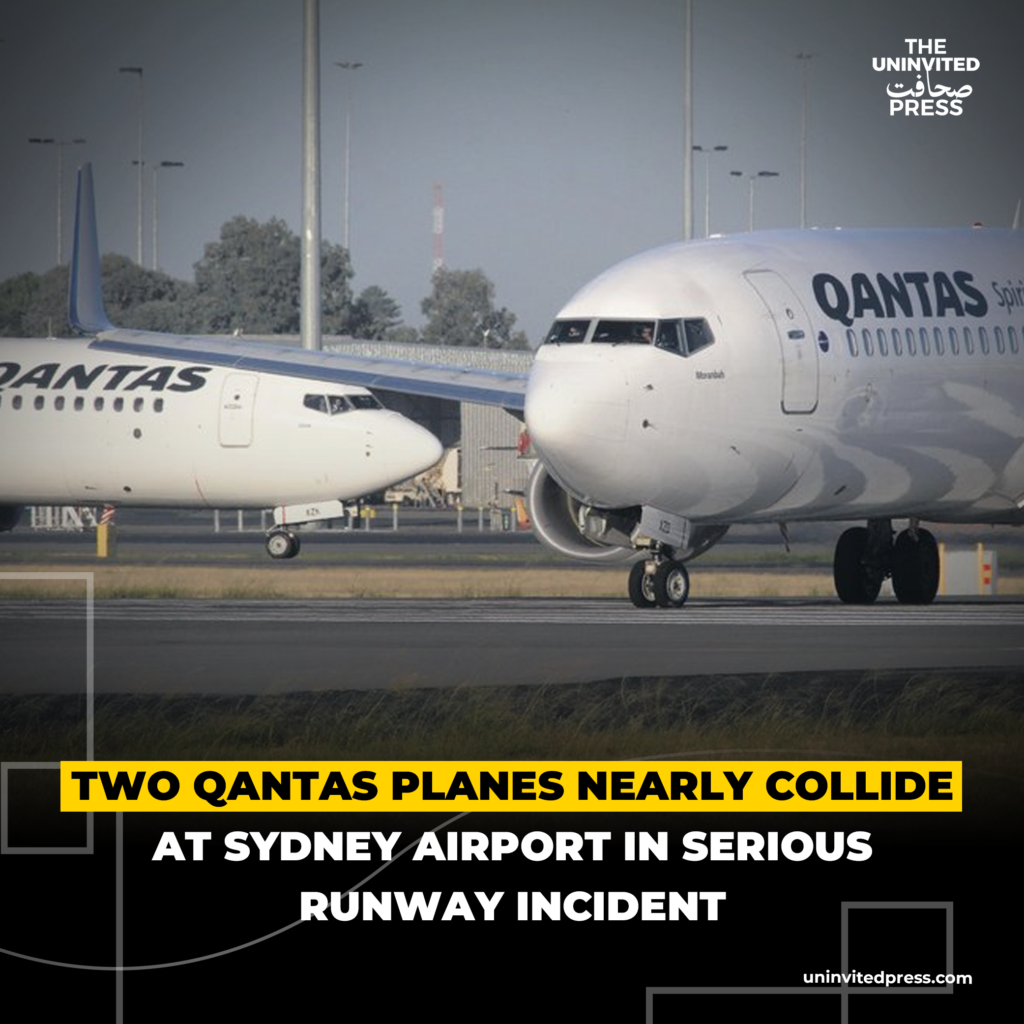
Australian safety investigators classify July near-miss as one of the most serious runway incursions on record after aircraft stop just 120 metres apart.
Two Qantas aircraft came within 120 metres of colliding on a runway at Sydney Airport in late July, in an incident that Australian investigators have described as one of the most serious runway incursions in the country’s history.
The Australian Transport Safety Bureau (ATSB) released preliminary reports on Wednesday detailing the event, which occurred on the morning of 27 July. A Qantas Boeing 737-800 (flight QF124, arriving from Queenstown, New Zealand) was cleared to cross runway 34L while a QantasLink Bombardier DHC-8-400 (flight QLK424D) was still landing on the same runway.
Both crews were ordered to stop immediately. The aircraft halted about 120 metres (394 feet) apart. No injuries or damage were reported, but the ATSB classified the event as a Category A runway incursion-the highest level of severity on the international scale and only the third such incident recorded in Australia since the bureau began keeping records in 2003.
ATSB Probes Six Sydney Airport Safety Incidents:
The July incident is one of six safety occurrences at Sydney Airport between July and August that the ATSB is examining. Preliminary reports released this week also cover:
- A 9 August taxiing conflict in which a Jetstar A320 had to brake sharply to avoid a Qatar Airways Boeing 777 being towed across its path. A flight attendant on the Jetstar aircraft fractured a wrist.
- Another 9 August runway incident involving a Virgin Australia Boeing 737 that aborted take-off after a Qantas 737 was cleared to cross the runway ahead of it.
- An 18 August taxiing conflict between two Qantas aircraft.
ATSB Commissioner Angus Mitchell said the July near-collision between the Dash 8 and the Boeing 737 stood out for its seriousness. “Planes should not be getting that close,” he noted in earlier comments on the cluster of events.
Sydney Airport Near-Misses Raise Safety Concerns:
Investigators are examining staffing levels and fatigue risks among air traffic controllers at Sydney Tower. Preliminary information indicates several controllers on duty around the time of the incidents had been flagged for elevated fatigue risk. Staff resourcing has emerged as a recurring line of enquiry across the investigations.
Sydney Airport has recorded the highest rate of near-misses, or “conflictions,” among Australia’s major airports since the COVID-19 pandemic-roughly 20 percent above the national average, according to ATSB data analysis.
Qantas, which also operates Jetstar, said safety remains its highest priority and that it is working closely with authorities and the industry to improve air traffic control operations at the airport. Airservices Australia, the agency responsible for air traffic management, has not yet issued a detailed public response beyond confirming cooperation with the investigations.
Full investigation reports, including findings and any recommendations, are still pending. In the meantime, the federal government has established an independent panel to oversee improvements in air traffic control operations at Sydney.
The cluster of incidents has renewed questions about capacity, staffing and safety margins at Australia’s busiest airport, particularly as passenger traffic continues to recover and grow. For now, the July near-miss between the two Qantas aircraft stands as a stark reminder of how quickly routine ground movements can escalate when clearances overlap.