

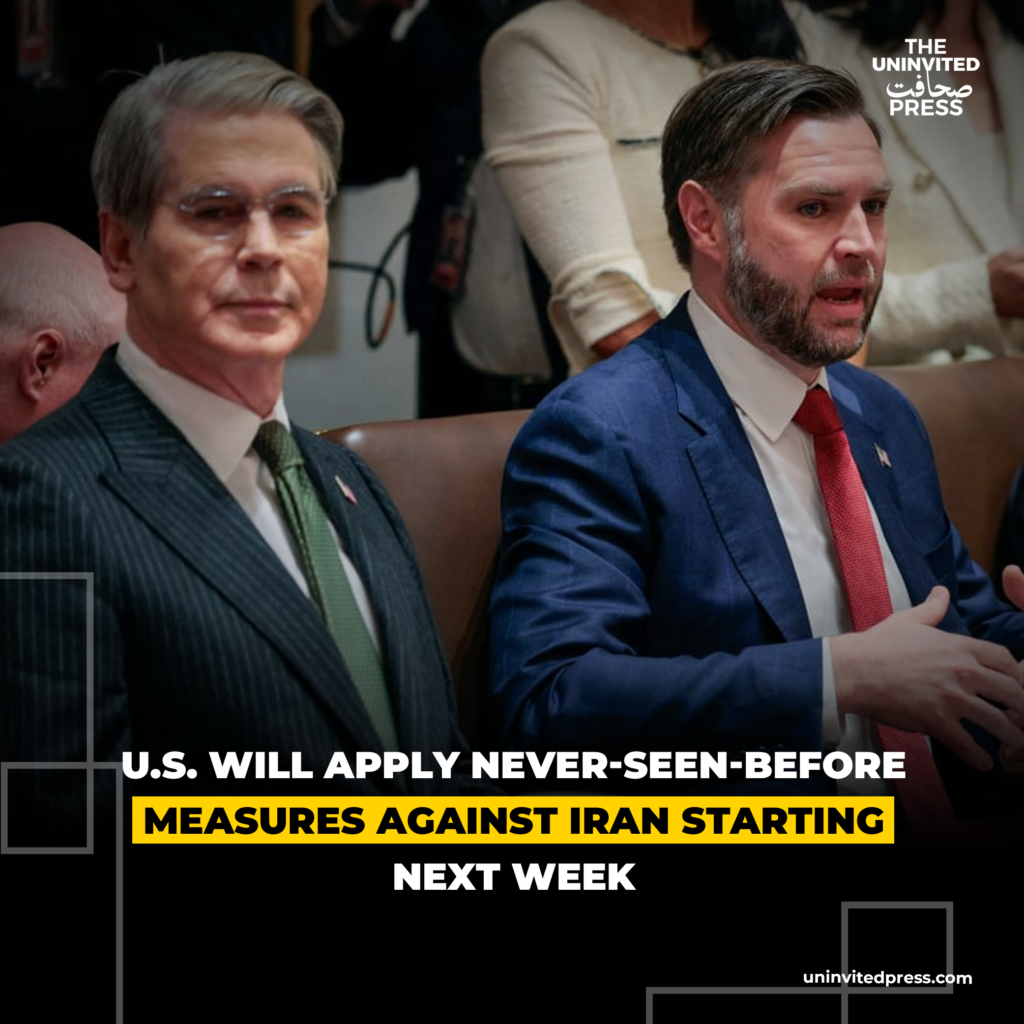
Treasury Secretary Scott Bessent vows measures ‘never seen in the history of economic isolation’ combined with ongoing naval blockade of Iranian ports amid stalled talks and rising regional tensions.
The United States plans to impose a new package of economic measures against Iran beginning next week that Treasury Secretary Scott Bessent described as unprecedented in the history of financial isolation of a country.
In an interview with Newsmax’s Rob Schmitt Tonight on Thursday, Bessent said Washington would announce the steps in the coming days. “Watch this space for more announcements coming next week because we are going to apply measures like have never been seen in the history of economic isolation on a country,” he stated.
US Vows Economic Isolation and Hormuz Blockade:
The planned campaign, he added, would combine “economic isolation like the world has never seen before” with the continued US naval blockade in the Strait of Hormuz “that will keep anything from going in or out of the Iranian ports.”
The warning comes as a fragile June memorandum of understanding between Washington and Tehran has largely collapsed, military exchanges have continued intermittently, and global energy markets remain volatile. The strategic waterway, through which roughly one-fifth of the world’s oil supply passes, has been at the centre of the confrontation for months.
U.S officials have maintained a naval presence enforcing restrictions on Iranian ports and shipping, a measure that Iranian authorities and regional analysts say has already inflicted severe economic pain. Defence Secretary Pete Hegseth indicated the US military has the capacity to sustain the blockade indefinitely.
Vice President JD Vance has framed the administration’s priorities clearly: stabilising energy prices for American consumers ranks first, followed by preventing Iran from obtaining a nuclear weapon. Oil prices have fluctuated sharply amid the uncertainty, with earlier comments by Bessent suggesting a possible deal to reopen the strait within days briefly boosting markets before the tougher rhetoric returned.
US Threatens Unprecedented Pressure on Iran:
The latest threat of intensified economic pressure fits a pattern of “maximum pressure” campaigns that successive US administrations have used against Tehran, though previous rounds of sanctions, asset freezes and secondary measures targeting Iran’s oil exports, banking networks and shipping have never fully crippled the country’s economy or forced fundamental policy changes. Iranian officials have long argued that such measures primarily harm ordinary citizens while the political leadership adapts through alternative trade routes, particularly with China and other partners.
No detailed list of the forthcoming measures has been released. Analysts expect further targeting of remaining financial networks, exchange houses, shadow banking channels and any residual oil trade mechanisms, building on multiple rounds of designations already issued in 2026. The US has repeatedly sanctioned entities accused of helping Iran move oil revenues and access the international financial system.
Tehran has not yet issued an official response to Bessent’s comments. Iranian leaders have previously insisted that any lasting resolution must include the full lifting of sanctions, the release of frozen assets, an end to the naval blockade, and recognition of Iran’s sovereign rights over its energy exports and regional security interests.
The timing of the announcement-as ceasefire talks remain stalled and regional tensions high-underscores the Trump administration’s preference for coercive economic tools alongside military posture. Whether the promised “never-seen-before” isolation can achieve what earlier sanctions campaigns failed to deliver remains an open question that will be tested in the weeks ahead.
For millions of Iranians already contending with high inflation, currency collapse and restricted access to goods, the prospect of deeper isolation raises immediate concerns about further hardship. For global markets, the continued uncertainty over Hormuz keeps energy security and price stability under pressure. And for the wider Middle East, the latest escalation in economic warfare risks prolonging a conflict whose human and regional costs continue to mount.