

The US proposal to secure the Strait of Hormuz could escalate tensions with Iran and unravel recent diplomatic efforts.
A newly unveiled strategy attributed to former and potentially returning US President Donald Trump to assert greater control over the Strait of Hormuz has raised alarms across the Middle East, with experts cautioning it could shatter the tenuous ceasefire holding in the Gulf and reignite broader conflict.
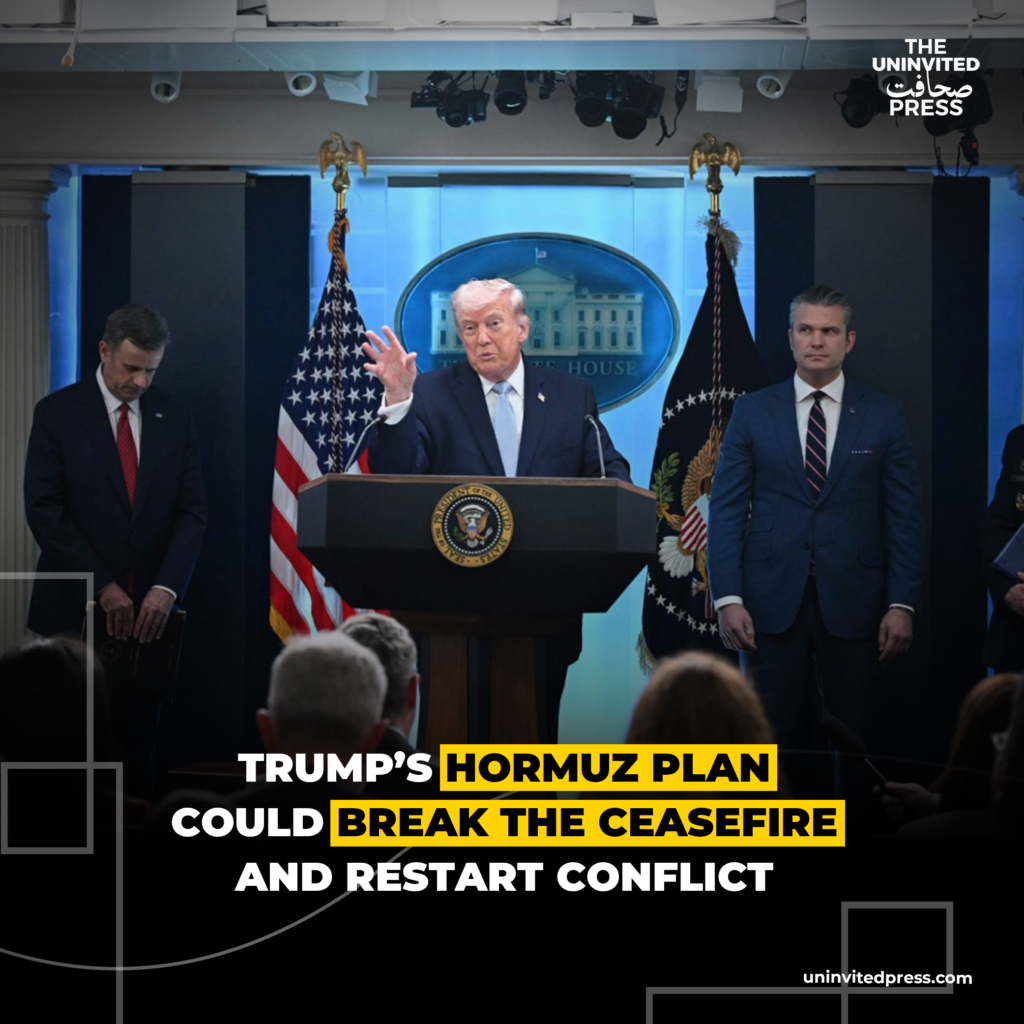
The plan, highlighted in a briefing-style presentation, depicts Trump addressing the issue from the White House podium, flanked by senior officials. It focuses on the narrow chokepoint through which nearly 20% of global oil supplies pass daily, a vital artery long contested between Iran and Western powers.
Strategic Value and Emerging Risks:
The Strait of Hormuz has been a flashpoint for decades. Iran has repeatedly threatened to close it during periods of heightened tension, while the US has maintained a significant naval presence to ensure freedom of navigation. Trump’s approach reportedly involves more assertive measures-potentially including enhanced military deployments or economic pressures-aimed at neutralising perceived Iranian threats to maritime traffic.
Critics argue the timing could not be more dangerous. Recent months have seen fragile diplomatic progress, including indirect talks mediated by regional and international actors, aimed at de-escalating hostilities following previous rounds of confrontation. Any move perceived as provocative could embolden hardliners in Tehran and prompt retaliatory actions, analysts say.
“Securing Hormuz is not just about oil; it is about sovereignty and regional power balances,” said Dr. Fatima Al-Sayed, a Gulf security expert based in Doha. “If the US pushes this plan aggressively, it risks collapsing the ceasefire framework that has kept direct clashes at bay.”
Domestic and International Backdrop:
This development comes amid ongoing speculation about Trump’s political future and his “America First” foreign policy doctrine, which prioritises energy security and confronting adversaries like Iran. Supporters view the Hormuz initiative as a necessary deterrent against Iranian disruption of global energy markets.
However, regional observers fear it signals a return to maximum-pressure tactics that previously escalated tensions, including the 2019-2020 tanker attacks and the assassination of Iranian General Qassem Soleimani.
Gulf Tensions and Energy Security Risks:
If the plan moves forward, its impact could extend across Gulf Cooperation Council states, Iraq, and beyond. Saudi Arabia, the UAE, and other oil-producing nations rely on secure shipping routes but remain cautious about being drawn into a potential US-Iran confrontation.
European and Asian countries, heavily dependent on Gulf energy supplies, have called for restraint. The European Union has emphasized the need for dialogue, while China, a major importer of Iranian oil, has warned against actions that could disrupt energy stability.
As the region closely monitors developments, uncertainty remains over whether the Hormuz strategy signals a negotiating move or a significant policy shift. With ceasefire arrangements already under pressure due to ongoing regional tensions and the aftereffects of past conflicts, the coming weeks are likely to be critical.