

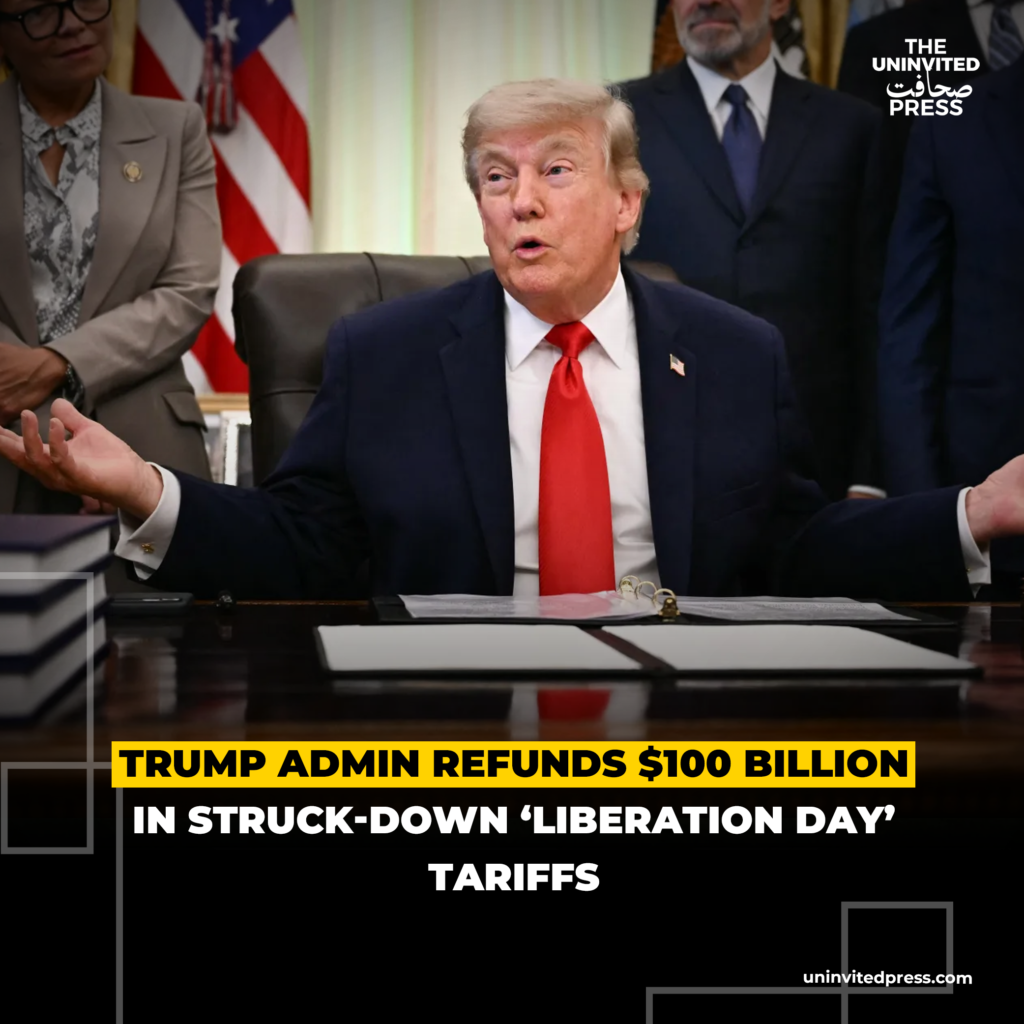
U.S. Customs returns majority of duties collected under emergency powers as importers reclaim funds and White House seeks alternative legal routes.
The Trump administration has refunded approximately $100 billion in tariffs collected under its 2025 “Liberation Day” programme, according to a court filing by US Customs and Border Protection (CBP). The sum represents roughly 60 percent of the $165-166 billion in revenue generated by the sweeping import duties before the US Supreme Court struck them down in February 2026.
In a filing submitted to the US Court of International Trade, CBP official Brandon Lord reported that as of 31 July, the agency’s Consolidated Administration and Processing of Entries (CAPE) system had received more than 250,000 refund declarations covering over 25 million import entries. Of nearly $129 billion in potential and certified refunds accepted for processing, about $100 billion has been completed, certified and sent to the Treasury Department for disbursement.
U.S Refunds $100B in Trump-Era Tariffs:
The refunds follow a landmark Supreme Court ruling that the International Emergency Economic Powers Act (IEEPA) did not authorise the president to impose broad tariffs. President Donald Trump had announced the measures in April 2025, branding the date “Liberation Day,” and imposed baseline 10 percent duties on most imports along with higher “reciprocal” rates aimed at countries with which the United States runs trade deficits. A federal judge later ordered the government to repay the duties to importers of record.
Significant sums remain outstanding. Nearly $29 billion in potential refunds is still under review, while about $1.6 billion is delayed because importers have not provided banking details. Only the entities that directly paid the tariffs are eligible to claim refunds under US customs law; consumers who faced higher prices have no automatic right to compensation.
Major corporations have already recovered substantial amounts. Amazon reported roughly $600 million in refunds in the second quarter of 2026. Apple received nearly $2.2 billion in the same period. Other large recipients include Nike and General Motors. Company executives have indicated that some savings may be passed on through lower prices or other means, but any consumer benefit remains at the discretion of individual businesses.
White House Pushes New Tariff Strategy:
The administration has expressed frustration with the court rulings and has moved to reimpose similar duties using alternative legal authorities, including Section 301 of the Trade Act of 1974. Those efforts have already drawn legal challenges from states and other parties. Trump has repeatedly defended the original tariffs as a tool to protect American industry, reduce trade deficits and generate revenue.
The scale of the repayments ranks among the largest forced revenue reversals in modern US trade history. While large importers with the resources to navigate the CAPE system have secured most of the early payouts, smaller businesses have reported administrative hurdles, prompting at least one class-action effort aimed at improving access for less-resourced claimants.
As CBP continues processing remaining claims, the final total of refunds is expected to rise. This underscores the legal and practical limits of using emergency economic powers for broad tariff policy, even as the White House continues to pursue protectionist measures through other statutory channels.