

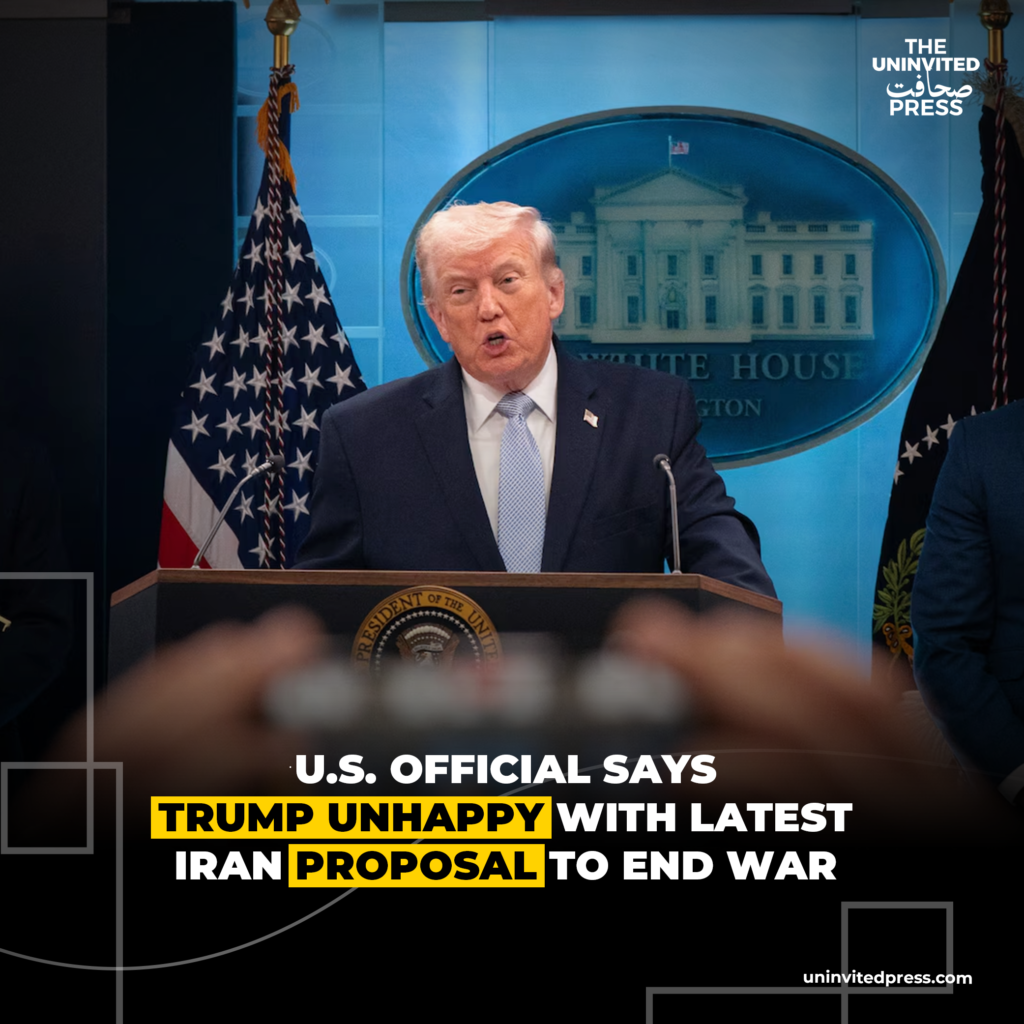
Tehran’s offer to reopen Strait of Hormuz while postponing nuclear talks fails to meet Washington’s core demands, as fighting disrupts global energy flows and raises fears of wider regional escalation.
A senior US official has said President Donald Trump is dissatisfied with Iran’s most recent proposal aimed at ending the ongoing conflict, citing Tehran’s decision to defer discussions on its nuclear programme until after a ceasefire.
The Iranian plan, relayed through intermediaries, reportedly includes reopening the strategic Strait of Hormuz to oil traffic and lifting aspects of the US naval blockade in exchange for an end to hostilities. However, it suggests addressing Iran’s nuclear activities only in a later phase-a position the White House views as unacceptable.
The development comes amid an eight-week conflict that has seen direct US and Israeli military involvement against Iran, sharply reduced oil exports from the Gulf, and heightened global energy prices.
Nuclear issue remains sticking point:
According to sources briefed on White House discussions, Trump told advisers he was “not happy” with the proposal because it failed to tackle the nuclear question from the outset-a long-standing red line for the administration.
“The president made clear that any deal must address Iran’s nuclear programme immediately,” one US official said, speaking on condition of anonymity.
Iran has maintained that sanctions relief and the end of what it calls a “blockade” must come first before broader concessions, particularly on its nuclear infrastructure.
Hormuz Tensions and Stalled Nuclear Demands:
The Strait of Hormuz, through which about one-fifth of global oil passes, has been a focal point of the confrontation. Iran’s restrictions on shipping have contributed to supply disruptions, driving up energy costs and fuelling inflation worldwide.
Tehran’s proposal is understood to include a commitment to ease its actions in the waterway in return for de-escalation. However, Washington insists on guarantees that go beyond temporary measures and include verifiable steps on Iran’s enriched uranium stockpile.
White House Press Secretary Karoline Leavitt confirmed that Trump convened national security officials to review the offer but stressed that the president’s “red lines” remain unchanged.
Stalled Talks and Rising Tensions:
The latest developments follow the cancellation of planned talks between United States and Iran in Pakistan, after Donald Trump rejected earlier proposals as inadequate. While backchannel contacts continue, both sides remain firmly positioned.
Since escalating in early 2026, the conflict has caused casualties, damaged infrastructure in Iran, and heightened fears of wider instability across the Middle East. Global actors are urging restraint and a diplomatic solution, warning that prolonged tensions could worsen economic pressures and increase the risk of further escalation.