

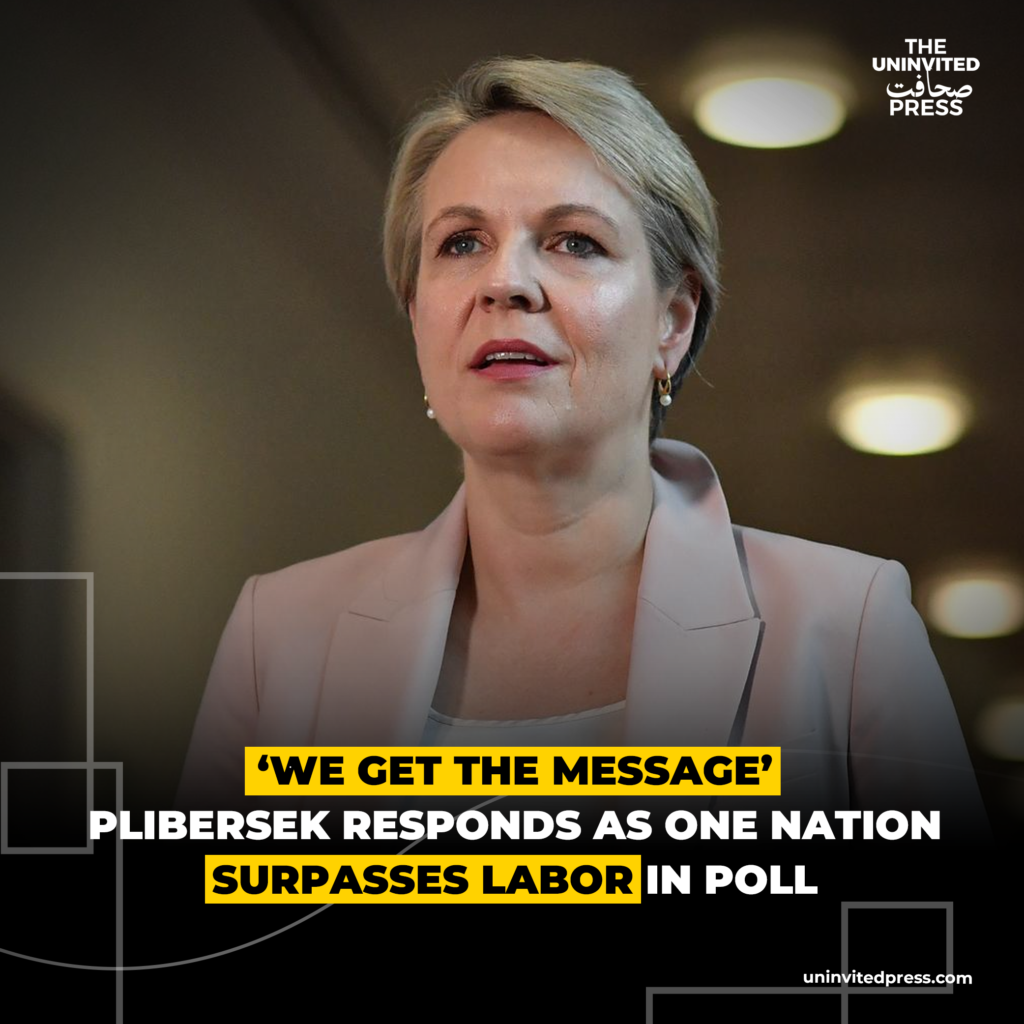
Senior Labor minister acknowledges voter discontent as right-wing party hits record high in major Australian survey.
Australian Social Services Minister Tanya Plibersek has admitted that the Labor government has received a clear warning from voters after a major new poll showed Pauline Hanson’s One Nation party surpassing Labor in primary vote support for the first time.
In the latest Newspoll, One Nation climbed to 31 percent, while Labor fell to 30 percent, with the opposition Coalition trailing further behind. The result reflects growing frustration among Australian voters over cost-of-living pressures, housing affordability, and immigration levels.
Speaking on Channel, Plibersek said the government understood the signal from the electorate.
“We see those polls and we get the message, which is we need big changes in this country, and that’s exactly what Labor is delivering,” she said.
Two-Party System Under Strain in New Poll:
The poll comes as both major parties face declining support, with voters turning to smaller parties amid ongoing economic challenges. One Nation has capitalised on discontent over immigration, inflation, and what it describes as “woke policies,” particularly in regional and outer-suburban areas.
Plibersek defended the government’s record, pointing to efforts to increase wages, build more homes, and improve essential services. However, she criticised One Nation for offering “complaints but no real solutions.”
Political analysts say the surge in One Nation support highlights deep voter disillusionment with the traditional two-party system ahead of future federal elections. While primary votes do not directly translate into seats due to Australia’s preferential voting system, the shift signals potential trouble for Labor at the ballot box.
Political implications:
Opposition Leader Peter Dutton’s Coalition has also struggled in the poll, but analysts suggest the conservative side may benefit from preference flows if One Nation continues to perform strongly.
The Albanese government is now under increasing pressure to deliver tangible relief on living costs and housing as it approaches the later stages of its term.