

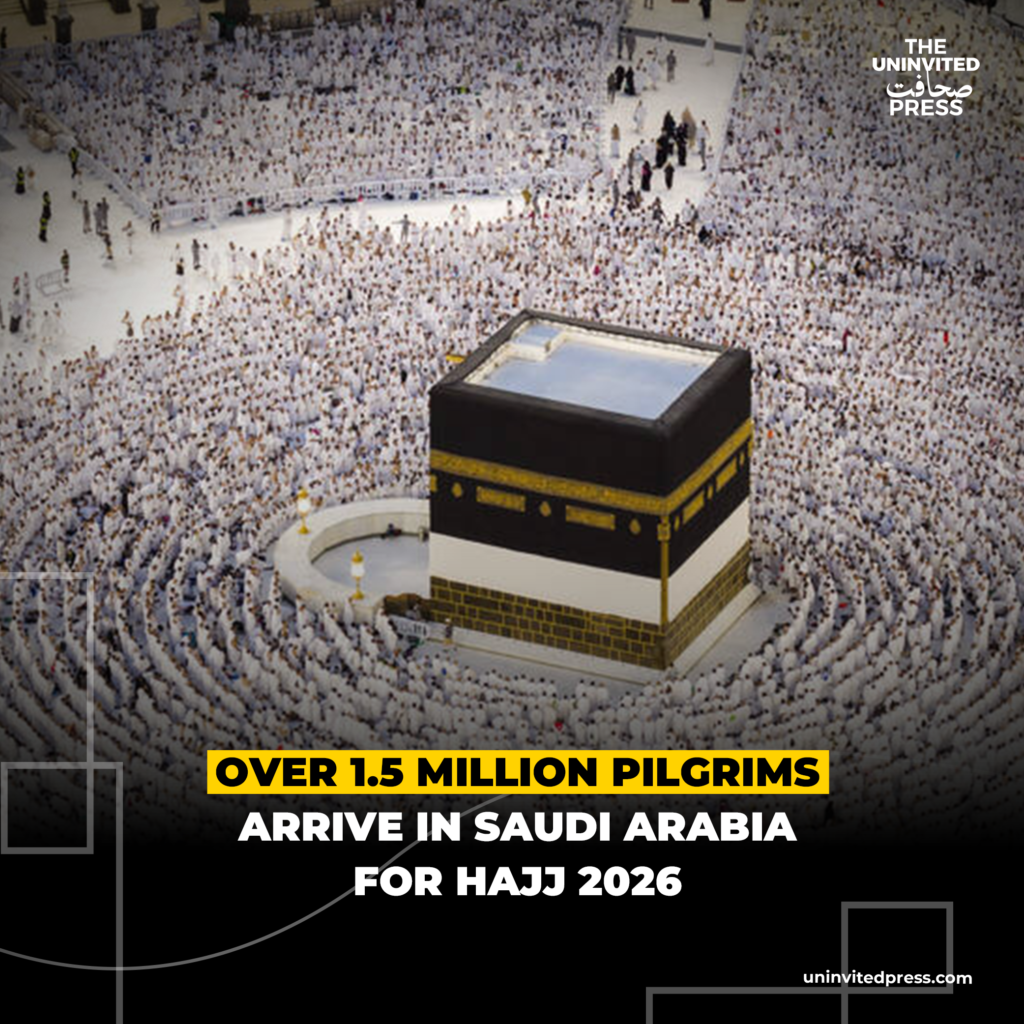
Massive gathering at the Kaaba marks the start of the annual Islamic pilgrimage amid enhanced security and logistical preparations.
More than 1.5 million Muslim pilgrims have arrived in Saudi Arabia for the Hajj 2026, one of the world’s largest religious gatherings, as authorities report smooth initial operations at the holy sites in Mecca.
Aerial images from the Grand Mosque show vast crowds of worshippers dressed in simple white Ihram garments circumambulating the Kaaba, the holiest site in Islam, marking the beginning of the five-day pilgrimage rituals.
Hajj, a religious duty for able-bodied Muslims who can afford it at least once in their lifetime, draws millions annually. This year’s figure already exceeds early expectations, with Saudi officials anticipating the total number of pilgrims could surpass previous records.
Extensive preparations and crowd management:
Saudi authorities have deployed thousands of security personnel, medical teams, and logistical staff to manage the massive influx. The General Authority for the Care of the Grand Mosque and the Prophet’s Mosque has implemented advanced crowd-control technologies, including AI-powered monitoring systems and expanded transportation networkS.
“We are fully prepared to ensure the safety and comfort of all pilgrims,” said a spokesperson for the Saudi Hajj Ministry. Special emphasis has been placed on accommodating elderly pilgrims and those with health conditions, following lessons from previous years.
Millions Gather in Mecca for Hajj 2026:
Pilgrims from over 180 countries have converged on Mecca, turning the city into a mosaic of languages and cultures united by faith. Many describe the experience as deeply spiritual, with the sight of millions gathered in one place symbolising unity in the Muslim world.
However, the pilgrimage also presents significant challenges. Temperatures in Mecca can soar during the Hajj season, raising concerns over heat-related illnesses. Saudi health authorities have urged pilgrims to stay hydrated and follow medical guidelines distributed at arrival points.
The event comes at a time of heightened regional tensions, yet Saudi Arabia has maintained its role as custodian of the two holy mosques, facilitating access for pilgrims regardless of nationality or political background.
As the main rituals of Hajj-including the stand at Mount Arafat, the symbolic stoning of the devil in Mina, and the sacrifice-approach, officials say they remain confident that the 2026 season will be conducted safely and smoothly for all participants.