

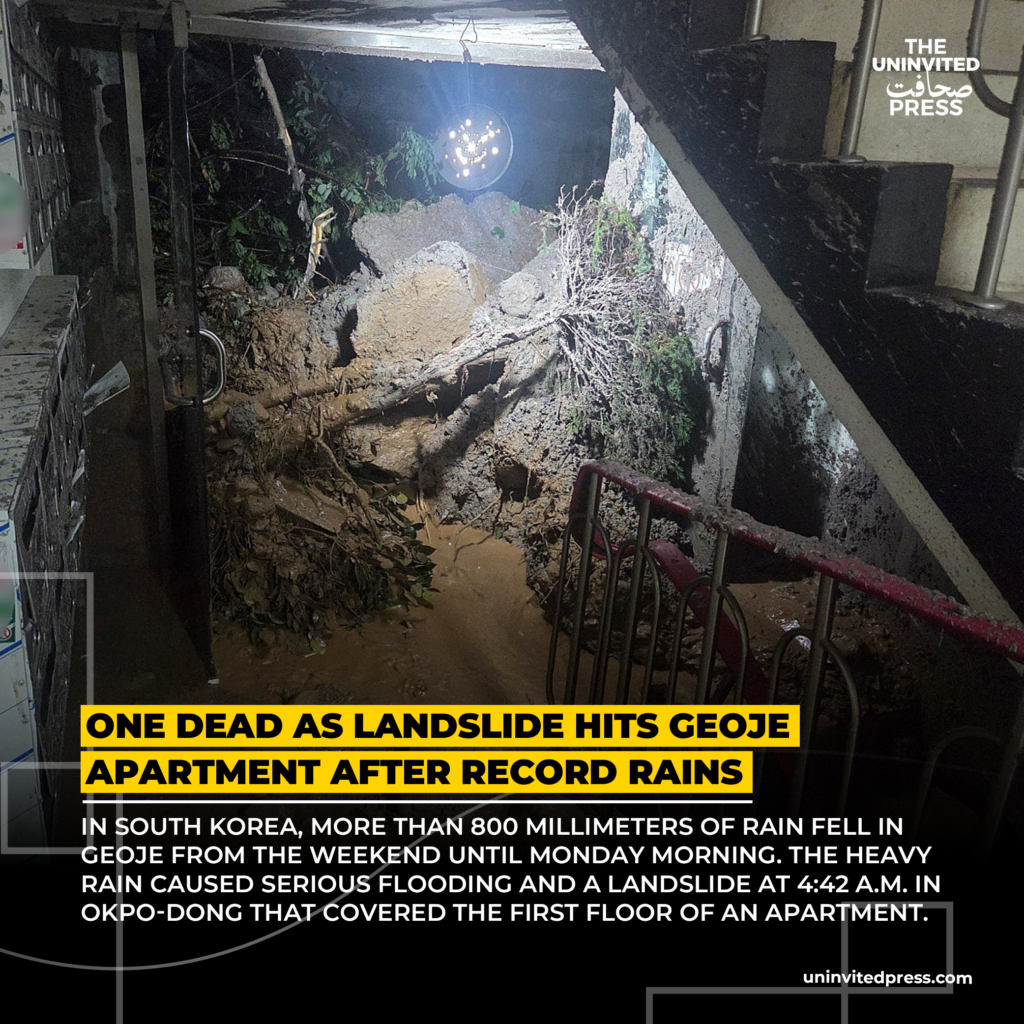
More than 800mm of rain falls in southern South Korea over the Liberation Day weekend, triggering flooding, evacuations and a deadly mudslide in Okpo-dong.
A landslide struck a residential apartment building in the southeastern South Korean city of Geoje early on Monday, killing one person and injuring two others after torrential rains dumped more than 800 millimetres of rain on the area over the weekend.
Record Rainfall Triggers Deadly Geoje Landslide:
The landslide occurred at approximately 4:42 a.m. local time in the Okpo-dong neighbourhood. Mud, rocks and debris from a nearby hillside buried the first floor of the apartment complex. Firefighters and police rescued three residents from the buried floor. One was found in cardiac arrest and later pronounced dead at a hospital; the other two sustained injuries and were receiving treatment.
Geoje, a coastal city in South Gyeongsang Province more than 300 kilometres southeast of Seoul, recorded between 805 and 815 millimetres of rain from Saturday morning through Monday morning, according to local authorities and the Korea Meteorological Administration. In some reports, the figure exceeded 800mm from Saturday through early Monday. Overnight into Monday alone, more than 400mm fell in parts of the city.
Hourly rainfall reached as high as 124.5mm at one point early Monday-the highest one-hour total recorded in Geoje since official measurements began in 1972. The downpours came after a prolonged drought in the region, turning what had been dry conditions into sudden, extreme flooding.
South Korea Floods Trigger Evacuations and Rescues:
Heavy rain warnings remained in effect across multiple areas of South Gyeongsang Province on Monday morning. Roads in Geoje were inundated, with cars partially submerged and strong currents sweeping through streets. Public bus services and household waste collection were suspended in affected zones. Major local employers, including shipbuilders, allowed employees to stay home amid the disruption.
Authorities received more than 20 emergency calls overnight from residents trapped by flooding or debris. Rescue teams worked to free about 20 people stranded in areas such as Hoejin Village. Roughly 100 residents of Yesol Village were evacuated due to the risk of further landslides. Emergency alerts warned of potential reservoir overflows and rising river levels, with some tourist sites closed and traffic restricted in low-lying areas.
Similar heavy rain affected nearby cities. Tongyeong recorded more than 670mm over the same period, while other parts of the province saw between 240mm and 340mm. A separate landslide in Tongyeong buried one person who was later rescued.
The extreme rainfall formed part of a broader pattern of intense summer storms across East Asia, with flooding and landslides also reported in parts of China, Japan and the Philippines in recent days. South Korean officials continued monitoring the situation as additional rain of 80-150mm was forecast for parts of the southern coast on Monday. Rescue and recovery operations remained under way in Geoje as authorities assessed the full extent of the damage.