

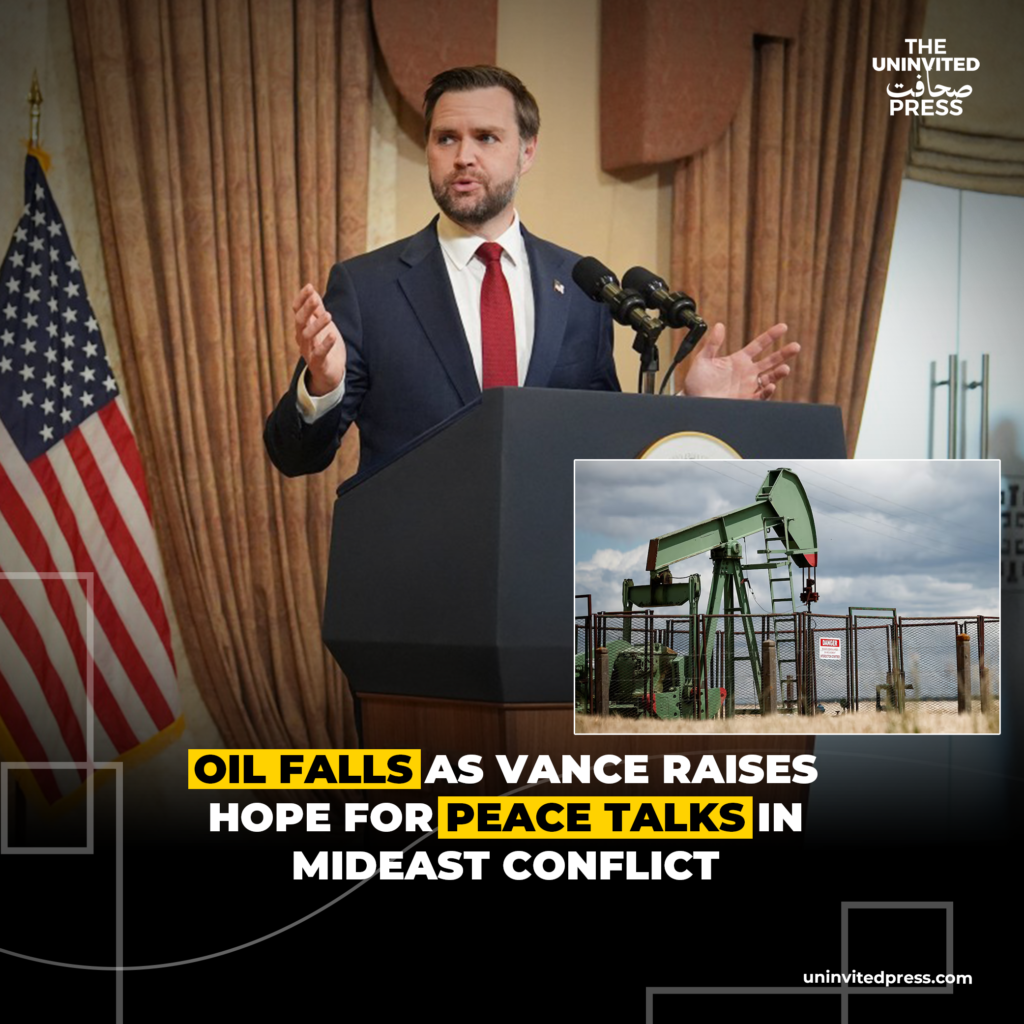
US Vice President signals openness to further negotiations with Iran despite weekend impasse in Islamabad, easing immediate market fears of prolonged disruption to Gulf oil supplies.
Global oil prices dropped on Monday amid comments from US Vice President JD Vance suggesting that Washington remains open to resuming peace talks with Iran, even after the collapse of high-level negotiations in Pakistan over the weekend.
Brent crude fell more than 3 percent in early trading, while West Texas Intermediate (WTI) declined around 2.8 percent, pulling back from recent gains triggered by the breakdown of the Islamabad talks and the start of a US naval blockade of Iranian ports.
Vance, who led the US delegation during the marathon 21-hour negotiations in Islamabad, told reporters that while no agreement was reached, the door for diplomacy had not been closed.“We made our position very clear, but we are always prepared to talk if Iran shows willingness to address our core concerns,” Vance said in remarks that markets interpreted as a relatively conciliatory tone compared with earlier statements.
Tense Ceasefire and Shifting Markets:
The comments come as a two-week ceasefire between the US and Iran-agreed earlier this month-continues to hold tenuously, despite the failure of the Islamabad round to produce a breakthrough on Iran’s nuclear programme, sanctions relief, or security arrangements in the Strait of Hormuz.
Oil prices had surged following the collapse of talks and President Donald Trump’s announcement of a naval blockade, with Brent briefly approaching $110 per barrel amid fears of prolonged disruptions to one-fifth of global oil supplies. However, Vance’s latest remarks appeared to temper those concerns, at least in the short term.
Negotiations Still Facing Obstacles:
During the Islamabad talks, Vance said Iran had refused to accept US “red lines”, particularly a firm commitment not to pursue nuclear weapons and to halt uranium enrichment activities. Iranian officials countered that Washington’s demands were “excessive” and unrealistic in the first round of direct negotiations.
Despite the impasse, Vance indicated that the US would continue to explore diplomatic avenues, while maintaining pressure through the naval operation now in effect.
“The bad news is we didn’t reach a deal, but that doesn’t mean we stop trying,” he added, according to officials briefed on his comments.
The US naval blockade, which began on Monday, targets vessels entering or leaving Iranian ports but is not intended to fully close the Strait of Hormuz to international shipping from other Gulf states.
Oil Market Volatility Sparks Global Economic Concerns:
The recent volatility in oil markets has already affected global energy prices and stock markets. A temporary ceasefire announcement earlier this month had triggered sharp drops in crude prices, while the breakdown of talks reversed some of those gains.
Energy experts warn that any prolonged disruption in the Gulf could push prices significantly higher, with potential knock-on effects on inflation and economic growth worldwide.
Gulf producers, including Saudi Arabia, have been closely monitoring the situation, with some quietly increasing output to help stabilise markets where possible.