

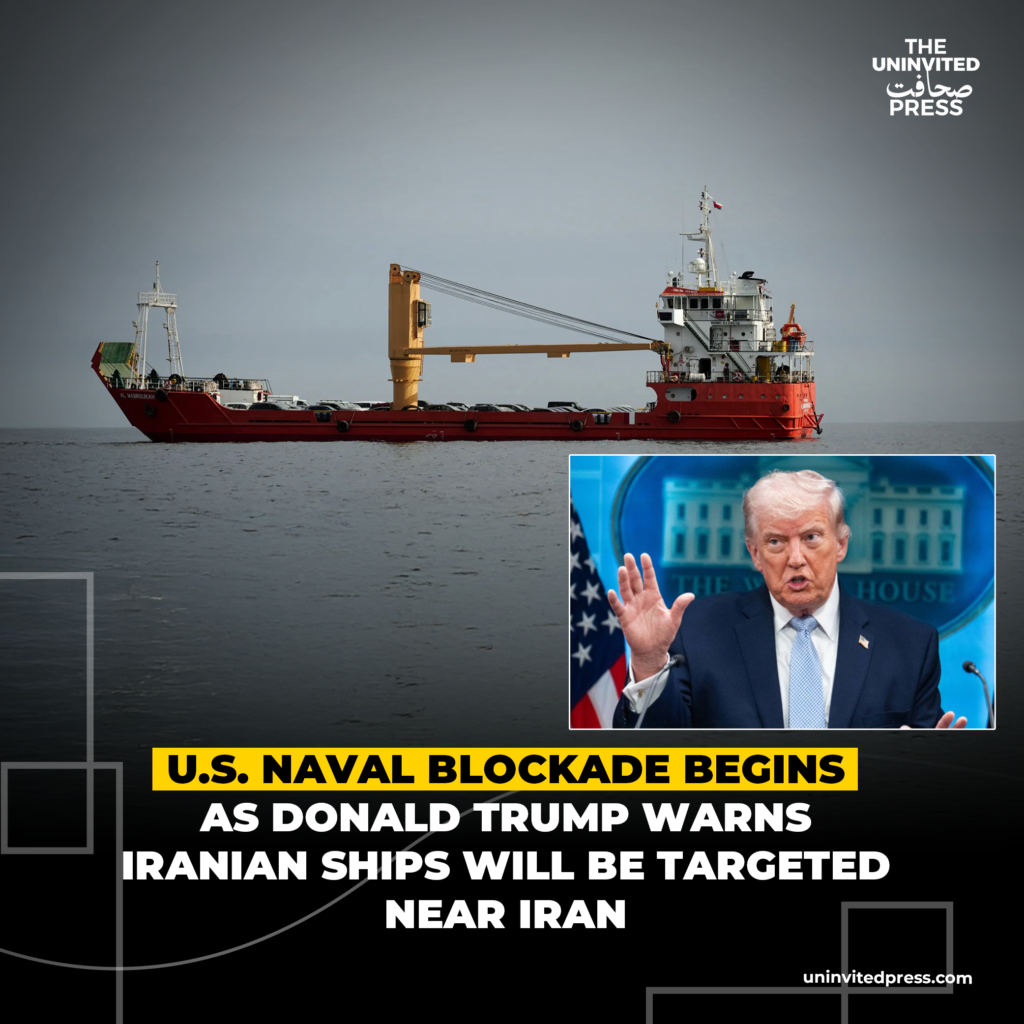
American forces enforce restrictions on vessels entering or leaving Iranian waters following the collapse of peace talks in Islamabad, raising fears of renewed escalation and disruption to global oil supplies.
The United States has begun a naval blockade of all Iranian ports and coastal areas, US Central Command (CENTCOM) confirmed on Monday, just hours after President Donald Trump warned that any Iranian ships approaching the operation would be “immediately eliminated”.
The measure took effect on Monday, following the breakdown of high-level US-Iran peace negotiations held in Islamabad over the weekend.
CENTCOM stated that the blockade would be enforced “impartially against vessels of all nations entering or departing Iranian ports and coastal areas”, but clarified it would not restrict ships transiting the Strait of Hormuz from non-Iranian ports.
Trump’s sharp warning:
In a social media post shortly after the blockade commenced, President Trump issued a stern warning to Tehran.
“If any of these ships come anywhere close to our BLOCKADE, they will be immediately ELIMINATED, using the same system of kill that we use against the drug dealers on boats at Sea. It is quick and brutal,” he wrote.
Trump described Iran’s remaining naval assets, including fast attack boats, as insignificant after what he claimed were heavy losses to the Iranian navy during earlier phases of the conflict. He framed the blockade as a response to what he called Iran’s “illegal act of extortion” involving tolls and threats to shipping in the Strait of Hormuz.
The US president has repeatedly stated that the goal is to pressure Iran into accepting a comprehensive deal, including limits on its nuclear programme and guarantees for freedom of navigation in the vital waterway.
Fragile Peace Deal Under Pressure:
The blockade comes amid a precarious two-week ceasefire between the US and Iran that has so far held but remains highly fragile. Peace talks in Pakistan failed to bridge deep differences over Iran’s nuclear activities, sanctions relief, and security arrangements in the Gulf.
Analysts warn that the naval operation, described by experts as a “major, open-ended military endeavour”, risks triggering Iranian retaliation and could place significant strain on already disrupted global energy markets. Oil prices surged past $100 per barrel in early trading on Monday.
Iran has threatened to target ports in the region belonging to countries allied with the United States, prompting further warnings from Washington.
Strait of Hormuz Crisis Deepens:
The move has drawn mixed international reactions. Some Gulf states have quietly supported measures to ensure freedom of navigation, while others have urged restraint to avoid wider conflict. European capitals and China have called for de-escalation and a return to diplomacy, while Pakistan is reportedly continuing behind-the-scenes mediation efforts after hosting recent talks.
Experts warn that sustaining such an operation poses serious logistical challenges and increases the risk of miscalculation in crowded waters. Former US officials suggest that while Iran may withstand parts of the pressure, prolonged blockade could inflict significant economic damage. As the situation develops, attention is focused on whether the pressure will bring Iran back to negotiations or trigger further escalation, with the fragile ceasefire nearing its expiry amid signs of both diplomatic openness and potential confrontation.