

Tehran asserts control over vital waterway as Trump administration launches ‘Project Freedom’ to escort stranded ships, raising fears of wider confrontation.
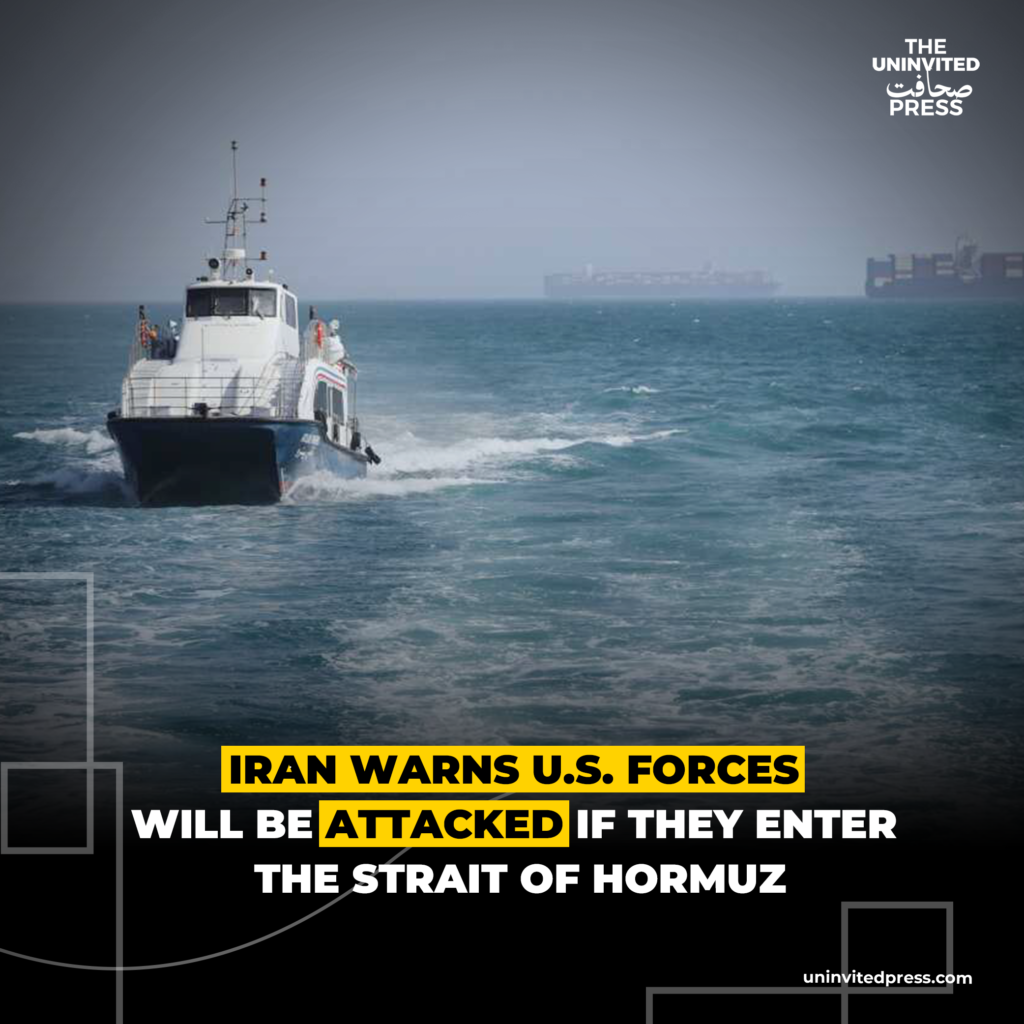
Iran’s military has issued a stern warning to the United States, stating that any American or foreign armed forces attempting to enter the Strait of Hormuz will be targeted and attacked, escalating tensions in one of the world’s most critical energy chokepoints.
The threat comes after US President Donald Trump announced plans for American naval forces to “guide” and escort merchant vessels and tankers stranded in the Gulf, a move Tehran views as a direct challenge to its sovereignty over the strategic passage.
“We warn that any foreign armed forces, especially the aggressive US army, will be attacked if they intend to approach and enter the Strait of Hormuz,” said a statement from Iran’s unified armed forces command, according to state media and officials including Major General Ali Abdollahi.
‘Project Freedom’ meets Iranian resistance:
The US operation, dubbed “Project Freedom” by the Trump administration, aims to restore safe passage for commercial shipping through the Strait of Hormuz, which carries about one-fifth of global oil trade. Trump described the mission as a humanitarian effort to free stranded vessels and their crews affected by recent regional hostilities.
Iran, however, insists that security in the strait remains under its control and that any movement of vessels must be coordinated with Iranian forces. Officials have warned commercial ships against unauthorised transit, describing US intervention as a potential violation of the fragile ceasefire that followed the recent US-Israel confrontation with Iran.
Iranian forces have reportedly fired warning shots at approaching US warships, with conflicting accounts emerging over whether any vessels were struck. The US Central Command has denied claims of damage to American ships.
Hormuz Tensions Rise:
The Strait of Hormuz lies between Iran and Oman, serving as the primary route for oil and liquefied natural gas exports from the Gulf. Any disruption has immediate global economic implications, already contributing to volatility in energy markets.
Iranian officials, including members of parliament and Revolutionary Guards commanders, have reiterated that Tehran will not tolerate what it calls “aggressive” foreign military presence in its backyard.
Analysts warn that miscalculation in the narrow waterway-where tanker traffic is dense and naval forces operate in close proximity-could rapidly spiral into direct confrontation between Iran and the United States.
This latest flare-up underscores the precarious nature of the post-ceasefire landscape in the Gulf. While diplomatic channels remain active, both sides appear locked in a high-stakes game of deterrence over control of this vital maritime corridor.