

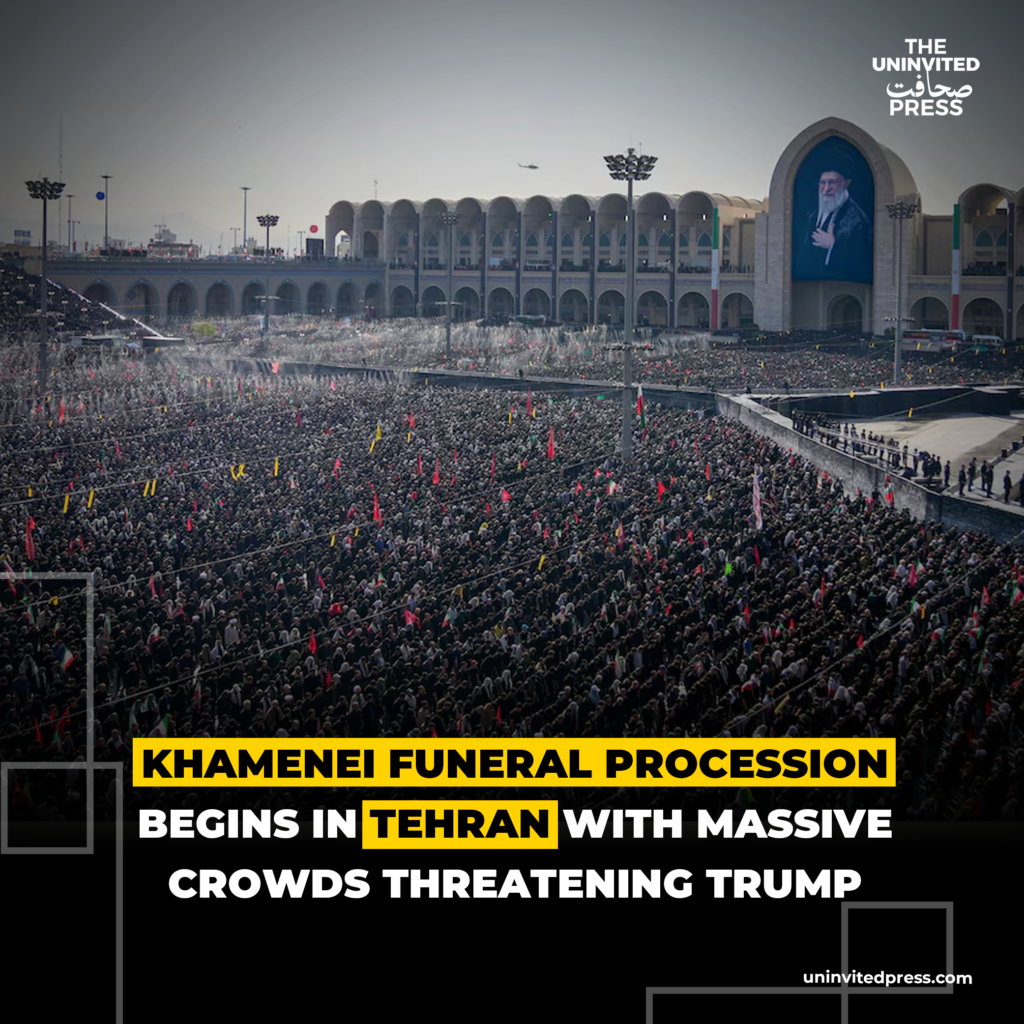
Hundreds of thousands gather as multi-day ceremonies highlight national mourning and defiance amid fragile regional truce.
Iran has launched a days-long state funeral for its former Supreme Leader Ayatollah Ali Khamenei, who was killed in a US-Israeli airstrike in February, with massive crowds filling the streets of Tehran for the start of public processions.
The funeral, described by Iranian officials as one of the largest gatherings since the 1979 Islamic Revolution, features processions through the capital and other cities, drawing millions of mourners waving flags and chanting slogans of resistance.
Massive Crowds and Political Messaging:
The ceremonies began with public viewings at Tehran’s Grand Mosalla mosque, where Khamenei’s coffin, alongside those of slain family members, lay in state. On Monday, a major procession wound through central Tehran, from Imam Hossein Square toward Azadi Square-a symbolic route echoing revolutionary history.
State media reported hundreds of thousands, with projections reaching millions over the week, participating in rituals steeped in Shiite tradition. Mourners, many dressed in black, carried red “revenge” banners and voiced anti-US and anti-Israel chants, including references to US President Donald Trump.
Analysts note the events serve both as genuine mourning and a display of regime resilience following the devastating war that claimed Khamenei and other top figures. Foreign delegations from over 100 countries attended earlier ceremonies, underscoring Iran’s diplomatic outreach even in grief.
Khamenei’s son Mojtaba, the new Supreme Leader, has been notably absent from some public portions, while other family members appeared.
Iran Mourns as Leadership Enters a New Era:
The funeral spans several days, moving from Tehran to Qom, and then to sacred Shiite sites in Iraq such as Karbala and Najaf, before concluding with burial in Mashhad, Khamenei’s birthplace.
Authorities expect up to 15-20 million attendees overall, with tight security amid the fragile US-Iran ceasefire signed last month. The delay in holding the full funeral-nearly four months after the killing-reflects concerns over potential renewed attacks during the mourning period.
The events coincide with heightened regional tensions, including Israeli actions in Lebanon, adding layers of political symbolism to the religious observances.
Khamenei, 86, led Iran for over three decades following Ayatollah Ruhollah Khomeini. His death in the opening strikes of the US-Israeli conflict marked a pivotal moment for the Islamic Republic.
As processions continue, the funeral highlights the theocracy’s efforts to project unity and strength. It also raises questions about the direction under the new leadership, as Iran navigates post-war recovery and sensitive international negotiations.
Iranian officials have framed the mourning as a call to “rise up” in defence of the revolution, blending personal loss with broader ideological defiance.