

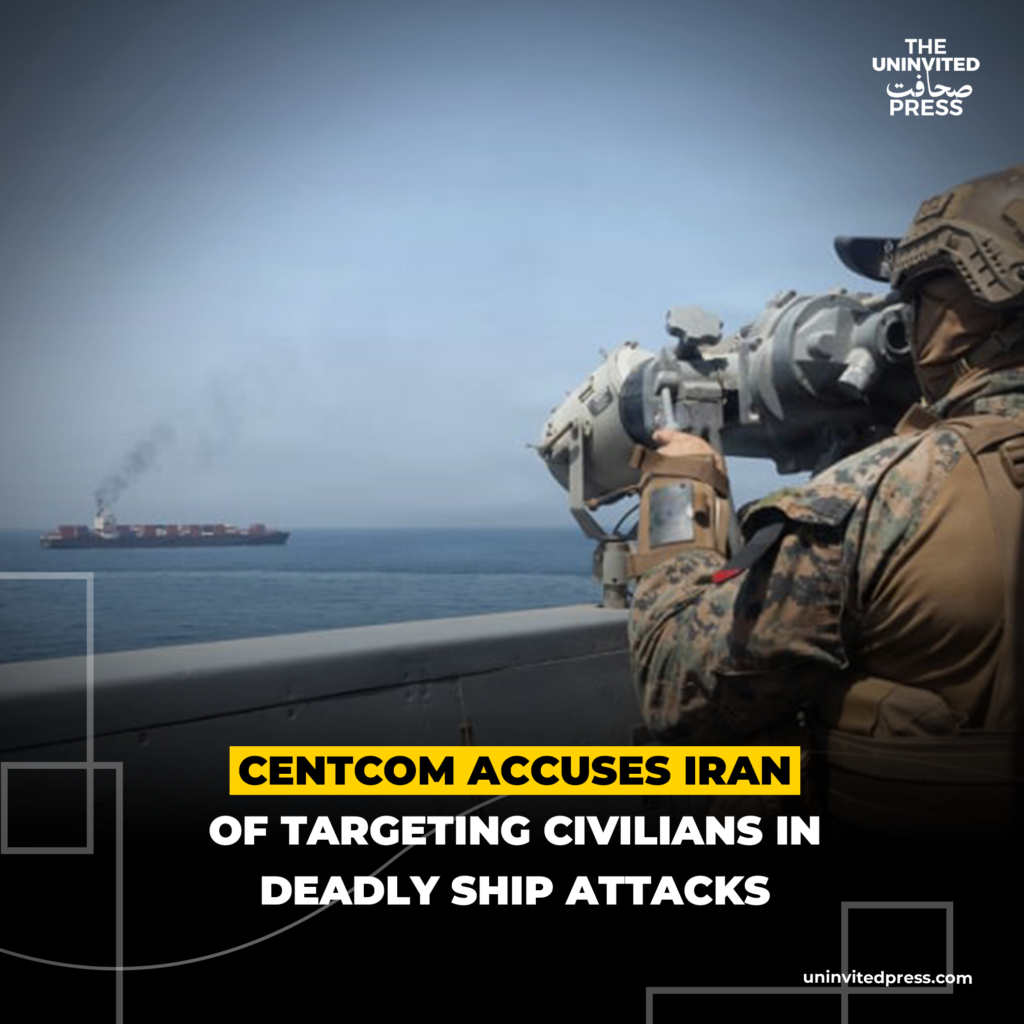
CENTCOM alleges Iranian attacks on merchant ships caused fatalities and injuries among civilian crews. The reported incidents have intensified concerns over freedom of navigation in the region.
The US Central Command (CENTCOM) has accused Iran of deliberately targeting civilians in a series of attacks on commercial ships in the Gulf region, saying the strikes have resulted in deaths, injuries, and missing crew members.
In a statement, Adm. Brad Cooper of CENTCOM highlighted incidents involving vessels such as the Qatari-flagged tanker M/T Al Rekayyat and others operating near Omani waters. The attacks reportedly killed at least one civilian, injured eight others, and left several crew members missing.
The accusations come as tensions in the Strait of Hormuz and surrounding waters remain high following months of direct US-Iran military confrontations, including US strikes on Iranian targets and a naval blockade on Iranian ports.
Shipping Risks Persist Despite Ceasefire:
The latest incidents occur against the backdrop of a fragile ceasefire between the United States and Iran. While both sides have pulled back from full-scale confrontation, sporadic attacks on shipping have continued, raising fears of renewed escalation in one of the world’s most vital energy corridors.
Iran has not publicly responded to the latest CENTCOM allegations, but Tehran has previously denied targeting civilian vessels, often accusing the US and its allies of provoking instability in the region to justify military presence.
Commercial shipping through the Strait of Hormuz-which carries roughly one-fifth of global oil supplies-has slowed significantly due to security concerns, contributing to higher oil prices and economic ripple effects across the region.
Maritime Patrols Expand After Attacks:
The US has been working closely with Gulf allies to secure maritime routes, with several countries reportedly intercepting Iranian missiles and drones aimed at commercial and military targets. CENTCOM’s statement frames the attacks as part of a pattern of Iranian aggression against international shipping, endangering civilian lives in violation of international norms.
This latest flare-up adds to longstanding concerns over freedom of navigation in the Gulf, a flashpoint that has drawn in multiple regional and global powers. Analysts warn that continued incidents could undermine diplomatic efforts to stabilise the area and risk drawing more countries into direct conflict.
As investigations continue, the US and its partners are expected to increase patrols and calls for de-escalation, while urging Iran to cease actions against civilian vessels. The situation remains fluid, with potential implications for global energy security and broader Middle East stability.