

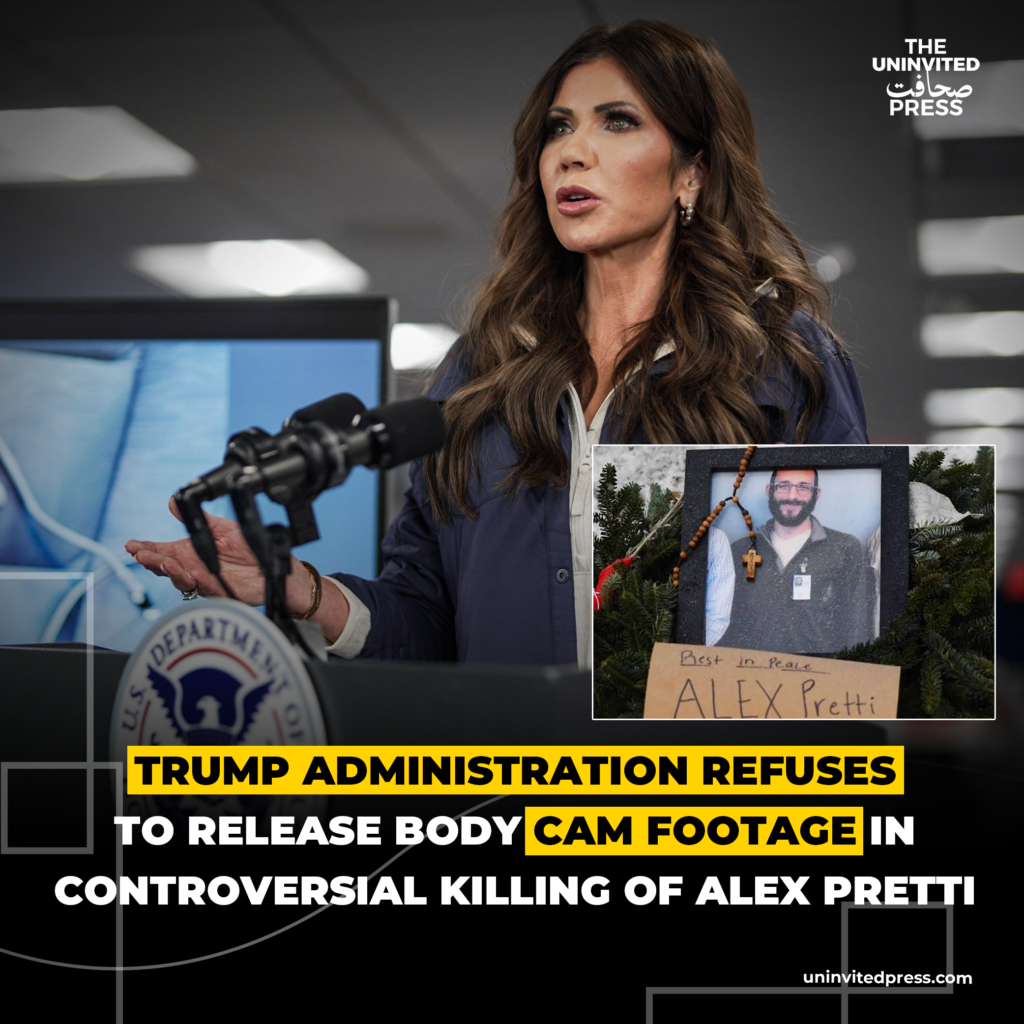
Officials have declined to release the body camera footage, drawing criticism from transparency advocates. The decision has intensified public scrutiny over accountability and the handling of the high-profile case.
The Trump administration has declined to release body camera footage related to the killing of Alex Pretti, a decision that has drawn sharp criticism from civil rights advocates and the victim’s family amid growing demands for transparency.
The refusal comes despite widespread calls for the video evidence following the controversial incident, which has sparked public debate over law enforcement conduct and government openness.
Calls for accountability ignored:
Rights organizations and transparency advocates contend that withholding the footage risks undermining public confidence in law enforcement and government institutions. They argue that releasing body camera recordings in high-profile cases is an important step toward ensuring independent scrutiny and maintaining public trust. US authorities have not publicly stated when or whether the footage will be released, leaving the case under continued public and legal scrutiny.
Questions Over Transparency Continue:
The case of Alex Pretti has attracted widespread public attention, with growing calls for an independent review and greater transparency surrounding the circumstances of his death. Critics argue that the administration’s refusal to release the body camera footage has fueled doubts about the official account and intensified concerns over accountability, particularly amid a political climate that emphasizes law-and-order policies.
As pressure continues to build from Pretti’s family, legal experts, civil rights organizations, and community leaders, the dispute has evolved into a broader debate about government transparency and public oversight. Advocates say releasing the footage is essential to ensuring accountability, protecting public trust, and upholding the public’s right to information in cases involving the use of state force.