

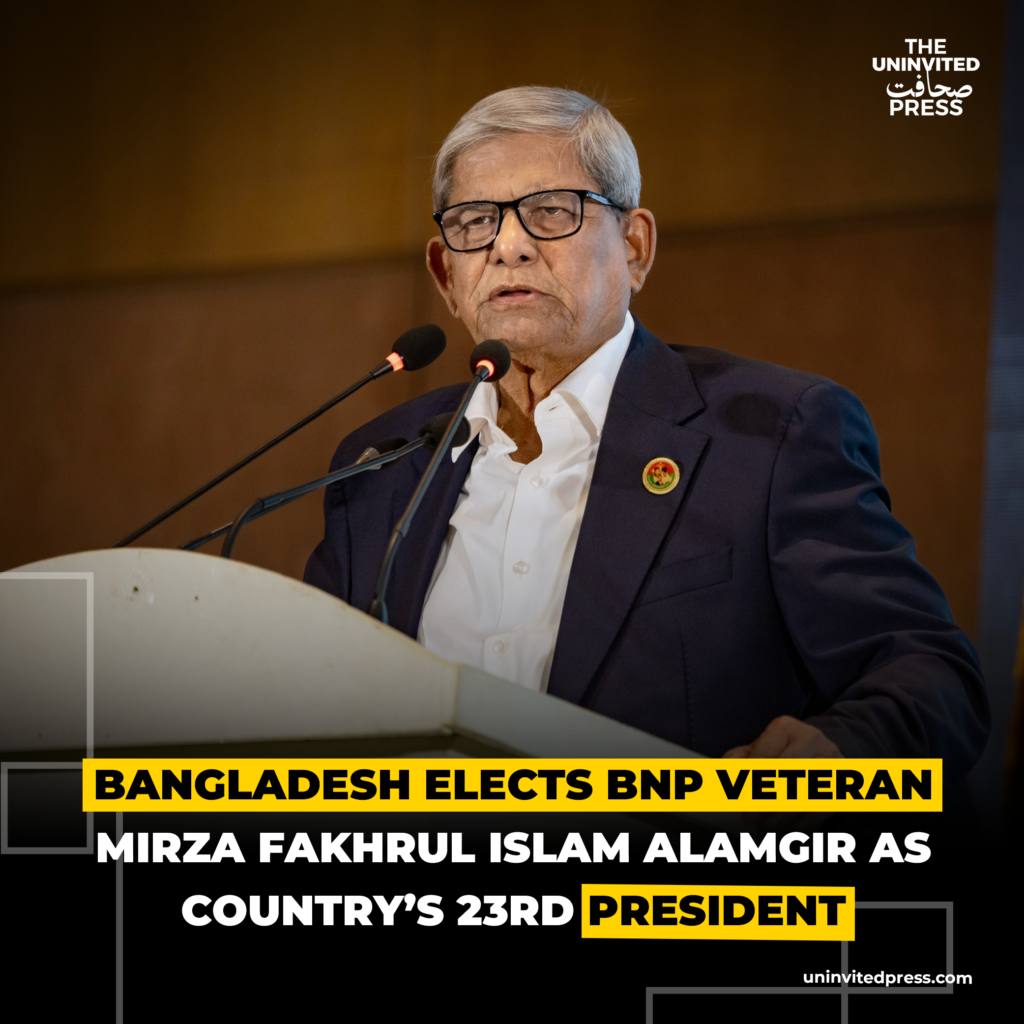
Longtime opposition figure wins first contested presidential vote in 35 years, filling vacancy after predecessor’s early resignation.
Bangladesh’s parliament has elected Mirza Fakhrul Islam Alamgir, a veteran leader of the ruling Bangladesh Nationalist Party (BNP), as the country’s 23rd president in a parliamentary vote on Thursday, marking the first contested presidential election since 1991.
BNP Veteran Alamgir Takes Bangladesh’s Presidency:
The 78-year-old Alamgir, who has served as BNP secretary-general since 2016 and most recently as local government, rural development and cooperatives minister, secured 255 votes. His sole rival, Oli Ahmed, an 84-year-old retired army colonel, chairman of the Liberal Democratic Party and candidate of an 11-party opposition alliance led by Jamaat-e-Islami, received 88 votes. Chief Election Commissioner A.M.M. Nasir Uddin announced the result after voting by members of parliament.
Of the 349 eligible lawmakers, 343 cast ballots. Alamgir is scheduled to take the oath of office on Friday evening at Bangabhaban, the presidential palace in Dhaka.
The presidency is a largely ceremonial position under Bangladesh’s parliamentary system. The president serves as head of state and commander-in-chief of the armed forces, while executive authority rests with the prime minister and cabinet. The vote was required after former President Mohammed Shahabuddin, a close ally of ousted Prime Minister Sheikh Hasina, resigned in late July citing health reasons, two years before the end of his term. The constitution mandates that a new president be elected within 90 days of a vacancy.
BNP’s Alamgir Elected Bangladesh President:
Alamgir’s election comes six months after the BNP returned to power in the February 2026 general election, which followed the 2024 student-led uprising that forced Hasina from office and led to an interim administration. Prime Minister Tarique Rahman, who assumed leadership of the BNP after the death of his mother Khaleda Zia, heads the government. The BNP and its allies hold a commanding majority in parliament.
A longtime face of the opposition during Hasina’s 15-year rule, Alamgir was repeatedly detained in what he and his party described as politically motivated cases. He has held several ministerial portfolios in previous BNP governments, including agriculture, civil aviation and tourism. Before the vote, he told reporters he never expected to become president, attributing it to “the infinite grace of the party and almighty Allah,” and pledged to “remain beside the people and serve them.”
The contest was notable as the first competitive presidential election in more than three decades. Since Bangladesh restored parliamentary democracy in 1991, most presidential elections had been uncontested, with the ruling party’s nominee elected unopposed.
Alamgir’s elevation completes a significant political transition for the South Asian nation of some 170 million people, consolidating BNP control over both the government and the largely symbolic presidency.