

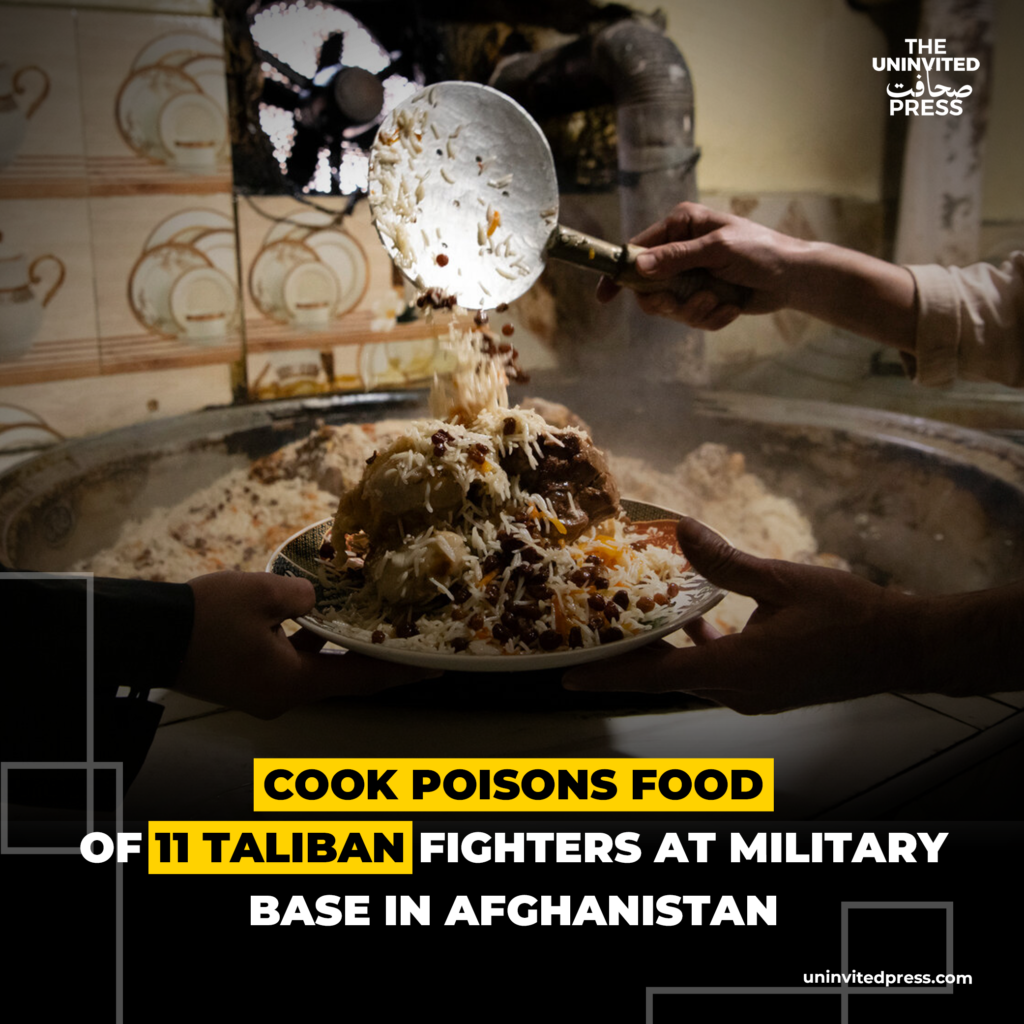
Local sources say brigade cook arrested after incident in Badghis; wounded fighters airlifted for treatment as authorities remain silent.
Local sources in Afghanistan’s western Badghis province have reported that 11 members of a Taliban military unit fell ill after consuming food at a base, prompting the arrest of the unit’s cook and the emergency evacuation of the affected fighters.
Taliban Fighters Hospitalised After Suspected Poisoning in Badghis:
According to those sources, the fighters became severely unwell overnight. Early on Wednesday, Taliban helicopters arrived in Badghis and evacuated the men to Herat province for treatment. Authorities arrested the brigade’s cook in connection with the episode. No information has been released about the fighters’ current condition, the nature of any investigation, or any confession or explanation from the detained cook.
Independent outlets have noted that the cause of the poisoning has not been clarified and that sources provided no further details about who may have been responsible or why. The absence of official comment fits a broader pattern under Taliban rule, in which security-related incidents involving their own forces are frequently met with silence or delayed, limited responses.
Similar incidents reported in Afghanistan in recent years-both under the previous government and since the Taliban’s return to power in 2021-have sometimes been linked by local observers to personal grievances, disputes over pay or resources within units, or, less frequently, alleged infiltration by anti-Taliban elements. Earlier cases, including food-related illnesses affecting security personnel in other provinces, have occasionally been attributed to internal rivalries or individual acts of retaliation rather than organised external operations. However, without forensic results, official findings, or credible claims of responsibility, none of these possibilities can be verified in the Badghis case.
Badghis itself has long been a relatively peripheral province with periodic security challenges, including residual armed activity and difficulties in fully consolidating control over remote districts. The presence of a dedicated infantry brigade reflects the Taliban’s effort to maintain a formal military structure across the country. Incidents that expose vulnerabilities within that structure-whether accidental contamination, deliberate internal sabotage, or external action-tend to be closely controlled in official messaging.
11 Taliban Fighters Airlifted After Suspected Poisoning:
The rapid airlift of the 11 fighters to Herat, a regional hub with better medical facilities, indicates that the symptoms were treated as serious. Air transfers from Badghis are typically reserved for cases where local treatment is insufficient. Yet even this operational detail has not been accompanied by any public update on outcomes.
For ordinary Afghans and independent journalists operating under tight restrictions, this incident underscores persistent difficulties in obtaining reliable information about events inside the security apparatus. Taliban authorities tightly manage narratives around their forces, and independent reporting often depends on local sources who risk repercussions for speaking. This information vacuum allows rumours to circulate while leaving the core questions-why the fighters fell ill, whether the cook acted alone or under instruction, and what the investigation has found-unanswered.
As of the latest available reports, no group has claimed responsibility, no fatalities have been confirmed, and the Taliban have offered no clarification. Until authorities choose to release findings or allow greater transparency, the incident stands as another example of an unresolved security episode whose causes remain hidden from public view. Further developments will depend on whether the administration breaks its silence or whether additional independent reporting emerges from Badghis or Herat.