

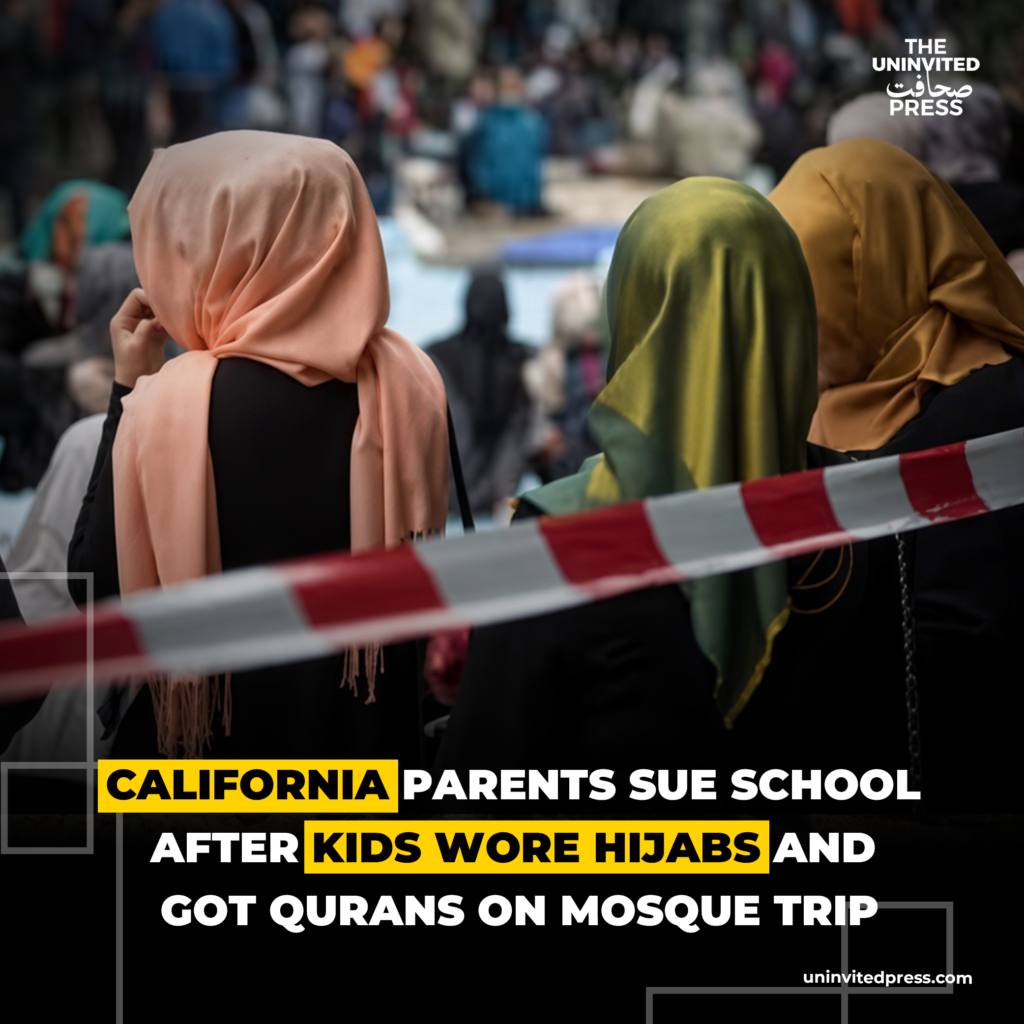
Jewish, Hindu and Zoroastrian families allege public school promoted one faith and failed to protect religious neutrality and student privacy.
A group of parents and former students has filed a federal lawsuit against a northern California school district, accusing it of crossing the line from educational exposure into the promotion of Islam during a high school field trip to a mosque.
The complaint, lodged in early August 2026 in the US District Court for the Northern District of California, targets the Palo Alto Unified School District and Palo Alto High School Principal Brent Kline. It centres on a fall 2025 visit organised under the school’s Social Justice Pathway programme to the Muslim Community Association mosque in Santa Clara. Plaintiffs include Jewish parents of current and former students, a Hindu parent and a Zoroastrian parent, acting through the group Community Members for Religious Neutrality in Public Schools-San Francisco Bay Area.
US School District Sued Over Mosque Visit:
According to the lawsuit, minor students were provided with Muslim religious attire and encouraged to wear it on site, with girls given hijabs. Students were also handed copies of the Quran to take home, observed midday Dhuhr prayers, engaged with participants in a Quran-memorisation programme run by the host institution, and were presented with the idea that Islam is particularly aligned with social justice work. Photographs of students in religious attire inside the mosque were later posted publicly by the host organisation, the complaint states, without meaningful, fully informed parental consent or a clear opt-out option.
The plaintiffs argue that the district failed to maintain the religious neutrality required of public schools under the First Amendment’s Establishment Clause and related state rules. They contend the programme elevated one faith above others by making the mosque the only house of worship visited in connection with the Social Justice Pathway, thereby stigmatising students and families who do not share that perspective. The suit further claims inadequate vetting of speakers, including exposure to Zahra Billoo, executive director of the Bay Area chapter of the Council on American-Islamic Relations, whose past public statements have drawn criticism from some Jewish organisations. Parents say they were not given sufficient advance information about the religiously inflected nature of the activities.
“The district failed to maintain religious neutrality, failed to ensure equal treatment among faiths, failed to protect student privacy and failed to vet, supervise, and monitor religiously divisive outside speakers during the school-sponsored event,” the complaint states. Plaintiffs seek declarations that the conduct was unlawful, injunctions against similar future trips, stronger policies on consent, photography and outside speakers, and removal of publicly posted images where possible.
School officials have responded cautiously. Superintendent Jason Glass said the district learned of the lawsuit through media reports and had not been formally served at the time of early statements. He noted that officials had reviewed the complaint but could not independently verify the allegations. Some accounts associated with the mosque and certain students have disputed elements of the narrative, including claims that every student received a Quran or that participation in attire and activities was coercive rather than optional or customary for visitors. Defenders of the trip have framed it as part of broader efforts to foster understanding across communities and combat prejudice through direct exposure to different traditions.
US Court Case Tests Religious Neutrality in Schools:
The case highlights longstanding tensions in American public education over the boundary between teaching about religion and appearing to endorse it. US courts have long held that schools may expose students to diverse faiths in an academic context but must avoid practices that a reasonable observer would view as government promotion of one religion. Field trips to houses of worship are not inherently unconstitutional when handled carefully, yet questions of parental notice, voluntary participation, equal treatment of traditions, and the use of student images can quickly become contested.
Palo Alto High School’s Social Justice Pathway is described as a multi-year elective programme focused on examining and addressing social problems. Critics of the lawsuit argue that learning about Islam’s historical and contemporary connections to justice work, or observing respectful customs such as head coverings inside a mosque, falls squarely within educational goals. Supporters of the parents counter that providing religious texts for personal use, encouraging specific attire, photographing students in that attire for public promotion, and linking one faith uniquely to the school’s social justice mission goes beyond neutral instruction.
The dispute also intersects with broader debates in California and nationwide about curriculum, parental rights, and how schools navigate pluralism in an increasingly diverse society. Jewish plaintiffs have pointed to heightened concerns about antisemitism and unequal treatment of minority faiths in educational settings. Hindu and Zoroastrian participants emphasise the principle that no single tradition should receive preferential institutional endorsement. Meanwhile, Muslim community representatives and some educators stress the value of interfaith contact and the risk that lawsuits could chill legitimate efforts at cross-cultural education.
As the case proceeds, the court will examine whether the district’s actions, as alleged, constituted an unconstitutional endorsement of religion or a permissible educational experience. Both sides frame their positions in the language of rights: the right of students and families to be free from government-favoured religion on one hand, and the right of schools to prepare young people for life in a multireligious democracy on the other. The outcome may influence how other districts design field trips, consent procedures and social justice programming involving religious institutions.