

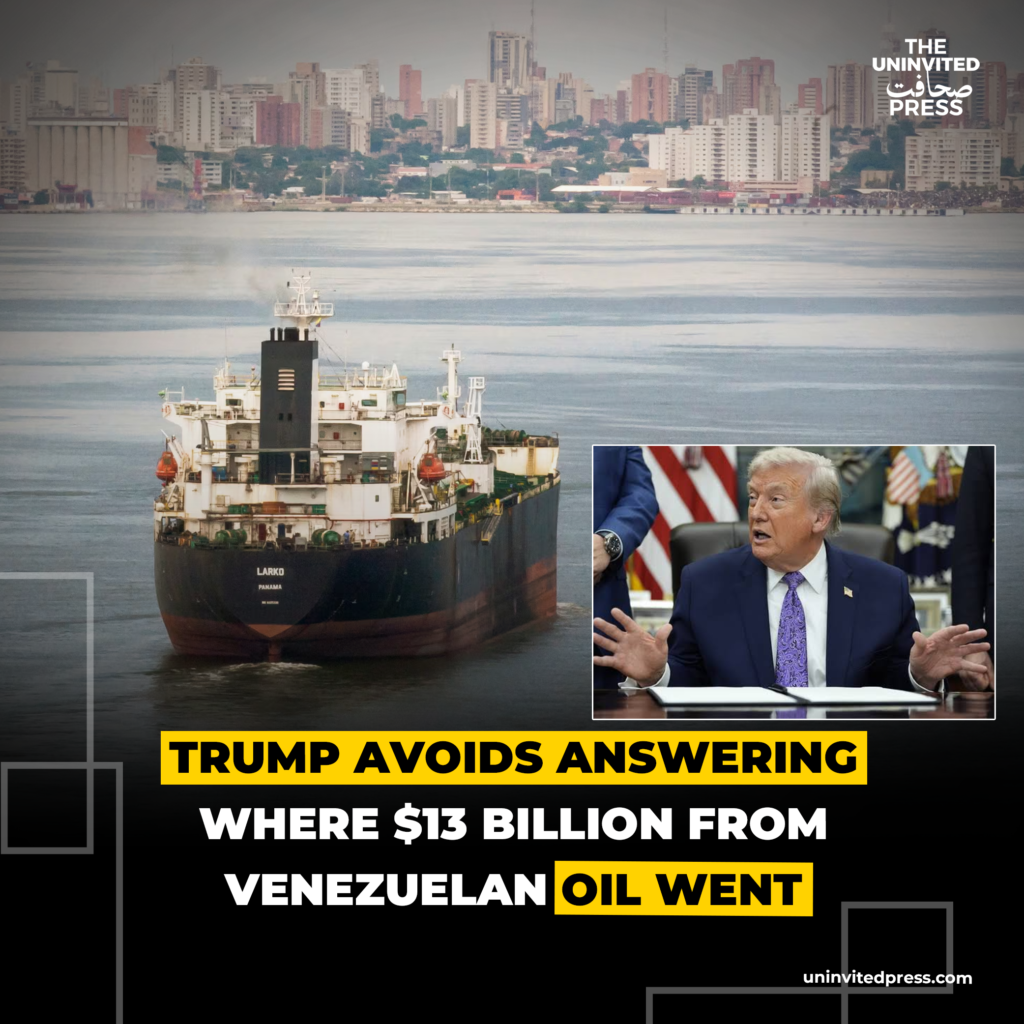
Sales reportedly exceeded Financial Times estimates, but President Trump offered no detailed accounting. Only a small portion of the revenues has reportedly been transferred to Caracas.
US President Donald Trump has acknowledged that Washington has collected more than $13bn from the sale of Venezuelan oil since January, yet has declined to provide a detailed public explanation of where the bulk of those funds have gone.
Speaking to reporters aboard Air Force One on 27 July while travelling to Michigan, Trump responded to questions about a Financial Times analysis estimating that his administration had gathered around $13bn in revenues from Venezuelan crude exports this year. “$13 billion from Venezuela? I think even more than that,” he said. “We’ve paid for that war many times over.”
The remark came six months after US forces captured then-President Nicolás Maduro in a January raid and installed Vice President Delcy Rodríguez as interim leader. In the aftermath, the Trump administration assumed effective control over Venezuela’s oil exports, suspended certain sanctions, and began overseeing sales of the country’s most valuable commodity. Oil accounts for roughly a quarter of Venezuela’s GDP.
$13bn Venezuelan Oil Revenue Faces Scrutiny:
According to the Financial Times investigation, based on shipping data and price estimates for key grades of Venezuelan crude, the value of oil moved under US supervision has surpassed $13bn. Venezuela’s own public tracking website lists only a single transfer of $300m back to the country in March. A senior State Department official told Congress in April that approximately $3bn had been sent to Venezuela and that the accounting firm KPMG was auditing the accounts, with promises of quarterly reports. Those reports have not been publicly released, and lawmakers from both parties have said they remain “in the dark.”
The administration’s public statements on the funds have shifted over time. An executive order issued in January described the US role as “custodial,” with the money remaining Venezuelan property held in designated Treasury accounts. Energy Secretary Chris Wright later said the proceeds would be “disbursed for the benefit of the American people and the Venezuelan people.” Trump himself has at times claimed the United States is “making a lot of money” from the oil and has boasted that the operation paid for itself many times over. In one instance he noted that the short military action that removed Maduro had brought “millions of barrels of oil out.”
Economists tracking Venezuela’s economy note that growth in the first quarter of 2026 registered only 2.5 percent-the weakest performance in nearly five years-despite a significant rise in oil export volumes under the new arrangement. Analysts suggest the muted recovery may indicate that not all of the increased revenues are reaching the Venezuelan government or being spent inside the country. A devastating pair of earthquakes in June, which the United Nations estimated caused $37bn in damage, has further highlighted the gap between the scale of oil income generated and the limited resources visibly available for reconstruction and public services.
Where Did Venezuela’s Oil Billions Go?
Critics in the US Congress, including Democratic Representative Joaquín Castro, have accused the administration of operating without adequate transparency or safeguards. “Trump’s invasion of Venezuela has been about oil, power, and graft from the very beginning, with billions of dollars in Venezuelan oil revenue being controlled by the Trump administration without transparency or safeguards,” Castro told the Financial Times. Some Republican members have also called for greater public reporting.
From Caracas, the Rodríguez government has publicly supported the US-managed sales process and created a website intended to provide transparency. Yet the discrepancy between the scale of revenues calculated by independent analysts and the amounts recorded as received has fuelled scepticism among Venezuelan economists and ordinary citizens still grappling with years of economic crisis, hyperinflation, and infrastructure collapse.
The episode has revived broader debates about sovereignty, resource control, and the long-term consequences of external intervention in Latin America. Oil has long been both Venezuela’s greatest asset and a source of political vulnerability. Previous governments under Hugo Chávez and Maduro faced repeated accusations of mismanagement and corruption that drained state oil company PDVSA of resources. Now, with the United States exercising direct oversight of exports, questions about accountability have simply shifted northward.
As of late July, the Trump administration has not released a comprehensive public accounting of how much oil has been sold, at what prices, into which accounts the proceeds have flowed, or precisely how the funds have been allocated between Venezuelan needs, operational costs, and any other purposes. Trump’s latest comments confirm the scale of the operation while leaving the central question unanswered: where has the money gone?