

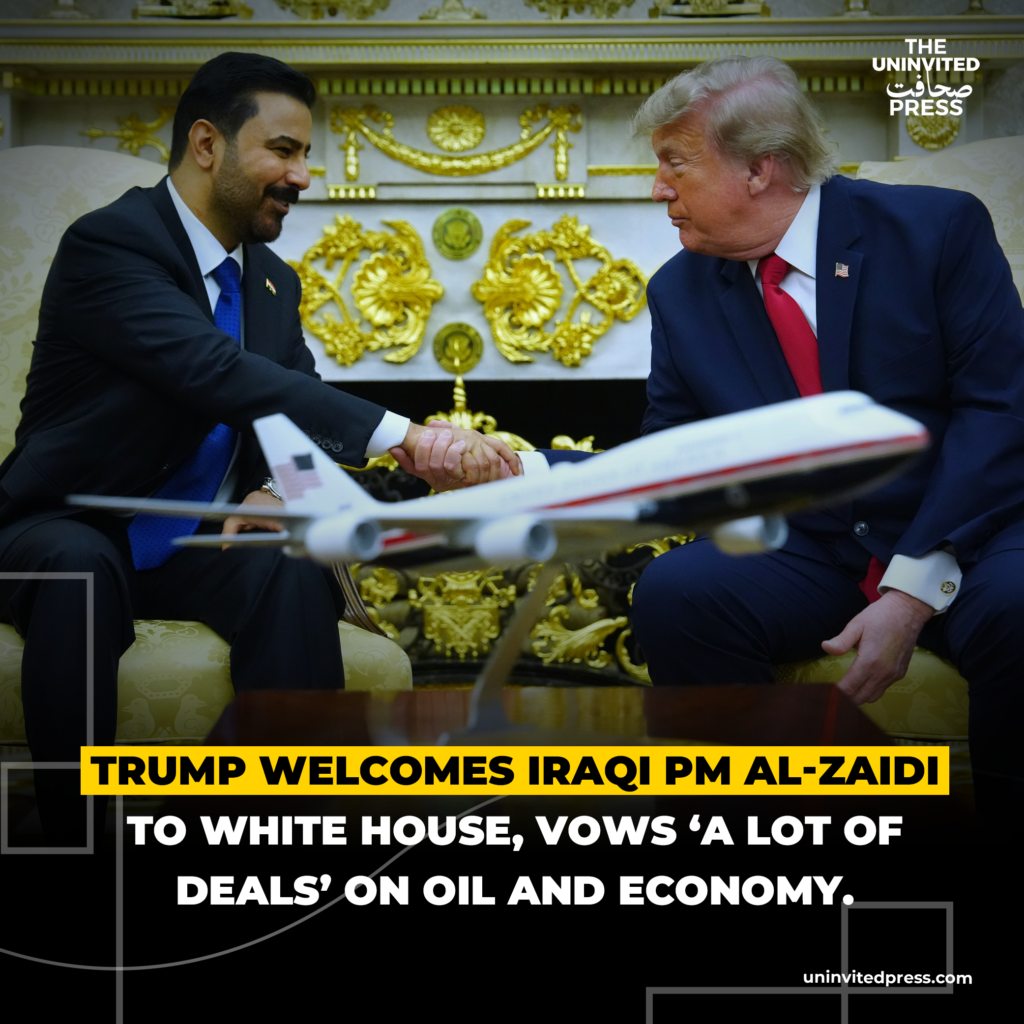
US-Iraq relations shift towards energy partnerships and reduced military footprint as Baghdad seeks to balance ties with Washington and Tehran.
US President Donald Trump hosted Iraq’s new Prime Minister Ali al-Zaidi at the White House on Tuesday, hailing “tremendous chemistry” with the businessman-turned-leader and promising “a lot of deals” focused on oil, economic cooperation, and investment.
The meeting, al-Zaidi’s first major trip abroad since taking office, marks a notable pivot in bilateral ties. Both sides highlighted a transition from a long-standing security relationship to deeper economic engagement, coinciding with the planned full withdrawal of remaining US troops from Iraq by September 30.
Trump praised al-Zaidi, a political newcomer backed by the US during Iraq’s recent leadership transition, as a “fantastic champion” who could steer the country toward prosperity. “They have tremendous oil reserves, they have tremendous potential wealth,” Trump said, referencing emerging partnerships in the energy sector.
Al-Zaidi, speaking through an interpreter, conveyed greetings from “the oldest civilization in the world” and emphasised an “economic partnership” aimed at diversifying Iraq’s economy, creating jobs, and expanding oil production.
Iraq Balances Security and Investment:
The visit comes as Iraq navigates complex regional dynamics, including ongoing tensions involving Iran and efforts to curb the influence of Iran-backed militias operating within its borders. Al-Zaidi has vowed to address paramilitary groups and corruption, priorities that align with US interests in stabilising the country post-ISIS campaign.
Analysts view the meeting as an opportunity for Baghdad to secure US investment while maintaining strategic autonomy. Iraq remains heavily reliant on oil exports, and deals with American firms could help modernise infrastructure and boost output. However, questions linger about implementation amid Iraq’s entrenched political challenges and competing external influences.
The confirmation of the US troop withdrawal by late September ends a presence that began with the 2003 invasion, fulfilling long-standing Iraqi demands for full sovereignty while allowing continued economic and diplomatic cooperation.
Trump Eyes Stronger US-Iraq Ties:
Ali al-Zaidi, a 41-year-old banker and businessman with no prior political experience, emerged as a compromise candidate earlier this year. His unexpected rise received public support from Trump, who opposed other contenders. In his first parliamentary address, al-Zaidi pledged to disarm various armed factions that have wielded significant power since the US-led war.
The White House meeting signals strong US endorsement of his leadership, with Trump framing it as the “beginning of a tremendous new chapter” focused on prosperity and stability.
As Iraq seeks to rebuild and diversify beyond oil dependency, the outcomes of these talks could shape the country’s economic trajectory and its position in a volatile region. Observers will watch closely whether announced partnerships translate into tangible benefits for ordinary Iraqis or primarily serve elite and foreign interests.