

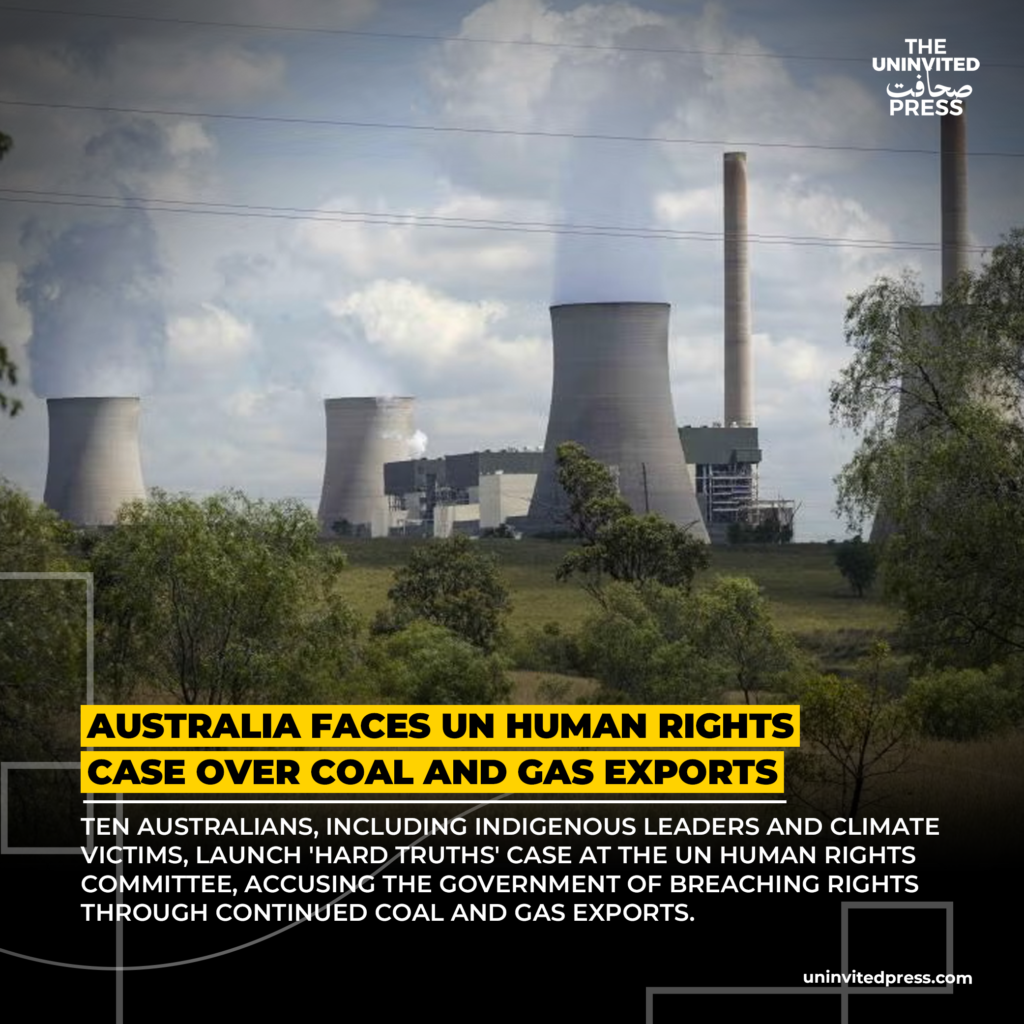
‘Hard Truths’ case challenges Canberra’s continued approval of coal and gas projects, highlighting the human cost of exported emissions
Ten Australians, including Indigenous leaders and people directly impacted by extreme weather events, have filed a landmark complaint with the United Nations Human Rights Committee, accusing the Australian government of breaching international human rights obligations through its support for coal and gas exports.
The case, titled “Hard Truths: The Australian Coal and Gas Exports Case”, argues that by approving and subsidising new fossil fuel projects-much of which is exported and burned overseas-Australia is contributing to climate change harms that violate citizens’ rights to life, health, family, home, and cultural integrity, particularly for First Nations peoples.
The complaint was formally submitted to the UN Human Rights Committee in Geneva and publicly launched in Parliament House on Monday. It is described as the first international legal claim against a country for climate harm since the International Court of Justice affirmed states’ legal duty to prevent significant climate damage.
Exported emissions, domestic consequences:
Australia is one of the world’s largest exporters of coal and liquefied natural gas. While the country excludes emissions from exported fossil fuels from its domestic climate accounting, critics say the pollution contributes to rising global temperatures that are already devastating communities at home.
The claimants include Traditional Owners whose lands have been affected by floods, bushfires, extreme heat, rising sea levels, and toxic algal blooms-events they link to the climate crisis intensified by fossil fuel combustion.
One claimant, Anne, a Traditional Owner from the Kimberley region, described watching devastating floods ravage her Country, according to reports surrounding the case launch.
The group contends that the Australian government, under the Albanese administration, is failing in its duty to protect people from foreseeable climate harms by continuing to expand fossil fuel production for export.
UN Climate Rights Case Challenges Australia’s Fossil Fuel Policy:
Environmental and human rights organisations supporting the case, including Environmental Justice Australia and Earthjustice, argue that Australia’s policies prioritise corporate profits over the rights of its citizens and vulnerable communities worldwide who suffer the downstream effects of exported coal and gas.
The complaint invokes the International Covenant on Civil and Political Rights, seeking a declaration from the UN committee that Australia’s continued approval of coal and gas projects without adequate safeguards is unlawful.
This action builds on previous UN findings against Australia, including a 2022 decision that the government violated the rights of Torres Strait Islanders through inadequate climate action.
The Australian government has consistently defended its climate policies, pointing to its renewable energy targets and commitments under the Paris Agreement. However, it continues to approve new fossil fuel projects, a stance that has drawn sharp criticism from climate scientists, Indigenous groups, and parts of the international community.
As extreme weather events become more frequent and severe across the continent-from record heatwaves to catastrophic flooding-the “Hard Truths” case puts Australia’s dual role as a major energy exporter and a nation facing acute climate impacts under global scrutiny.
The UN Human Rights Committee will now review the communication. While its decisions are not legally binding, they carry significant moral and political weight and could influence future domestic litigation and international pressure on Canberra.
For the claimants, the case represents more than legal action-it is a demand for accountability and a call to align government policy with the lived realities of those on the frontlines of the climate crisis.