

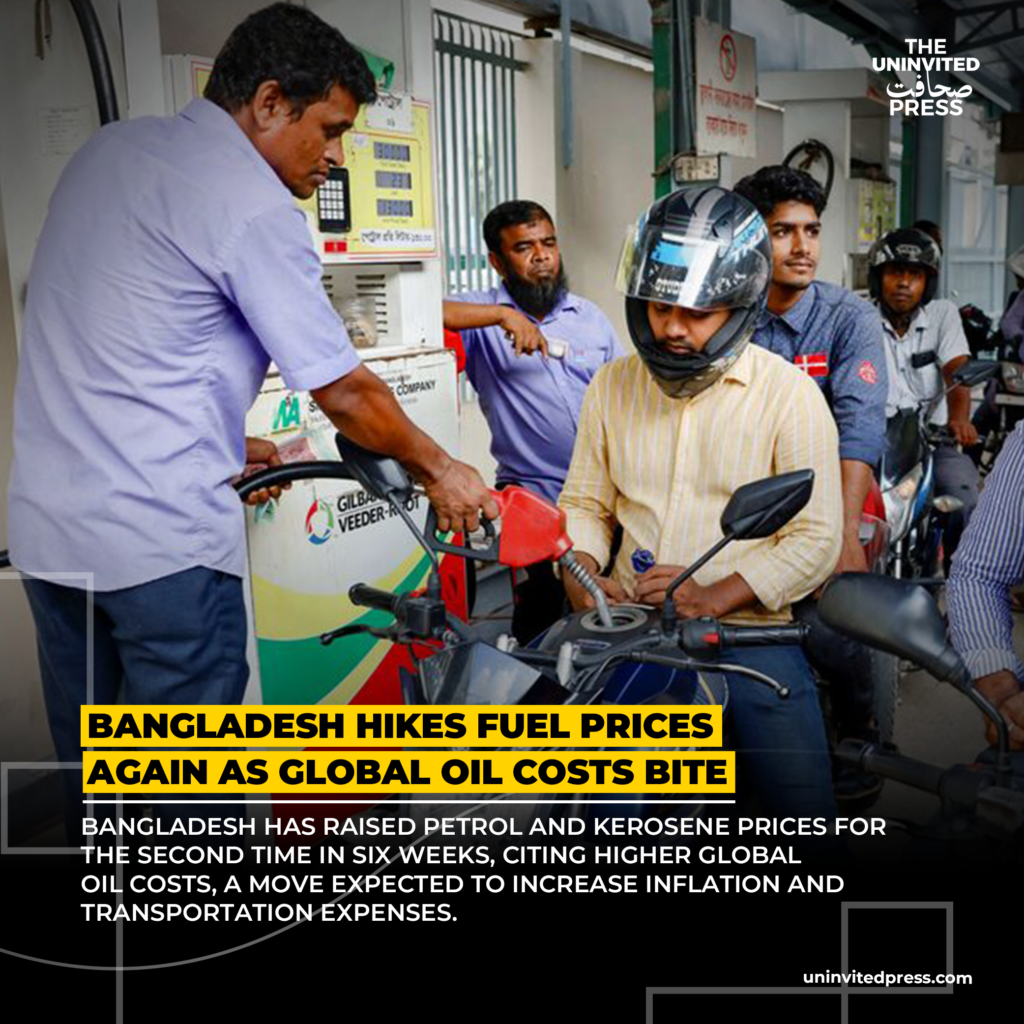
Petrol and kerosene costs increase amid rising international crude prices, sparking fears of higher inflation and transport burdens for millions of low-income households.
The Bangladeshi government has announced another round of fuel price hikes, raising the cost of petrol and kerosene for the second time in just six weeks, as authorities cite sustained high global oil prices.
The latest adjustment, effective immediately, increases petrol prices by approximately 5-7 taka per litre and kerosene by a similar margin, according to officials from the Bangladesh Petroleum Corporation (BPC). The move comes as international crude benchmarks remain elevated due to ongoing geopolitical tensions in the Middle East and supply concerns.
Impact on daily life:
For millions of Bangladeshis who rely on motorcycles, rickshaws, and public transport, the price hikes are expected to translate directly into higher transportation costs and increased living expenses. Kerosene, widely used for cooking and lighting in rural areas and urban slums, will add further pressure on already strained household budgets.
“I fill up my bike twice a week for work. Every time they raise the price, my daily earnings shrink,” said Mohammad Rahman, a delivery rider in Dhaka, speaking to local media at a fuel station.
Economists warn the increases could push inflation higher, which has already been hovering above 9% in recent months. Food and transport costs are particularly sensitive in a country where a large portion of the population lives on low and irregular incomes.
Bangladesh Raises Fuel Prices Amid Global Energy Pressures:
Energy ministry officials said the adjustments were necessary to reduce the massive subsidy burden on the state-owned BPC, which has been incurring heavy losses due to the gap between import costs and domestic retail prices.
This marks the second fuel price revision since early April, reflecting the government’s attempt to gradually align local prices with international market realities while managing the fallout from the global energy crisis.
Bangladesh imports nearly all of its petroleum needs, making it highly vulnerable to fluctuations in global oil markets. The situation has been exacerbated by the recent disruptions in the Strait of Hormuz and broader Red Sea shipping issues, which have driven up freight and insurance costs for energy imports.
Fuel Price Hikes Draw Criticism Amid Cost of Living Concerns:
Opposition parties and civil society groups have criticised the timing of the hikes, arguing that the interim government-which took over following last year’s political upheaval-should prioritise relief for citizens before passing on global cost pressures.
Consumer rights organisations have called for targeted subsidies for low-income groups and greater transparency in the pricing mechanism.
The government has said it will continue to monitor the situation and may introduce mitigating measures, such as expanded social safety net programmes, to cushion the impact on the most vulnerable.