

US president rejects ‘weak’ draft agreement as negotiations continue over uranium stockpiles, sanctions relief and reopening of Strait of Hormuz.
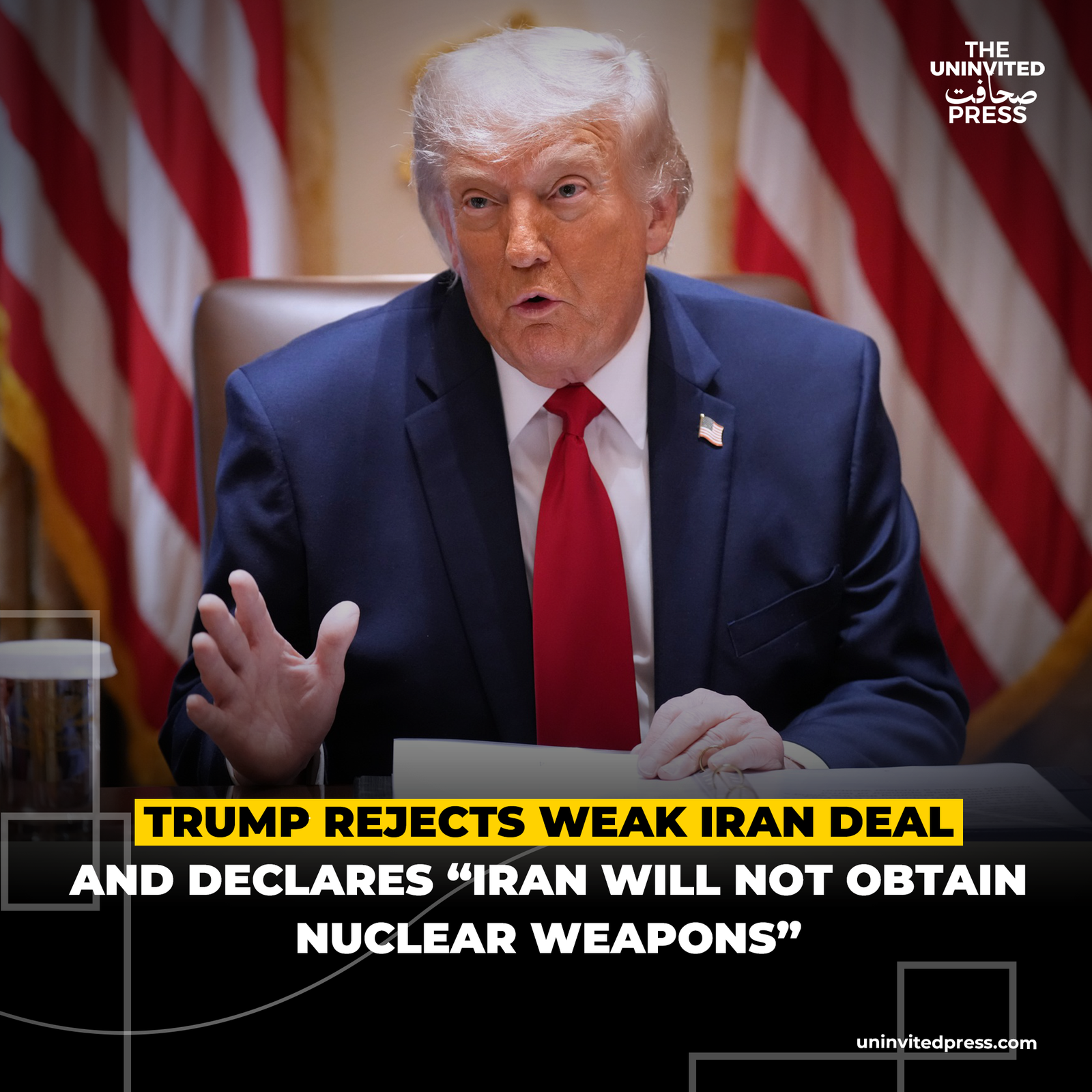
US President Donald Trump has pushed back against a preliminary framework reached between American and Iranian negotiators, demanding stronger guarantees that Iran will never obtain nuclear weapons, according to US officials and media reports.
In an interview, Trump declared that any deal must include ironclad assurances, stating: “The one guarantee that I have to have is that there will be no nuclear weapons. They’ve agreed to that.”
Tougher stance on uranium and sanctions:
The reported revisions come after US and Iranian negotiators reached a tentative memorandum of understanding to extend a fragile ceasefire by 60 days and begin broader talks on Iran’s nuclear programme. Trump, however, is said to have sent the draft back for amendments, seeking clearer and more stringent language on Tehran’s highly enriched uranium stockpile and other nuclear commitments.
Iran has long maintained that its nuclear programme is for peaceful purposes, but Washington and its allies remain deeply sceptical. Trump has repeatedly contrasted any future agreement with the 2015 Joint Comprehensive Plan of Action (JCPOA), which he withdrew from during his first term, calling it “horrible” and one-sided.
US-Iran Talks Face Major Hurdles Despite De-Escalation Efforts:
The negotiations are taking place against the backdrop of a three-month war earlier this year that saw direct US and Israeli strikes on Iranian targets, Iranian missile responses, and the closure of the Strait of Hormuz-a critical chokepoint through which about one-fifth of global oil passes.
Reopening the strait for safe commercial shipping remains a key US demand, alongside limits on Iran’s nuclear activities. Iran has signalled willingness to discuss de-escalation but has rejected what it describes as excessive US demands.
The developments have raised concerns in the region. Israel, which views Iran’s nuclear programme as an existential threat, has expressed reservations about any deal that does not fully dismantle Tehran’s capabilities. Meanwhile, Iranian officials have said a final agreement is “not imminent” and that trust in US commitments remains low.
Analysts warn that while both sides appear motivated to avoid further escalation, significant gaps remain on core issues such as the timeline for sanctions relief, the fate of Iran’s enriched uranium, and verification mechanisms.