

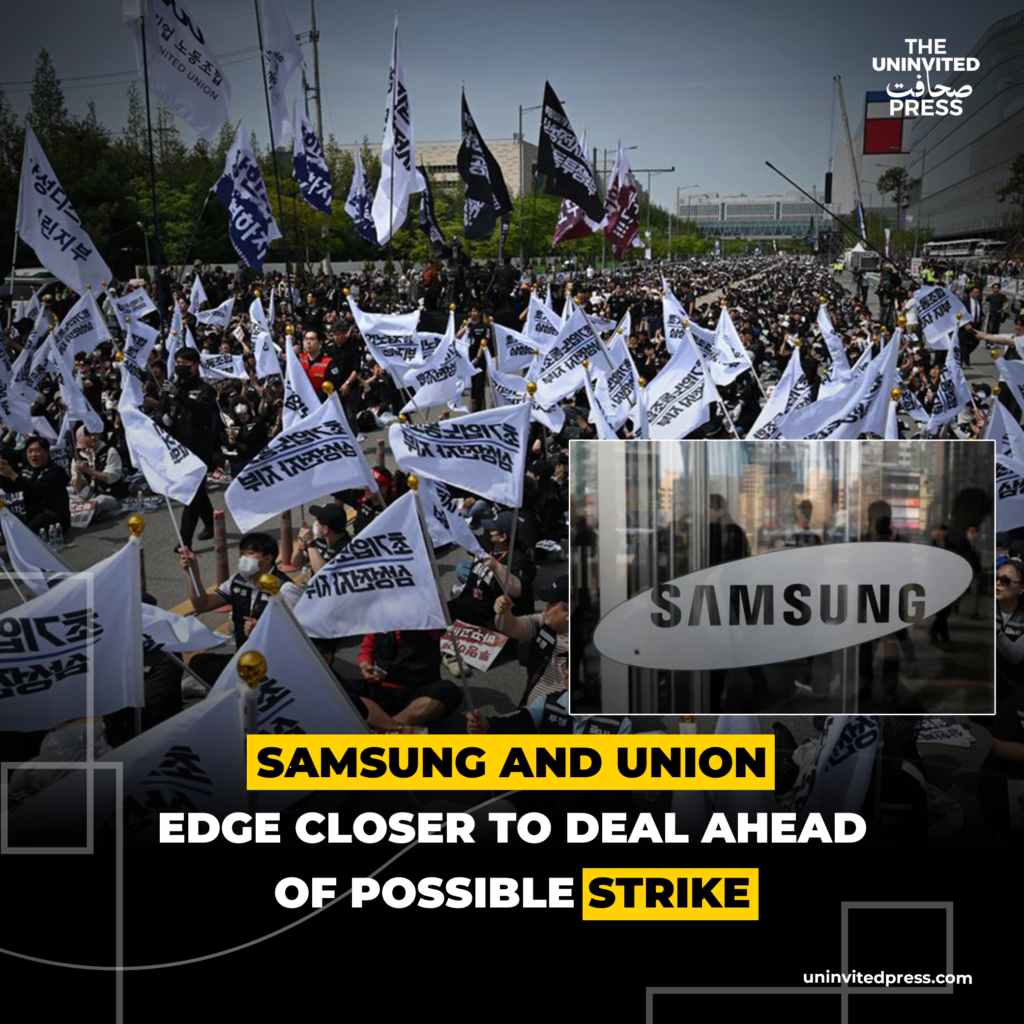
Intensive last-minute negotiations aim to avert what could be the largest walkout in Samsung Electronics’ history, amid soaring AI-driven profits and worker demands for fairer compensation.
Tens of thousands of Samsung Electronics workers have taken to the streets in recent weeks, waving union flags and demanding a greater share of the company’s record profits from the global artificial intelligence boom. As a planned 18-day strike approaches, management and the union are engaged in extended government-mediated talks described by both sides as a critical opportunity to reach an agreement.
The dispute centres on wages, performance bonuses, and profit-sharing. Union leaders argue that despite Samsung’s strong financial performance-fuelled by demand for high-bandwidth memory (HBM) chips essential for AI data centres-compensation has not kept pace with rivals like SK Hynix. Workers are seeking the removal of caps on performance bonuses and a larger slice of profits, reportedly around 15 percent, while the company has offered increases with certain limitations.
Samsung Strike Threat Raises Global Chip Supply Concerns:
Samsung Electronics, the world’s largest memory chipmaker, is a cornerstone of the South Korean economy, accounting for a significant portion of national exports and employing over 120,000 people directly, with thousands more in its supplier network. South Korean officials, including the prime minister, have warned that even a short disruption could cost hundreds of millions of dollars daily and threaten global chip supplies at a time of tight availability for AI infrastructure.
A court has partially granted the company an injunction, requiring unionised workers to maintain semiconductor production lines and facility operations during any strike, with heavy fines for non-compliance. Shares in Samsung rose sharply on the news, reflecting investor relief over potential production safeguards.
“We are negotiating in good faith,” a union representative was quoted as saying, while emphasising that the strike remains on the table if demands are not met. The union, representing tens of thousands of workers, has mobilised strongly, with rallies drawing up to 40,000 participants earlier in the spring.
Samsung Faces Rising Strike Pressure Amid Labour Talks:
Samsung, long viewed as resistant to unionisation, saw its first major worker-led actions in recent years. The current standoff follows months of negotiations that collapsed over differences in how to distribute profits. The union has highlighted talent outflows to competitors offering better packages and called for greater transparency in compensation structures.
Analysts note that the timing is particularly sensitive. Global demand for advanced chips remains robust, but any prolonged production halt at Samsung’s key facilities in places like Pyeongtaek could ripple through international supply chains for smartphones, servers, and AI hardware.
As talks extend into Tuesday, both sides face pressure to compromise. A successful deal could avert the strike scheduled to begin on May 21 and running potentially until June 7. Failure to agree would test the resilience of South Korea’s labour relations framework and the country’s flagship corporation at a pivotal moment in the global technology race.