

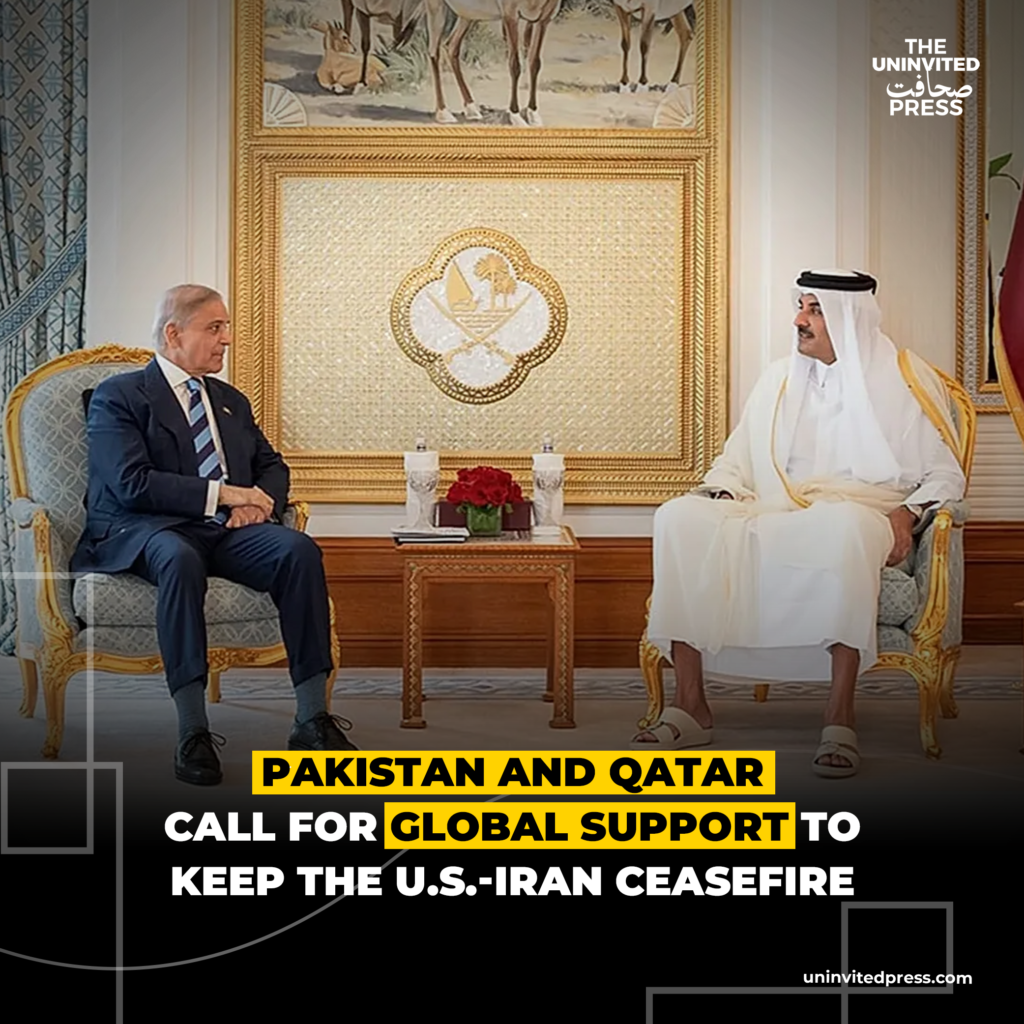
Pakistan and Qatar have jointly called on the international community to actively support efforts aimed at maintaining the recently established but fragile ceasefire between the United States and Iran. Both countries expressed concern that without coordinated global backing, the situation in the region could quickly deteriorate again.
In a display of diplomatic coordination, Pakistani Prime Minister Shehbaz Sharif and Qatari Emir Sheikh Tamim bin Hamad Al Thani have called on the international community to rally behind efforts to preserve the tenuous ceasefire between the United States and Iran.
The two leaders met amid mounting concerns over the stability of the Pakistan-brokered truce, which has held since early April 2026 but faces ongoing challenges, including disputes over maritime security in the Strait of Hormuz and stalled follow-up negotiations.
Joint push for de-escalation:
During the high-level meeting, both sides emphasised the need for “full adherence” to the ceasefire and broader international support to prevent a return to hostilities that had threatened regional stability and global energy markets earlier this year.
Pakistan, which played a central mediating role in securing the initial two-week truce, has continued to facilitate dialogue, with Islamabad hosting talks between the parties. Qatar, a key diplomatic actor in the Gulf, has repeatedly welcomed the ceasefire as an “initial step toward de-escalation” while stressing the importance of protecting freedom of navigation and international trade routes.
The leaders’ joint call comes as uncertainty lingers over the future of the agreement. While the US has extended the ceasefire, reports indicate intermittent tensions and differing interpretations of its terms persist.
Pakistan, Qatar Call to Sustain US-Iran Ceasefire:
The meeting underscores the close bilateral ties between Pakistan and Qatar, as well as their shared interest in Middle East stability. Both countries have significant stakes in the outcome: Pakistan maintains strong relations across the Muslim world and has leveraged its position for mediation, while Qatar hosts major US military facilities and plays an influential role in Gulf diplomacy.
Analysts say sustained international pressure will be critical to transforming the temporary pause into a lasting political solution addressing underlying issues, including Iran’s nuclear programme, ballistic missiles, and regional proxy dynamics.
Prime Minister Sharif has previously highlighted Pakistan’s appreciation for support from Qatar and other partners in the diplomatic process. For its part, Doha has voiced readiness to back extensions of the truce if direct talks falter, prioritising a peaceful resolution over renewed conflict.
Call for Global Role in Fragile US-Iran Truce:
The US-Iran confrontation earlier in 2026 raised fears of wider escalation, disrupting shipping and energy supplies. The ceasefire has so far averted further direct confrontation, but experts warn that without robust global engagement, the fragile peace could unravel.
As diplomatic efforts continue, the message from Islamabad and Doha is clear: regional powers are united in calling for restraint and collective action to safeguard the hard-won ceasefire and open pathways for comprehensive negotiations.