

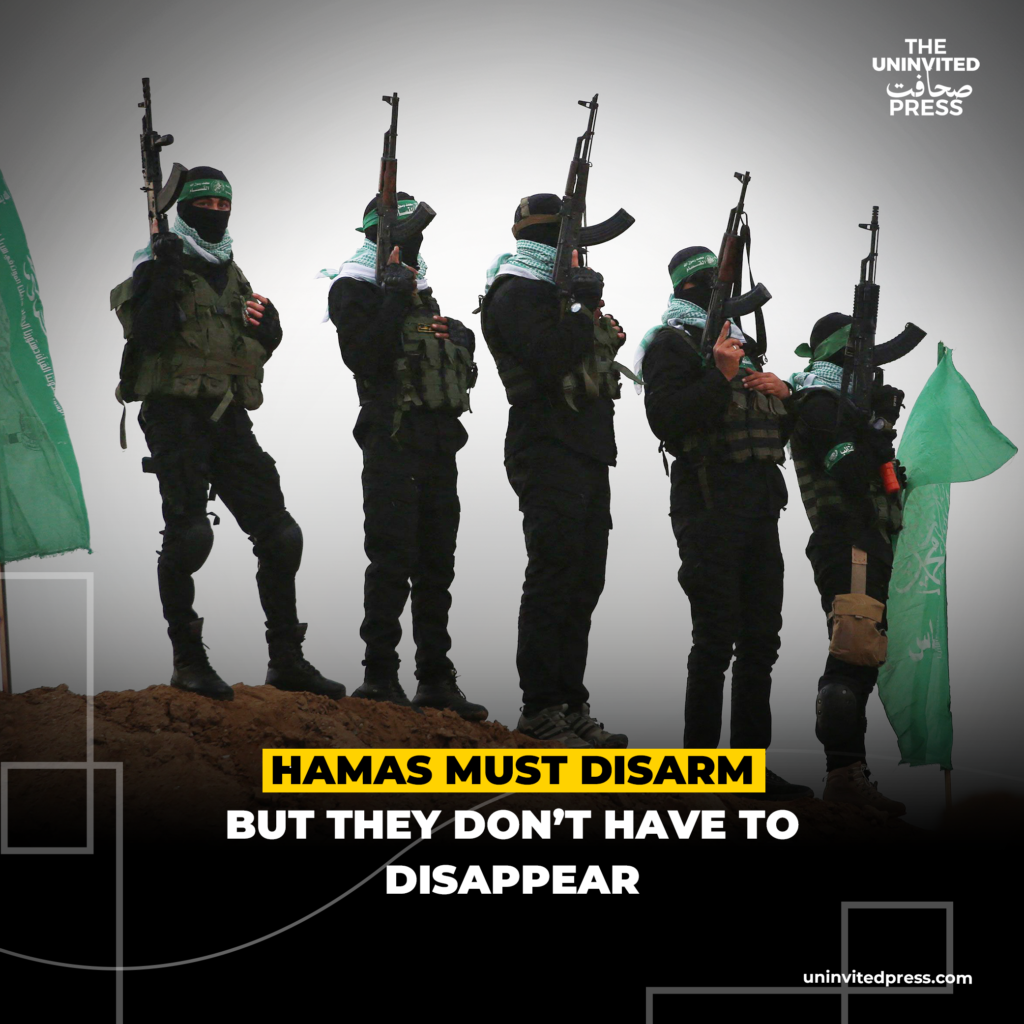
Mladenov Says Hamas Need Not Disappear Politically Despite Deadlock in Gaza Ceasefire Talks.
As negotiations over the second phase of a fragile US-brokered ceasefire in Gaza remain deadlocked, the top international envoy overseeing the truce has said Hamas must disarm its military wing but does not need to “disappear” as a political movement.
Nickolay Mladenov, the high representative for the US-led Board of Peace, made the remarks while emphasising that full disarmament of Hamas remains a non-negotiable condition for advancing reconstruction efforts and implementing the next phase of the ceasefire agreement.
“We are not asking Hamas to disappear as a political movement,” Mladenov stated, signalling a potential path for the group to transition into a purely political entity if it agrees to surrender its weapons.
Gaza Disarmament Standoff Deepens:
Israeli officials, and international mediators have stalled over the timing and conditions of disarmament. Hamas has repeatedly rejected demands to lay down arms before a full Israeli withdrawal from Gaza and the implementation of earlier ceasefire commitments, including expanded humanitarian aid and prisoner releases.
Hamas leaders argue that relinquishing weapons while Israeli forces remain in parts of the territory would leave Palestinians vulnerable. The group has described full disarmament as “political surrender” and insists any process must be part of a broader political settlement addressing the Israeli occupation.
Israeli officials, for their part, maintain that Hamas cannot be allowed to retain any military capability, describing the group’s armed presence as the main obstacle to long-term stability and reconstruction in Gaza.
Mounting Pressure on Gaza Ceasefire as Violence Persists:
The current truce, brokered under US President Donald Trump’s Gaza plan, has held tenuously since October 2025. However, progress on reconstruction and full Israeli withdrawal has been tied to Hamas beginning a phased disarmament process.
Analysts warn that the impasse risks derailing the fragile agreement, with fears of renewed fighting growing as both sides accuse each other of violating the deal’s terms.
Mladenov’s position reflects a delicate balancing act by international mediators: pushing for the demilitarisation of Gaza while attempting to keep Palestinian political factions engaged in the process. Whether Hamas will accept any framework that requires it to give up its weapons remains uncertain.
The fate of postwar Gaza-and the broader question of Palestinian governance-now hinges on whether a compromise can be reached that satisfies Israel’s security demands without triggering internal Palestinian conflict or the collapse of the ceasefire.