

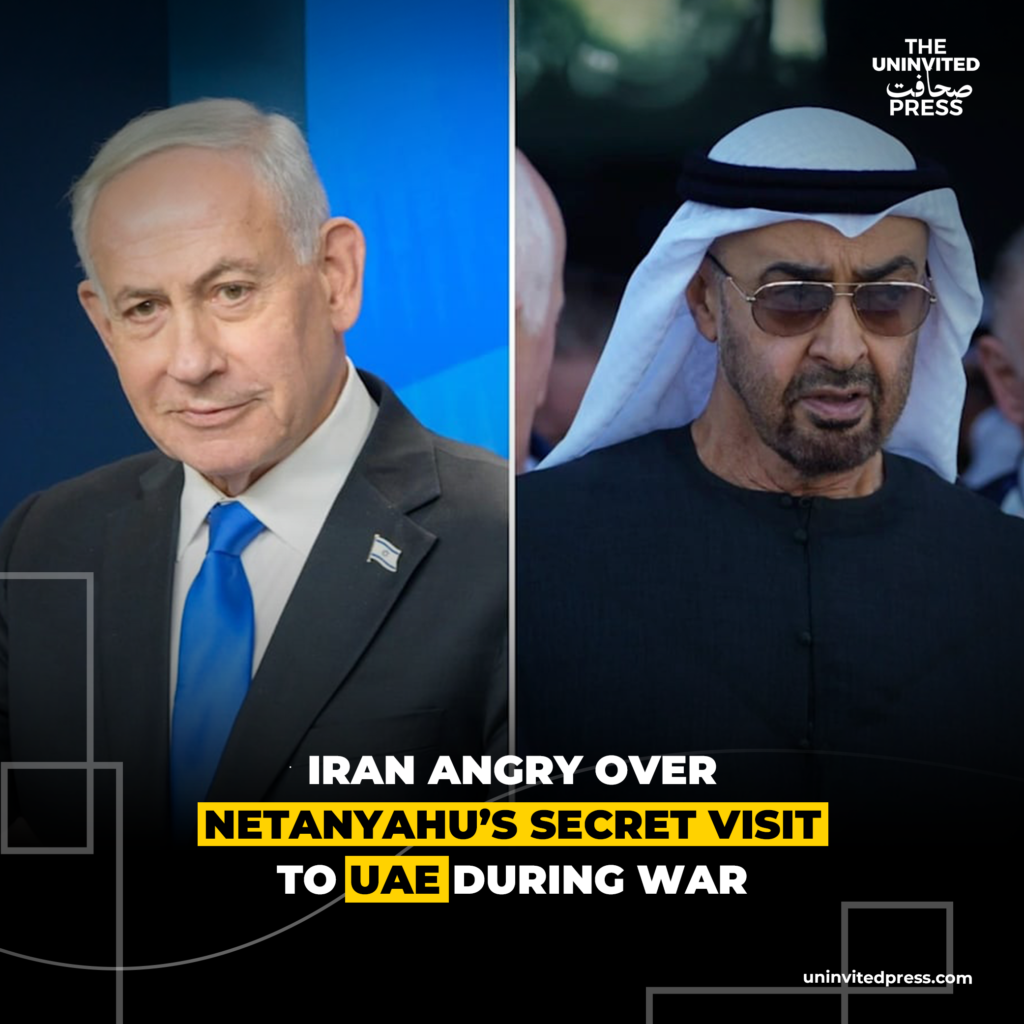
Abu Dhabi rejects reports of a secret visit by Benjamin Netanyahu, insisting ties with Israel remain “public and transparent”.
Iran has expressed strong anger over reports that Israeli Prime Minister Benjamin Netanyahu made a secret visit to the United Arab Emirates during the recent US-Israel military campaign against Iran, a development that has further strained diplomatic relations in the Gulf.
According to a statement from Netanyahu’s office released on Wednesday, the Israeli leader secretly travelled to the UAE and met with President Sheikh Mohamed bin Zayed Al Nahyan. The Israeli side described the meeting as resulting in a “historic breakthrough” in bilateral relations, which were formalised under the 2020 Abraham Accords.
The UAE Foreign Ministry swiftly rejected the claims, describing them as “entirely unfounded.” In a strongly worded statement, Abu Dhabi emphasised that its relations with Israel are conducted transparently under the framework of the Abraham Accords and “are not based on non-transparent or unofficial arrangements.”
Iran Condemns Alleged Gulf-Israel Coordination:
Iranian officials and state media have condemned the reported visit as evidence of continued collusion between Israel and certain Gulf states against Tehran. Analysts in Tehran view the alleged meeting-which reportedly took place during active hostilities-as a provocative act that undermines regional stability and heightens threats to Gulf security.
The development comes as a fragile ceasefire holds following weeks of intense exchanges between Iran, Israel, and the United States. Iran has repeatedly warned Gulf countries against deepening security ties with Israel, stating that such cooperation would invite severe consequences.
UAE-Israel Ties Face New Regional Strains:
The UAE was the first Gulf country to normalise relations with Israel in 2020, leading to significant economic, technological, and security cooperation. However, the partnership has been tested by Israel’s military campaigns in Gaza, Lebanon, and most recently against Iran.
Gulf states, including the UAE, faced Iranian missile and drone attacks during the conflict, raising questions about the limits of their security alignments.
While Israeli officials hail closer coordination with Abu Dhabi, the UAE’s public denial reflects the delicate balancing act Gulf nations are attempting-maintaining economic and security partnerships while avoiding direct confrontation or domestic backlash.
As regional actors assess the fragile post-conflict landscape, the controversy surrounding the alleged visit underscores the persistent fault lines in the Middle East, where public diplomacy and backchannel engagements often collide.