

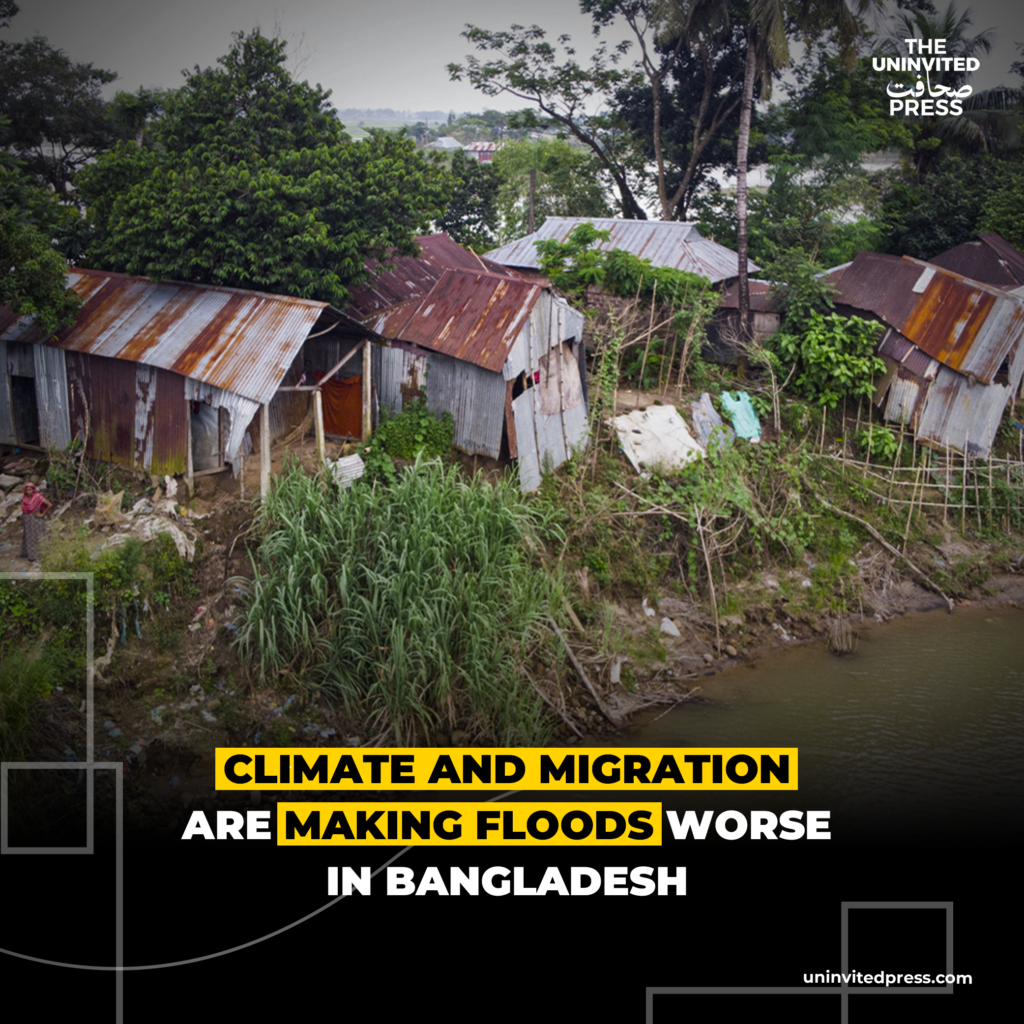
Vulnerable delta nation faces deadly cycle as displaced families crowd into flood-prone urban slums, amplifying disaster risks.
Recurrent and increasingly severe flooding in Bangladesh is being exacerbated by a dangerous feedback loop: climate change drives mass internal migration, while the influx of displaced people into poorly planned urban areas intensifies the impacts of future floods.
Home to one of the world’s largest river deltas, Bangladesh is among the countries most exposed to climate hazards. Rising sea levels, intensified monsoon rains, melting Himalayan glaciers and more frequent extreme weather events have already displaced millions and destroyed livelihoods. Experts warn that without urgent adaptation, the situation will deteriorate further.
According to projections, up to 13.3 million to 19.9 million Bangladeshis could become internal climate migrants by 2050 due to flooding, sea-level rise, salinity intrusion and riverbank erosion. Many end up in the slums of Dhaka and other cities, often settling in low-lying, flood-vulnerable zones.
Climate Migration and Urbanisation Worsen Flood Risks in Bangladesh:
Rural communities, particularly in coastal and riverine areas, are hit hardest. Cyclones, prolonged inundation and loss of farmland force families to migrate in search of survival. Once in cities, they frequently occupy informal settlements lacking proper drainage, sanitation or resilient infrastructure.
This rapid, unplanned urbanisation worsens flooding in multiple ways: encroachment on wetlands and natural waterways reduces the land’s natural absorption capacity, while densely packed slums with poor waste management block drainage systems. As a result, even moderate rains can trigger devastating urban floods.
“Migration is both a consequence of and a contributor to heightened flood risks,” said one climate expert familiar with the dynamics. Families who lose everything to river erosion or salinity often have no choice but to rebuild in marginal urban areas, where they face repeated displacement.
Rising Flood Impacts and Economic Losses in Bangladesh:
Recent years have seen devastating floods strike earlier, last longer and affect larger areas. In the northeast and coastal regions, extreme rainfall events-made more likely by climate change-have submerged homes, destroyed crops and claimed lives. Women and children are disproportionately affected, facing heightened risks of gender-based violence and loss of education in the aftermath.
The economic toll is staggering. Floods regularly cause billions in damages, threaten food security and strain public resources. The World Bank and others have highlighted that severe flooding events could slash national GDP significantly.
Urgent Need for Integrated Solutions:
Bangladeshi authorities have invested in flood embankments, early warning systems and cyclone shelters, yet experts say more comprehensive, long-term strategies are needed. These include:
- Climate-resilient urban planning that protects wetlands and improves drainage in migrant-receiving areas.
- Support for adaptive livelihoods in rural zones to reduce forced migration.
- Stronger international climate finance to help the country, which contributes minimally to global emissions, cope with impacts it did not create.
Rights groups and researchers emphasise that addressing the migration-flood nexus requires recognising climate-displaced people and incorporating their needs into national development plans.
As Bangladesh braces for another monsoon season, the interplay between a changing climate and human movement underscores a broader truth: in one of the world’s most climate-vulnerable nations, adaptation must tackle both environmental and social dimensions simultaneously.