

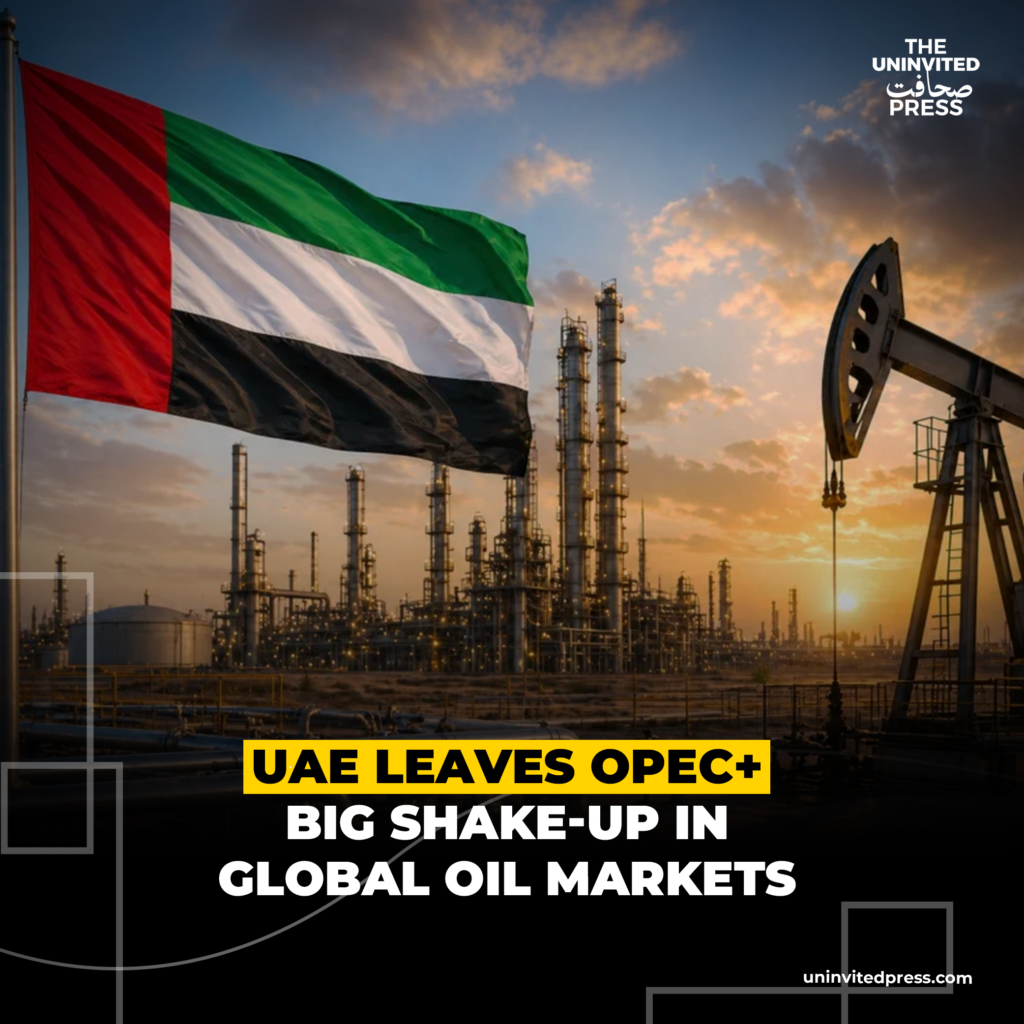
Decision to leave effective May 1 reflects Abu Dhabi’s push for production flexibility as global markets grapple with supply shocks from regional conflict.
The United Arab Emirates has announced its withdrawal from the Organisation of the Petroleum Exporting Countries (OPEC) and the wider OPEC+ alliance, effective May 1, dealing a significant setback to the oil producers’ group and its de facto leader, Saudi Arabia.
The surprise move, confirmed by the UAE’s state news agency WAM on Tuesday, comes after nearly 60 years of membership and at a time of acute global energy turmoil triggered by the ongoing war involving Iran, which has disrupted key shipping routes through the Strait of Hormuz.
In a statement, the UAE Ministry of Energy and Infrastructure said the decision “reflects the UAE’s long-term strategic and economic vision and evolving energy profile,” allowing it greater flexibility to increase production in line with market needs and national interests.
Strategic shift towards independence:
The UAE, one of the world’s top oil producers with significant spare capacity, has long expressed frustration with OPEC+ production quotas. By exiting, Abu Dhabi aims to accelerate investment in its energy sector and respond more nimbly to global demand, particularly as it diversifies its economy under the Vision 2031 and broader post-oil transition plans.
Energy Minister Suhail Al Mazrouei emphasised the country’s commitment to playing a responsible role in global markets by gradually increasing output based on demand.
UAE Exit Raises Concerns Over OPEC+ Unity and Oil Market Stability:
The departure removes a key compliant member and one of OPEC’s largest producers. Analysts say it weakens the cartel’s cohesion and ability to manage global supply, potentially leading to higher volatility in oil prices.
Oil markets reacted swiftly to the news, with prices fluctuating amid broader concerns over supply disruptions from the Iran conflict. Experts warn that the loss of UAE coordination could complicate efforts to stabilise prices in the coming months.
Saudi Arabia, which has historically anchored OPEC+ decisions, now faces a more fragmented alliance. The exit is seen by some observers as a sign of shifting Gulf dynamics, where individual national interests increasingly take precedence over collective action.
The UAE’s reported move comes amid a global energy shock, with disruptions in the Strait of Hormuz tightening supply and driving prices higher. While immediate production effects may be limited, the decision could weaken unity within OPEC and OPEC+. Analysts say it reflects a shift toward greater energy autonomy, with mixed views on its impact on global oil stability.