

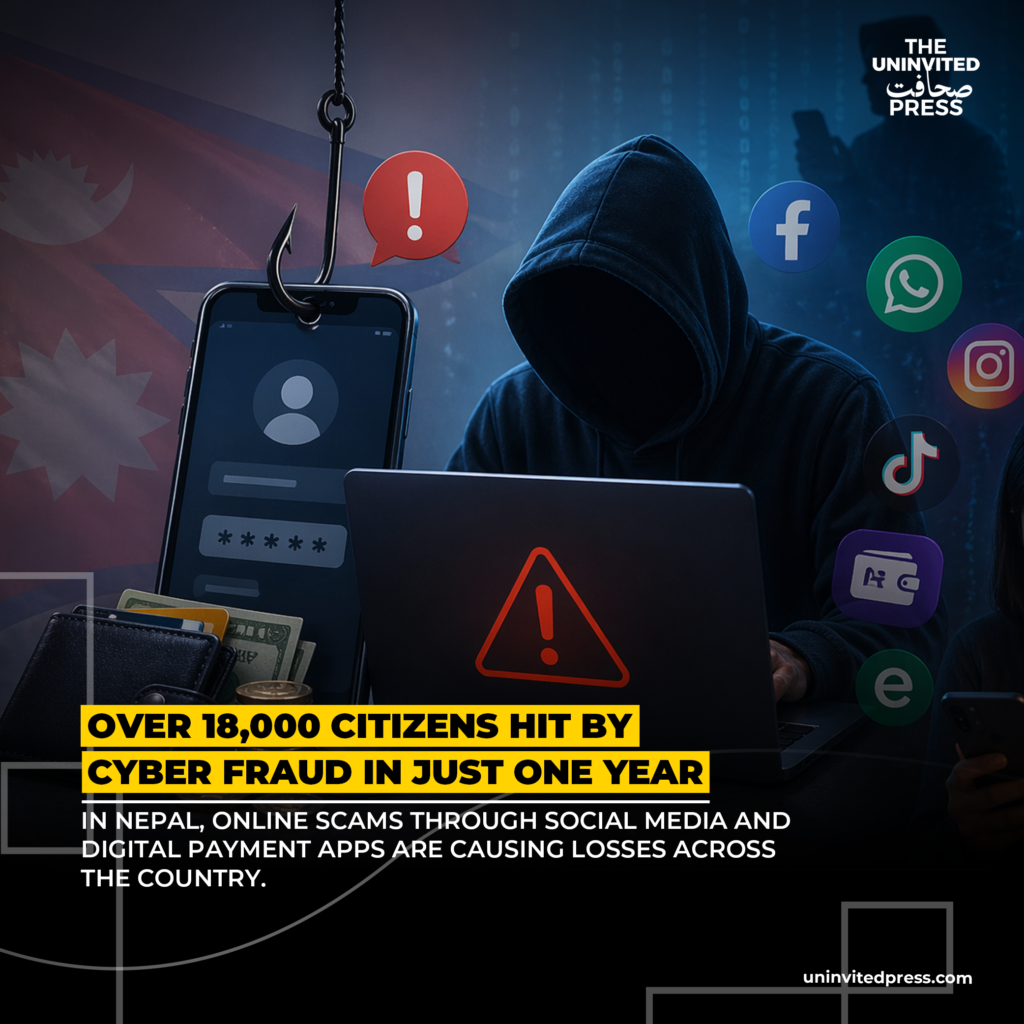
Over 18,000 citizens targeted in one year, with social media and digital payment platforms emerging as primary channels for sophisticated fraud schemes.
Nepali authorities are sounding the alarm over a sharp rise in cyber fraud, with more than 18,000 citizens reportedly falling victim to online scams in just the past year, according to official figures and cybersecurity reports.
The surge highlights the vulnerabilities of Nepal’s rapidly expanding digital economy, where millions now rely on mobile banking, digital wallets and social media platforms for daily transactions, often without adequate awareness or protection.
Digital boom meets rising threats:
Fraudsters are increasingly exploiting popular platforms such as Facebook, WhatsApp, Instagram, TikTok and local digital payment apps to deceive users through fake investment schemes, impersonation scams and phishing attacks. Many victims lose significant sums-from life savings to small daily earnings-after clicking suspicious links or sharing personal and banking details.
A recent graphic widely circulated on social media depicts a hooded hacker silhouette against a backdrop of Nepal’s flag, with a smartphone hooked like bait and warning symbols, underscoring the scale and sophistication of these crimes.
Cybersecurity experts say the problem has worsened as internet penetration in Nepal has grown rapidly, reaching remote areas but leaving many users-especially the elderly and less tech-savvy-exposed.
“Scammers are using advanced social engineering tactics tailored to the Nepali context,” said a senior official at the Nepal Telecommunications Authority. “They pose as bank staff, government officials or even romantic interests to build trust before striking.”
Rising Financial Losses from Cyber Fraud in Nepal:
The financial losses are mounting. While exact figures for total money lost remain underreported, police sources indicate millions of Nepali rupees have been siphoned out of the country through international cybercrime networks. Many victims, particularly in rural districts, hesitate to report cases due to shame or lack of trust in the system.
Stories of families losing homes, students dropping out, and small businesses collapsing after falling prey to fake loan or investment offers have become increasingly common in local media.
Authorities have registered thousands of complaints, but convictions remain low due to challenges in tracing cross-border perpetrators, often operating from abroad.
Government response and calls for stronger security measures:
The Nepali government has stepped up efforts, launching awareness campaigns and strengthening the Cyber Bureau of Police. Recent initiatives include tighter regulations on digital payment platforms and collaboration with international agencies to track fraudulent networks.
However, digital rights advocates argue that more is needed, including mandatory cybersecurity education in schools, stricter oversight of social media companies operating in Nepal, and better victim support mechanisms.
“Digital inclusion must go hand in hand with digital safety,” said a representative from a Kathmandu-based consumer rights group. “Without robust protections, the promise of a digital Nepal risks becoming a nightmare for ordinary citizens.”
As Nepal pushes forward with its digital transformation agenda, the battle against cyber fraud is emerging as a critical test of the country’s ability to protect its people in an increasingly connected world.