

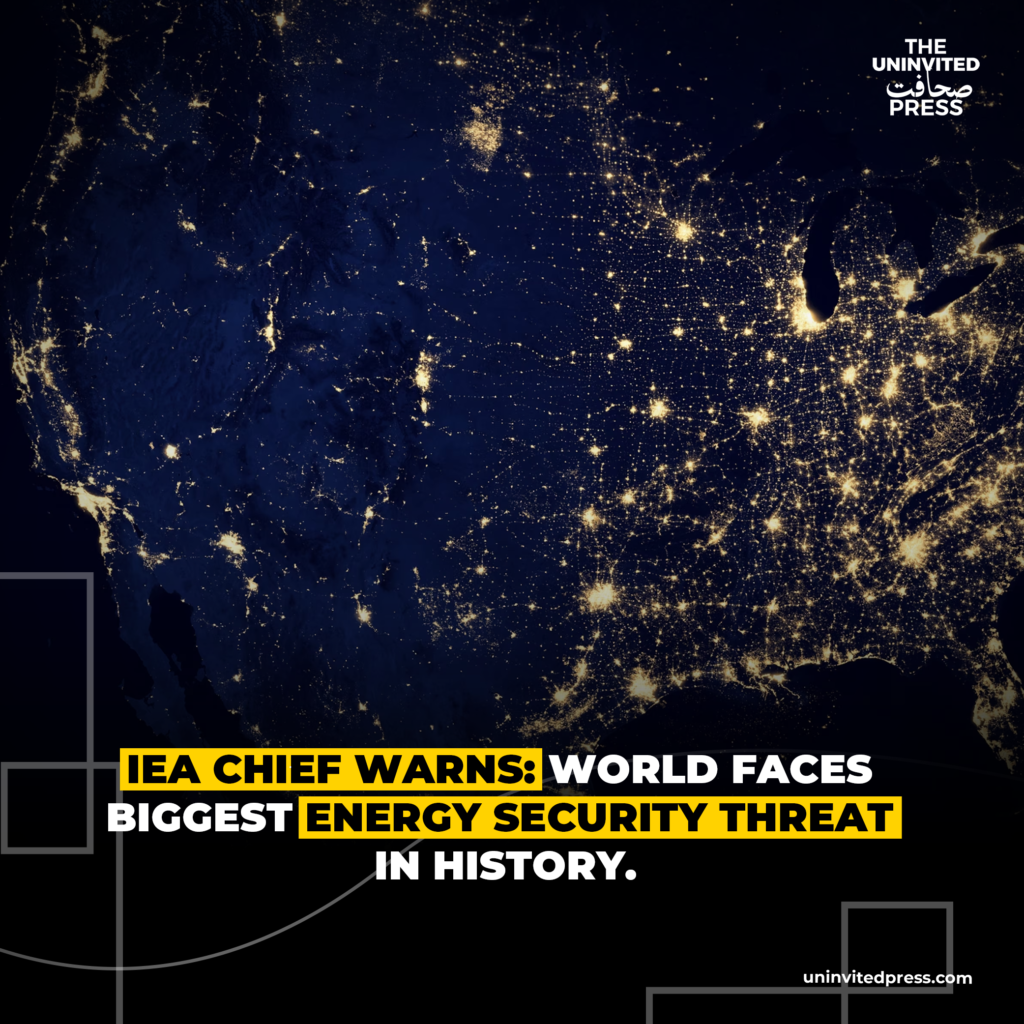
“We are facing the biggest energy security threat in history,” warns Fatih Birol as Iran conflict triggers massive oil supply shock.
The head of the International Energy Agency (IEA) has issued a grave warning that the world is confronting the most severe energy security threat in history, driven by the ongoing conflict involving Iran and the resulting disruption to global oil flows.
In a stark interview, IEA Executive Director Fatih Birol stated that the loss of approximately 13 million barrels per day of oil production and shipments-largely due to the closure of the Strait of Hormuz-has created an energy crisis surpassing the 1973 and 1979 oil shocks combined.
Major supply disruption with no rapid resolution expected:
The escalation of hostilities in the Middle East has brought much of Iran’s oil exports to a halt, with no new energy shipments loaded in April, according to IEA assessments. This unprecedented disruption is already rippling through global markets, pushing oil prices higher and raising fears of fuel shortages and economic instability worldwide.
“Put all of them together, we are indeed facing the largest energy crisis in the history now,” Birol told CNBC, emphasising that the situation continues to deteriorate.
The Strait of Hormuz, through which nearly a fifth of global oil passes, remains effectively blocked, amplifying the shock to energy markets already strained by previous conflicts in Gaza and Lebanon.
Energy Crisis Worsens Global Economic Divide:
The energy shock is hammering economies across the globe, particularly in developing countries heavily reliant on imported oil. Rising fuel costs are exacerbating inflation, threatening livelihoods and widening inequalities between wealthy nations capable of securing alternative supplies and poorer ones facing acute shortages.
Critics in the Global South argue that Western military involvement and unconditional support for Israel have directly contributed to this self-inflicted global energy catastrophe, prioritising geopolitical aims over energy stability and climate goals.
Birol urged accelerated efforts to boost clean energy deployment and diversify supplies, while warning that short-term relief options remain limited.
Global Energy Crisis Highlights Geopolitical Risks and Supply Shifts:
The crisis has renewed debates over the fragility of fossil fuel-dependent systems. Environmental advocates say the turmoil underscores the urgent need to reduce reliance on oil from volatile regions, though analysts caution that a rapid shift away from hydrocarbons could prove challenging amid current shortages.
Meanwhile, countries like China and India are scrambling to secure alternative supplies from Russia and other producers, highlighting shifting geopolitical energy alliances.
As the conflict in the Middle East shows no immediate signs of resolution, the IEA’s warning serves as a sobering reminder of how intertwined energy security, geopolitics and global stability have become.